
• Research
  • Diwan
  • About
  • Experts
Carnegie Middle East logoCarnegie lettermark logo
LebanonIran
{
  "authors": [
    "Neil Noronha"
  ],
  "type": "legacyinthemedia",
  "centerAffiliationAll": "",
  "centers": [
    "Carnegie Endowment for International Peace",
    "Carnegie India"
  ],
  "collections": [],
  "englishNewsletterAll": "",
  "nonEnglishNewsletterAll": "",
  "primaryCenter": "Carnegie India",
  "programAffiliation": "",
  "programs": [],
  "projects": [],
  "regions": [
    "India"
  ],
  "topics": [
    "Domestic Politics",
    "Economy"
  ]
}

Source: Getty

In The Media
Carnegie India

To Boost Black Money Promise, Modi Must Start Lobbying for India to Lead FATF

There is now an opportunity for India to take the lead on a global platform to combat money laundering and tax evasion–and for Modi to take his campaign promise forward.

Link Copied
By Neil Noronha
Published on Jun 21, 2018

Source: Print

Cracking down on black money has been the centerpiece of Prime Minister Narendra Modi’s campaign. There is now an opportunity for India to take the lead on a global platform to combat money laundering and tax evasion – and for Modi to take his campaign promise forward.

Read the Full Article

This article was originally published in the Print.

About the Author

Neil Noronha

Neil Noronha is a Henry Luce scholar, and a visiting scholar with Carnegie India.

Neil Noronha

Neil Noronha is a Henry Luce scholar, and a visiting scholar with Carnegie India.

Domestic PoliticsEconomyIndia

Carnegie does not take institutional positions on public policy issues; the views represented herein are those of the author(s) and do not necessarily reflect the views of Carnegie, its staff, or its trustees.

More Work from Malcolm H. Kerr Carnegie Middle East Center

  • Paper
    The Twilight of Oil in an Age of Uncertainty: From a Vicious to a Virtuous Cycle

    The global hydrocarbon order is changing. Economic diversification and developing productive economies have become essential for Middle Eastern and North African states, requiring them to address social and political challenges and rethink domestic, regional, and global settlements.

      • +1

      Nur Arafeh, Ishac Diwan, Hamza Meddeb, …
  • Paper
    Egypt’s Military Landlord Economy and its Limitations

    The armed forces champion a form of capitalism that is generating revenue, but its reliance on rent faces diminishing returns, leaving the country with massive sunk costs and deferred returns, deepening dependency on external borrowing.

      Yezid Sayigh

  • Commentary
    Diwan
    Unpacking Lebanon’s Gap Law

    In an interview, Ishac Diwan looks at the merits and flaws in the draft legislation distributing losses from the financial collapse.

      Michael Young

  • Commentary
    Diwan
    Has Sisi Found a Competent Military Entrepreneur?

    Mustaqbal Misr has expanded its portfolio with remarkable speed, but a lack of transparency remains.

      Yezid Sayigh

  • Research
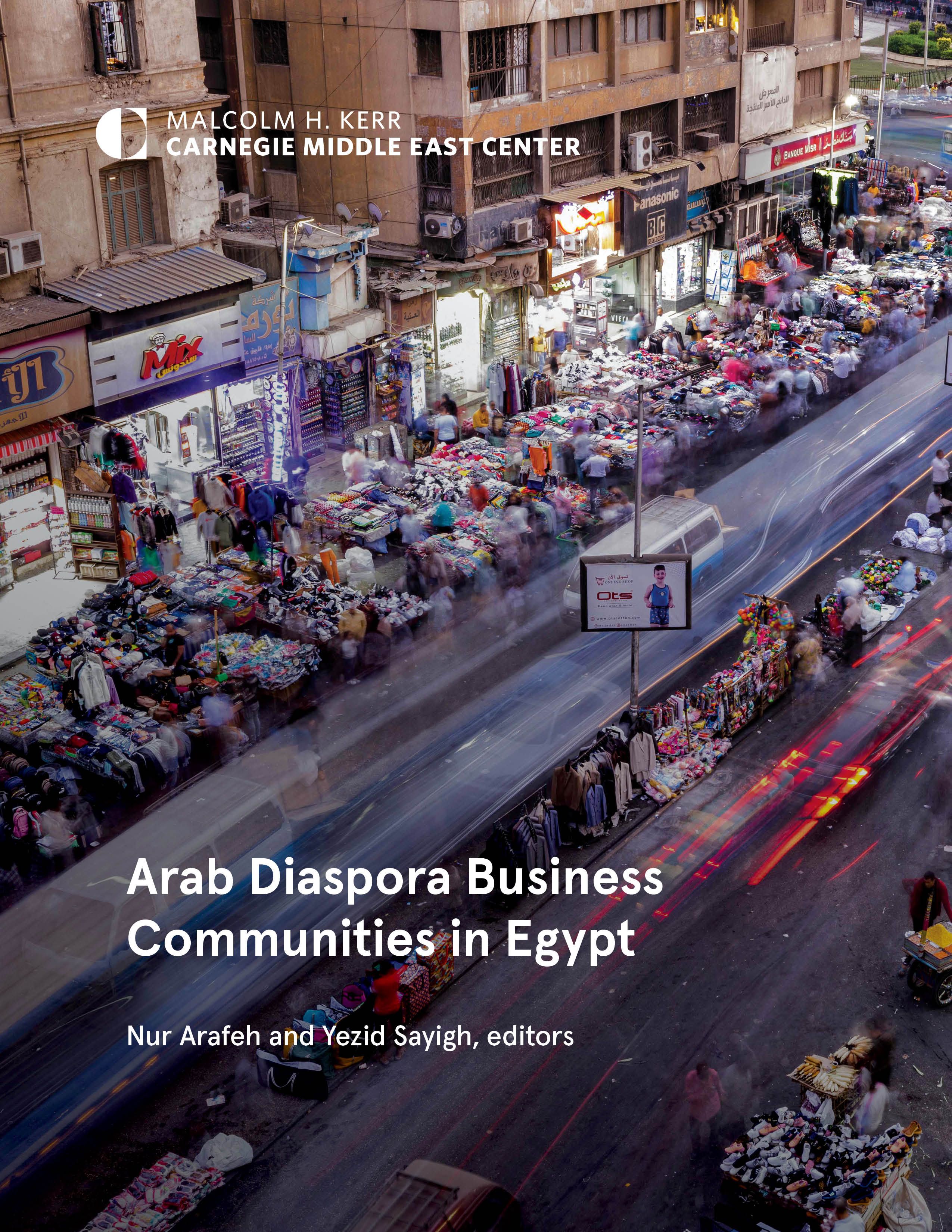
    Arab Diaspora Business Communities in Egypt

    Arab diaspora business communities in Egypt often mirror the same systemic challenges facing Egyptian businesses.

      • +4

      Nur Arafeh, Yezid Sayigh, Qaboul al-Absi, …

Get more news and analysis from
MENA Transitions
Carnegie Middle East logo, white
  • Research
  • Diwan
  • About
  • Experts
  • Projects
  • Events
  • Contact
  • Careers
  • Privacy
  • For Media
Get more news and analysis from
MENA Transitions
© 2026 Carnegie Endowment for International Peace. All rights reserved.