Money Matters in Indian Elections: Why Parties Depend on Wealthy Candidates
The rise of wealthy candidates is driven by the weak representative role of India’s elected politicians, which discourages quality governance and leads elected politicians to view their election campaign as an economic investment in the future.
Link Copied
By Neelanjan Sircar
Published on Jul 26, 2018
Source: Hindustan Times
Money matters in Indian elections. In the increasingly high stakes world of election campaigning, aggressive displays of candidate wealth, from cash handouts to alcohol distribution, to big rallies, are becoming more common and more extravagant.
While money plays a key role in most elections across the world, the particular reliance of Indian parties on candidates with great personal wealth is quite a unique phenomenon.
In many longstanding democracies, campaign funding is highly regulated, a lion’s share of the funding comes from the party itself or third-party sources like lobbyists and corporate actors, and the personal wealth of the candidate is less important. But why are Indian parties increasingly dependent upon such wealthy candidates?
To answer this question, one needs to understand how candidates are selected and the policymaking role of legislators in India’s political system.
India’s parties display very low “intra-party democracy” because party’s policy decisions are routinely made by a small coterie of party elites. More importantly, party tickets are typically distributed—or even sold—by these elites in the absence of a functioning democratic process within the party.
Even if a candidate wins his or her seat, anti-defection laws effectively prevent elected representatives from having much of a role in policymaking. In such a scenario, third party actors have few incentives to invest in specific candidates, rather than a party at large. With little opportunity to raise outside funds, candidates must largely finance their election campaigns.
Naturally, this has led to a rise of wealthy candidates. Looking at self-reported candidate affidavits for Lok Sabha elections between 2004 and 2014, the median total wealth of candidates grew by approximately 330% in nominal terms. Even adjusting for inflation, the median wealth of candidates saw a rise of 116% in real terms.
In the 2014 national election, candidates reported a median wealth of Rs 23.8 lakh —approximately 27 times the nominal per capita income of India in 2014-2015 of Rs 88,533—which is, in turn, significantly wealthier than the general population.
There are reasons to be worried about this rise of self-financing candidates in India. First, if candidates need to be wealthy to contest an election, only a small subset of the population can realistically hold office, resulting in legislators that have less in common with the citizens they represent. Second, if parties increasingly look at personal wealth to select candidates, instead of characteristics of “quality” such as education or constituency service, then elected politicians may become worse at representing their constituents.
Finally, and most importantly, if campaigns must be self-financed, then candidates may view contesting elections as an investment rather than a sunk cost, leading to greater levels of corruption in office as legislators try to recoup the costs of contesting elections.
Indeed, related evidence suggests that incumbent politicians enjoy a significant return on their assets.
To shed light on the problem, candidate affidavits were digitised for each of the last three national elections, providing details on moveable and immovable wealth, as well as a number of other characteristics such as pending criminal cases and education.
Comparing this data to the election results over the appropriate national elections can be used to understand the relationship between candidate wealth and electoral outcomes.
This analysis focuses on moveable wealth, which are assets that can be quickly mobilised for campaign purposes, as opposed to immovable wealth (which consists mainly of fixed assets like real estate). More than 80% of the value of moveable wealth is nested in four types of assets: jewellery, cash, deposits, and vehicles. The biggest source of moveable wealth is jewellery because a relatively small amount of jewellery may contain a lot of financial value, so it can be used to quickly move large sums of wealth from one place to the next.
Because competitive political parties require the most expensive electoral campaigns, these are the parties that should select the wealthiest candidates. The data bears this out.
Candidates from competitive parties (defined as a party that was one of the top two finishers in a constituency) selected candidates who were approximately 20 times richer than candidates from non-competitive parties. This implies that candidates with any chance of winning an election are much richer than the overall candidate pool.
At the same time, if wealthier candidates were no better at winning elections, then an analysis of candidate wealth would be no more than academic curiosity. In order to determine the relationship between wealth and winning elections, the analysis was restricted to candidates from competitive parties and a statistical model was fit to the data.
Even when restricting attention to the top two candidates, the richer candidate reported moveable asset wealth about four times greater on average than the poorer candidate.
As the wealth gap grows between the top two candidates in a constituency, the richer candidate has a higher probability of winning (see graphic). In the median case, the wealthier candidate is about 10 percentage points more likely to win than the poorer candidate.
Taken together, these analyses provide statistical evidence that competitive parties are more likely to field wealthier candidates, and, even when focusing only on those candidates that have some chance of winning, wealth is strongly correlated to electoral success.
This result is consistent with growing incentives parties face to select wealthy candidates to self-finance increasingly expensive campaigns.
Self-financing candidates, in addition to covering their own campaign costs, can bring in funds for the party and subsidise poorer candidates.
The root cause of the rise of wealthy candidates is the weak representative role of India’s elected politicians. The rules governing the system are such that, even after winning election, legislators have little power in policymaking—which is controlled by a small set of party elites. In short, India’s politicians have little incentive to invest in actually becoming good representatives, and they are more likely to see the election as an economic investment in the future. It all adds up to a compromised democratic system in which the candidates for whom we vote need not represent our interests.
Neelanjan Sircar is an associate professor at Ahmedabad University and one of the country’s leading scholars of Indian politics. He has spent years studying party organizations, welfare politics, and electoral change across states—including West Bengal and Assam.
Carnegie does not take institutional positions on public policy issues; the views represented herein are those of the author(s) and do not necessarily reflect the views of Carnegie, its staff, or its trustees.
More Work from Malcolm H. Kerr Carnegie Middle East Center
To address the deepening climate crisis, climate activism is employing a wider variety of tactics and aiming at a broader set of goals. In response, the movement faces stronger repression and civic backlash against climate action.
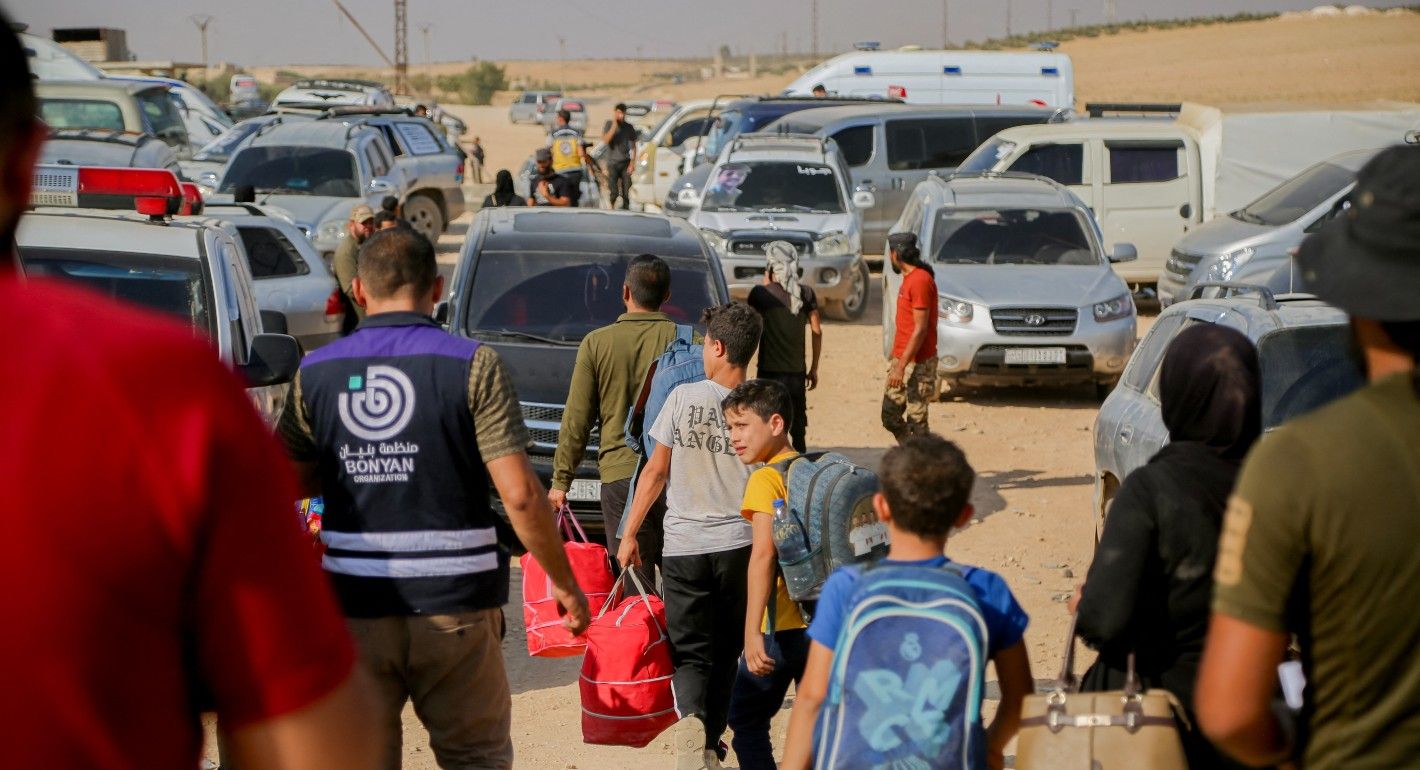
A humanitarian crisis in Lebanon deepens, and Syrian refugees face a perilous choice: remain in a war-torn environment or return to Syria where they risk encountering significant dangers and discrimination. There are significant challenges and risks to their search for safety in Syria.
In Syria’s border regions, changes in demographics, economics, and security mean that an inter-Syrian peace process will require consensus among main regional powers that Syria must remain united, that no one side can be victorious, and that perennial instability threatens the region.
The interaction of national armed forces and private business sectors offers a useful lens for viewing the politics of numerous countries of the so-called Global South. A rising trend of military political activism—often accompanied by military commercial activity—underlines the importance of drivers and outcomes in these relationships.