The Path to Reforms: Ensure Enforcement, Bring Clarity
Electoral finance reforms could relax limits on expenditures, but should also feature full transparency with adequate verification and enforcement mechanisms.
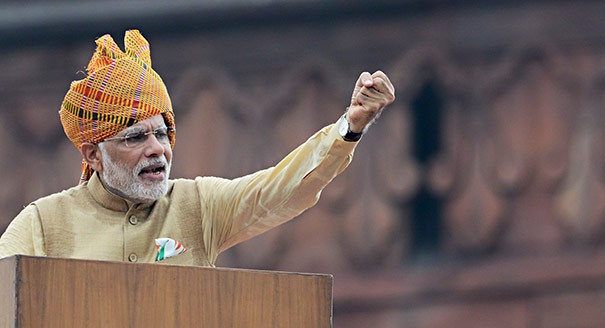
It is a truism to note that political finance sits at the heart of corruption in modern India. While politicians publicly lament the status quo, they privately profit from the current system. Therefore, the fact that the Narendra Modi government has made reforming political finance an important priority, is worth both acknowledging and evaluating. Given the infirmities associated with India’s system of managing the flows of money in and out politics, how effectively have its initiatives addressed the entrenched challenges?
In understanding the state of play, four stylised facts characterise India’s political finance regime. First, there is virtually zero transparency around political contributions. In the majority of cases, it is impossible to identify who is making contributions, and to whom. Second and related, given the premium placed on anonymity, contemporary Indian politics is a cash-intensive business. Third, political party accounts are a black box. While parties are required to submit audited accounts to the Election Commission of India (ECI), they are under no obligation to subject their books to independent scrutiny.
Finally, ECI is outgunned when it comes to confronting those who circumvent existing campaign finance rules. For example, the agency has neither adequate power nor resources to sanction candidates for even blatant misrepresentation on disclosure forms.
This is the context in which one needs to understand and evaluate the Modi government’s political finance reforms. The changes introduced by the government broadly fall into two categories. First, the government launched a high-octane war on cash — best exemplified by its November 2016 decision to demonetise high-value rupee notes.
Furthermore, in the 2017 Finance Act, the government instituted a new Rs 2,000 threshold for cash contributions (down from Rs 20,000). In addition, in the 2017-2018 budget, the finance minister announced a new financial instrument called ‘electoral bonds’ — time-limited bearer bonds that private entities can purchase from scheduled banks and donate to political parties.
The funds would flow entirely through the formal banking system, thereby reducing the reliance on cash contributions. The upshot is that neither the party nor the private entity is required to disclose the transaction.
Second, the government also eased limits on corporate giving. First, it eliminated the cap on corporate donations (which previously stood at 7.5% of a corporation’s average net profits over the previous three years) and second, it dropped the requirement that firms declare their political contributions on their profit-and-loss statements.
The government has also retrospectively altered provisions in the Foreign Contributions Regulation Act (FCRA) that define what constitutes a ‘foreign’ company. Whereas to be labelled a foreign firm had previously entailed majority foreign ownership, the new definition stated that a company would no longer be deemed a foreign source as long as the “nominal value of share capital is within the limits specified for foreign investment”. Viewed against the extant challenges, we believe these new reforms are unlikely to move the needle in a positive direction.
It is true that the government’s assault on cash addresses one of the long-standing problems plaguing political finance. While cash does not equal black money, a heavy reliance on cash does facilitate an easy nexus with black money. Unfortunately, the moves do little to address the magnitude of the challenge. While demonetisation was touted as a method for curbing cash in elections, there is no evidence that it has done so.
According to India’s then chief election commissioner, the five states that went to polls in early 2017 immediately after notebandi saw an “unprecedented number of seizures of all manner of inducements to the voter”.
In the Uttar Pradesh campaign alone, ECI seized more than Rs 115 crore —three times the cash recovered in the previous election.
While the government had an opportunity to eliminate cash contributions entirely, it merely lowered the cash ceiling. Whenever an arbitrary limit is imposed, there is an incentive for those who want to game the system to report amounts just below the threshold.
Electoral bonds also portend a move away from cash, but they do so at the expense of transparency: the objective of the scheme is to compel corporations to give above board by guaranteeing them anonymity. It is now possible for corporations to give an unlimited sum of money to political parties, who can accept unlimited amounts, without either having to disclose a single rupee.
The changes made to FCRA, in turn, have little to do with a clean up of election finance; they have everything to do with the fact that the Bharatiya Janata Party (BJP) and the Congress faced legal jeopardy for illegally accepting donations from ‘foreign’ companies.
What would a more effective alternative approach look like? In our view, it would have five elements. First, political contributions must be fully transparent. If the Indian citizenry is expected to shift to digital payments, surely political parties can lead by example? Any amount, no matter how small, should be mandatorily linked to their official electoral ID from ECI and/or their Aadhaar number. Second, candidate spending limits should be relaxed, or eliminated entirely, but only in exchange for strict disclosure requirements and enhanced enforcement. If candidates play fast and loose with their accounts, disqualification has to be on the table. These limits need a simple basis —for example, Rs 100 per registered voter — revised periodically for inflation.
Third, party accounts must be subject to independent scrutiny. As it is, all major parties have thumbed their noses at the Central Information Commission’s ruling that parties are subject to the Right to Information Act.
Fourth, the current distinction, whereby there are limits on candidates’ expenditures but not on that of political parties, should be abolished. There should be just one expenditure limit per constituency that includes candidates and party expenditures.
Finally, only if the above preconditions on transparency and enforcement are fulfilled, should public financing be contemplated. In the absence of such complementary reforms, there would be nothing to stop politicians and parties from having their cake and eating it too — a condition that they have become all too accustomed to.
Devesh Kapur is the Starr Foundation Professor of South Asian studies at the Johns Hopkins School of Advanced International Studies (SAIS). He is the author of three books on migration, including The Other One Percent: Indians in America (with Sanjoy Chakravorty and Nirvikar Singh).
E Sridharan
E. Sridharan is the academic director and chief executive of the University of Pennsylvania Institute for the Advanced Study of India.
Milan Vaishnav is a senior fellow and director of the South Asia Program and the host of the Grand Tamasha podcast at the Carnegie Endowment for International Peace. His primary research focus is the political economy of India, and he examines issues such as corruption and governance, state capacity, federalism, and electoral behavior. He also conducts research on the Indian diaspora.
Carnegie does not take institutional positions on public policy issues; the views represented herein are those of the author(s) and do not necessarily reflect the views of Carnegie, its staff, or its trustees.
More Work from Malcolm H. Kerr Carnegie Middle East Center
To address the deepening climate crisis, climate activism is employing a wider variety of tactics and aiming at a broader set of goals. In response, the movement faces stronger repression and civic backlash against climate action.
A humanitarian crisis in Lebanon deepens, and Syrian refugees face a perilous choice: remain in a war-torn environment or return to Syria where they risk encountering significant dangers and discrimination. There are significant challenges and risks to their search for safety in Syria.
In Syria’s border regions, changes in demographics, economics, and security mean that an inter-Syrian peace process will require consensus among main regional powers that Syria must remain united, that no one side can be victorious, and that perennial instability threatens the region.
The interaction of national armed forces and private business sectors offers a useful lens for viewing the politics of numerous countries of the so-called Global South. A rising trend of military political activism—often accompanied by military commercial activity—underlines the importance of drivers and outcomes in these relationships.