

Research
Steve Feldstein, Shreya Joshi
{
  "authors": [
    "Steve Feldstein"
  ],
  "type": "legacyinthemedia",
  "centerAffiliationAll": "dc",
  "centers": [
    "Carnegie Endowment for International Peace"
  ],
  "collections": [
    "Democracy and Governance"
  ],
  "englishNewsletterAll": "democracy",
  "nonEnglishNewsletterAll": "",
  "primaryCenter": "Carnegie Endowment for International Peace",
  "programAffiliation": "DCG",
  "programs": [
    "Democracy, Conflict, and Governance"
  ],
  "projects": [],
  "regions": [
    "Southern, Eastern, and Western Africa"
  ],
  "topics": [
    "Political Reform",
    "Democracy"
  ]
}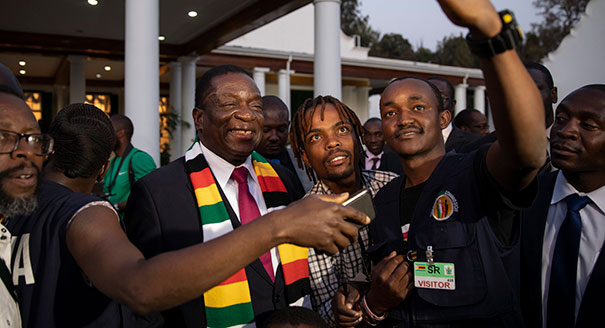
Source: Getty
Despite the possibility for real democratic change, Zimbabwe’s July election has elevated another despot in Mugabe’s mold.
Source: Conversation
Many citizens and international observers cautiously hoped that the southern African nation of Zimbabwe would find its way from dictatorship to democracy this year. President Robert Mugabe was militarily removed from office in November 2017 after 37 years in office, opening the door for the country’s first real leadership transition since 1980.
Elections were set for July 30. And, for the first time in many Zimbabweans’ lives, Mugabe was not on the ballot.
Election turnout was high, with over 70 percent of the country’s 16 million eligible voters participating. Zimbabweans waited in long lines to choose between Mugabe’s replacement, the 75-year-old acting President Emmerson Mnangagwa, and a young lawyer named Nelson Chamisa who promised economic revival and political change.
“What everyone had hoped for was a turning of the page in Zimbabwe,” observed Michelle Gavin, an Africa specialist at the Council on Foreign Relations.
Election day was peaceful enough, but the high spirits wouldn’t last long.
After Chamisa’s party alleged fraud, the election commission said it would take days to finalize the vote count. When people in the capital of Harare protested the delay, police and soldiers fired, killing seven unarmed citizens.
On Aug. 2, the election commission declared Mnangagwa president with 50.8 percent of the vote – just enough to avoid a run-off. Chamisa’s party rejected the results and, a week later, filed a legal challenge in court.
Mugabe was a violent, repressive ruler. And Mnangagwa – whose nickname is “the Crocodile” – was his vice president and enforcer. In the weeks since the election, the government has ruthlessly cracked down on the opposition.
Police have beaten and arrested dozens of Chamisa supporters, and groups of Mnangagwa’s backers have conducted house-to-house searches for opposition leaders.
Tendai Biti, a well-known opposition figure, fled to Zambia, but was turned over by the Zambian government to Zimbabwe’s security forces. Mnangagwa’s government charged him with inciting public violence. He was released on a US $5,000 bond only after a global outcry.
Today, Zimbabwe remains tense as it awaits the results of the court battle over the presidency. Most observers expect Chamisa’s case will fail, and that Mnangagwa will officially be installed as Zimbabwe’s third president since 1963.
Having spent considerable time studying Zimbabwe’s politics as a U.S. State Department official, I found the contested result and election-day violence saddening but not surprising.
Mnangagwa struck a conciliatory tone in the months leading up to the election. Declaring that Zimbabwe was “open for business,” he amended a law requiring local ownership of diamond and platinum mines. He signaled his intent to end farm seizures and vowed to sell off failing state enterprises.
He even wrote a New York Times op-ed calling for democracy and equal rights for all citizens.
But Mnangagwa is tied to numerous human rights abuses, including overseeing a series of government-ordered massacres between 1982 and 1986 known as the “Gukurahundi.” An estimated 20,000 civilians from Zimbabwe’s Ndebele ethnic group were killed.
And behind his seemingly reasonable rhetoric, there were signs that Mnangagwa would stoop to win Zimbabwe’s election at any cost.
Human rights groups reported widespread voter intimidation, especially in rural areas, where the government deployed plainclothes security forces to “remind” people to vote – for Mnangagwa. Zimbabwe’s state-controlled media relentlessly broadcast pro-Mnangagwa messages.
And, according to civil society groups, the election commission kept the voter registration roll under wraps until it was too late for voters who discovered their names were missing to re-register.
Zimbabwe’s recent history mirrors a pattern familiar to other authoritarian countries undergoing a transition.
Research shows that authoritarian leaders almost always contend with two major political pressures: challenges from within their regime, which rarely trigger a democratic transition, and popular challenges from outside the system, which might.
Mugabe succumbed to pressure from within his party last year after a succession battle between his wife, Grace, and Mnangagwa’s faction. The military settled this struggle decisively in November 2017, putting Mugabe under house arrest. Grace fled the country, and Mnangagwa was installed as acting president.
Once he assumed office, Mnangagwa worked resolutely to guarantee he could quash the next challenge facing him: popular opposition.
Even as he cited the importance of human rights and invited international observers to monitor Zimbabwe’s presidential election, he was methodically working with allies to lay a repressive groundwork that would ensure he stayed in power as the standard-bearer of the ruling ZANU-PF party.
After the electoral commission announced his tenuous victory, Mnangagwa reacted in classic authoritarian fashion: he deployed police and military forces to repress street protests, driving would-be challengers into hiding.
Zimbabwe held an election without Mugabe. Unfortunately, all it got was another despot in Mugabe’s mold.
It wasn’t crazy to imagine things turning out differently.
Zimbabwe’s political system had actually been getting slightly more democratic in Mugabe’s final years. According to the Varieties of Democracy index, one of the world’s largest social science databases on democracy, Zimbabwe’s electoral system remains squarely in the “illiberal” category. But its score has improved 20 percent since 2007, particularly on freedom of expression.
The Economist Intelligence Unit’s Democracy Index shows Zimbabwe making similar modest progress since 2006.
These small improvements in Zimbabwe’s political system, coupled with Mugabe’s demise, convinced some diplomats and experts that the July 31 election might open the door for real democratic change rather than a continuation of electoral autocracy.
But recent events have confirmed that Mnangagwa and his allies did not force the ailing Robert Mugabe out of office to transform Zimbabwe’s political system. Rather, they sought to ensure their continued control over the nation.
After 38 years of authoritarian rule, one election simply does not create democracy from dictatorship.

Director and Senior Fellow, Democracy, Conflict, and Governance Program
Steve Feldstein is a senior fellow and director of the Democracy, Conflict, and Governance Program at the Carnegie Endowment for International Peace. His research focuses on technology, national security, the global context for democracy, and U.S. foreign policy.
Recent Work
Steve Feldstein, Shreya Joshi
Steve Feldstein
Carnegie does not take institutional positions on public policy issues; the views represented herein are those of the author(s) and do not necessarily reflect the views of Carnegie, its staff, or its trustees.
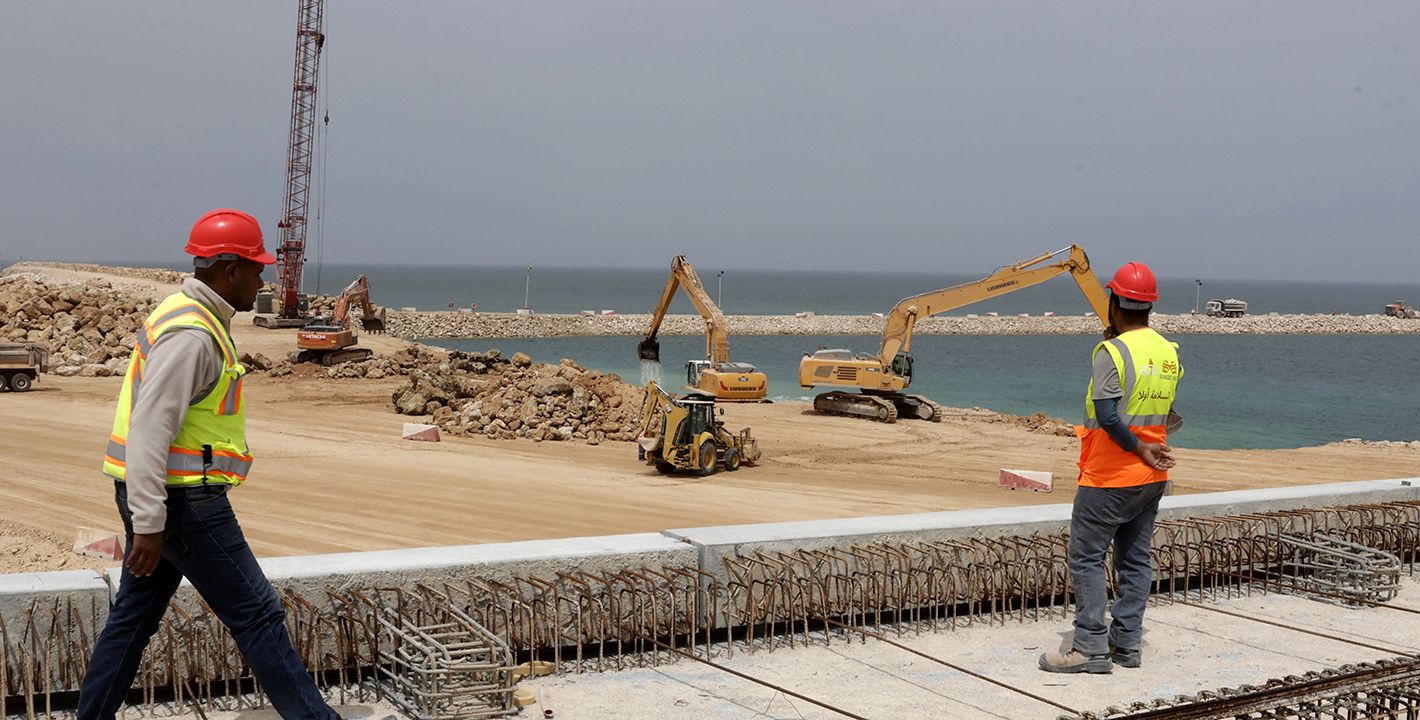
The Moroccan-Algerian rivalry is playing itself out in ties with Burkina Faso, Niger, and Mali.

Yasmine Zarhloule
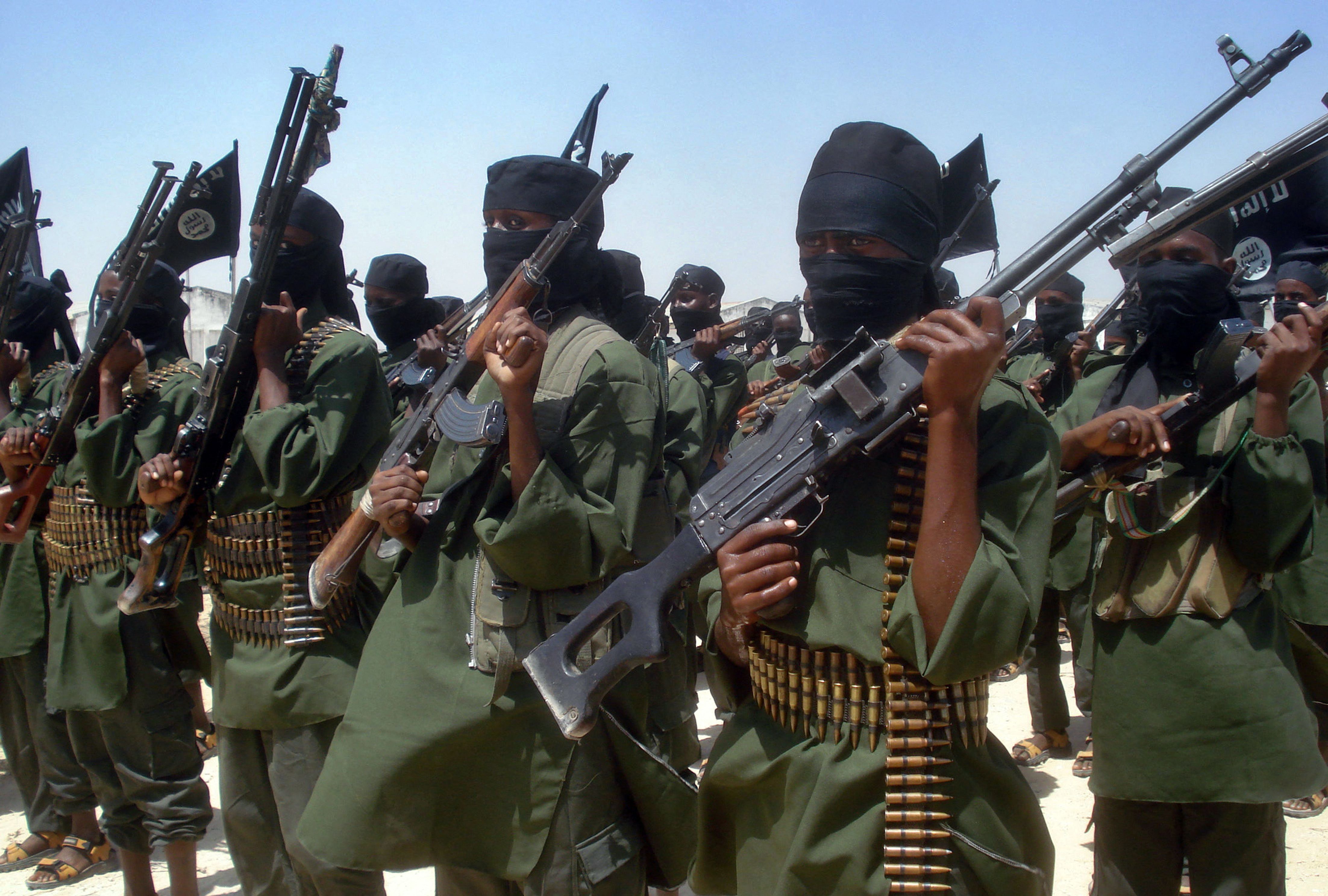
The Yemeni group, like its main backer Iran, has established contacts with al-Shabab and the Islamic State in Somalia, showing how pragmatism prevails when geopolitical goals demand it, and all sides share an enmity for the United States and Israel.
Ibrahim Jalal, Adnan al-Jabarni
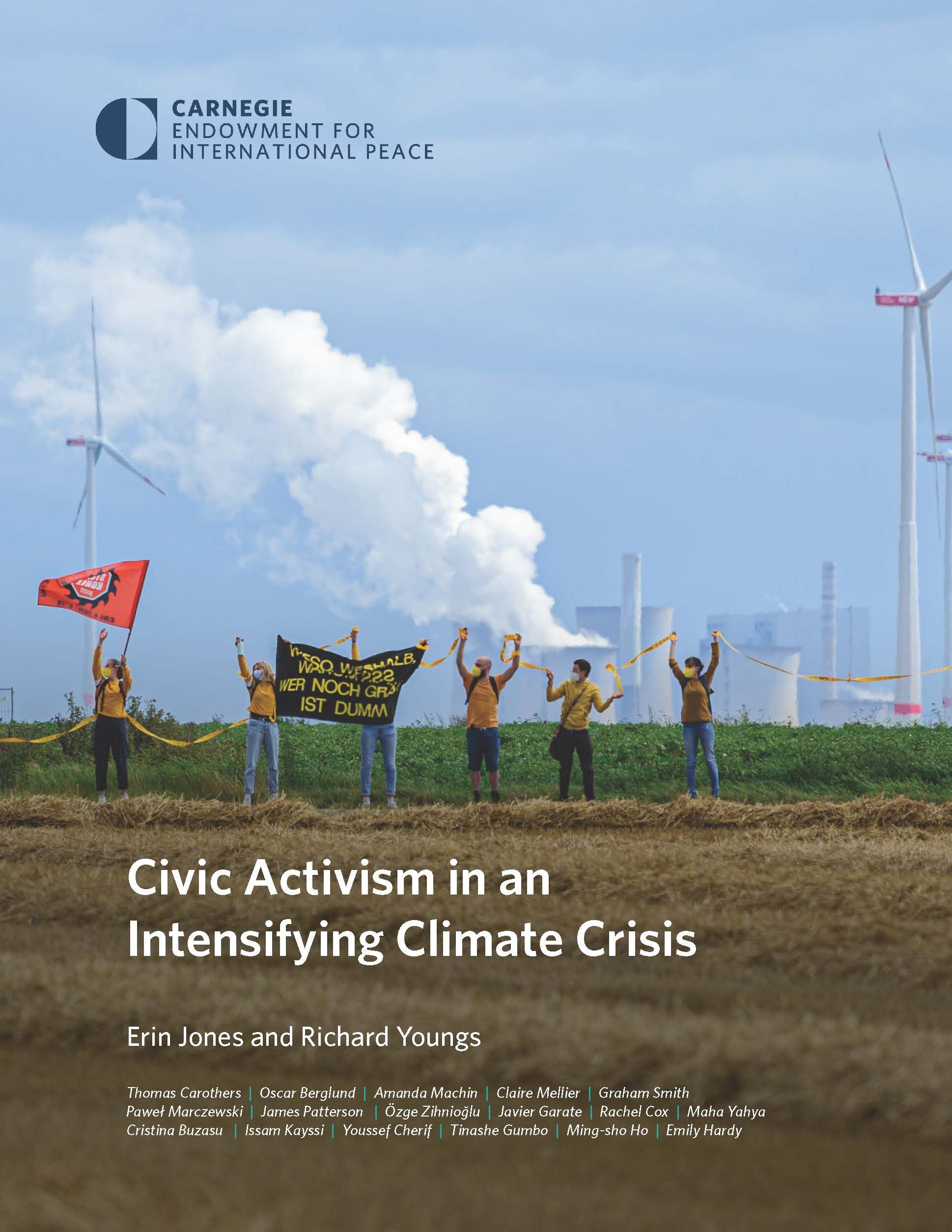
To address the deepening climate crisis, climate activism is employing a wider variety of tactics and aiming at a broader set of goals. In response, the movement faces stronger repression and civic backlash against climate action.

Erin Jones, Richard Youngs
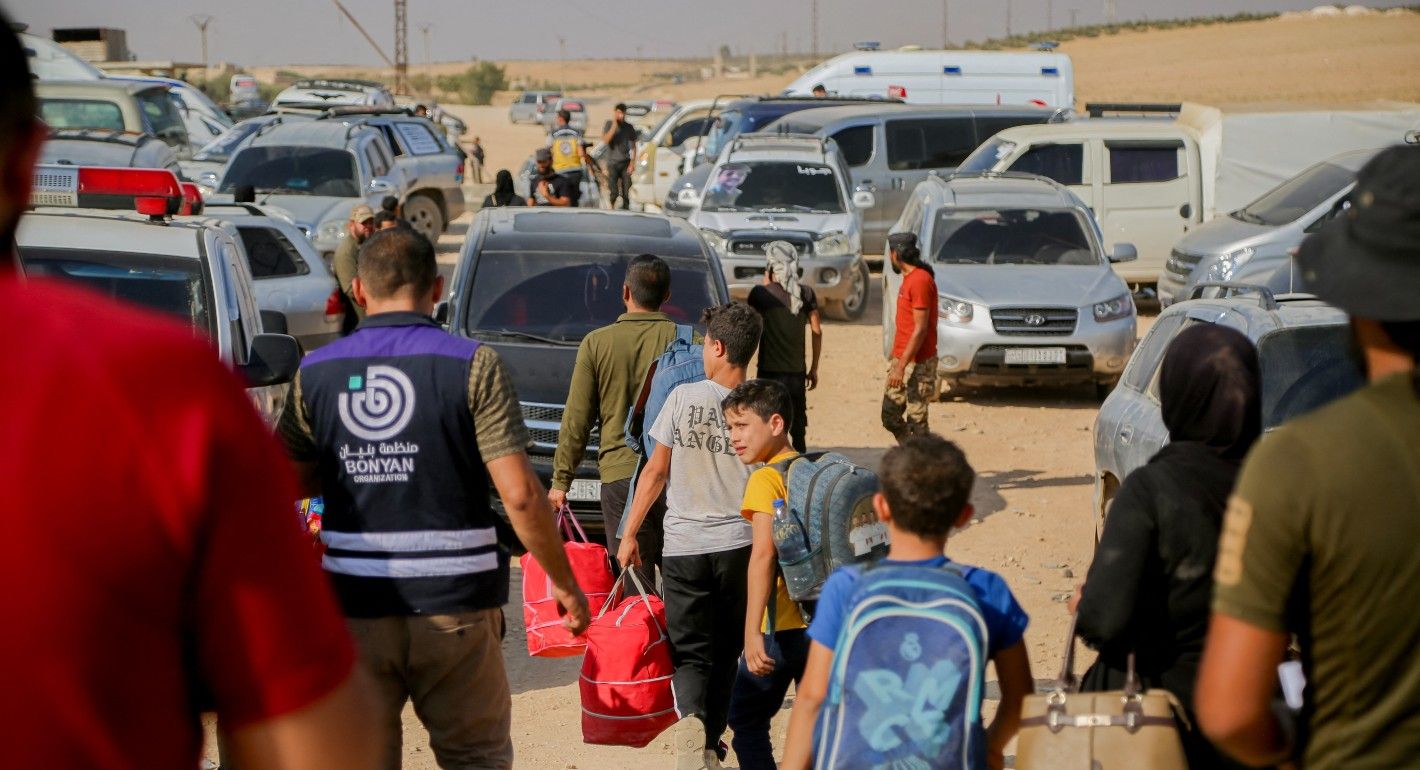
A humanitarian crisis in Lebanon deepens, and Syrian refugees face a perilous choice: remain in a war-torn environment or return to Syria where they risk encountering significant dangers and discrimination. There are significant challenges and risks to their search for safety in Syria.
Haid Haid
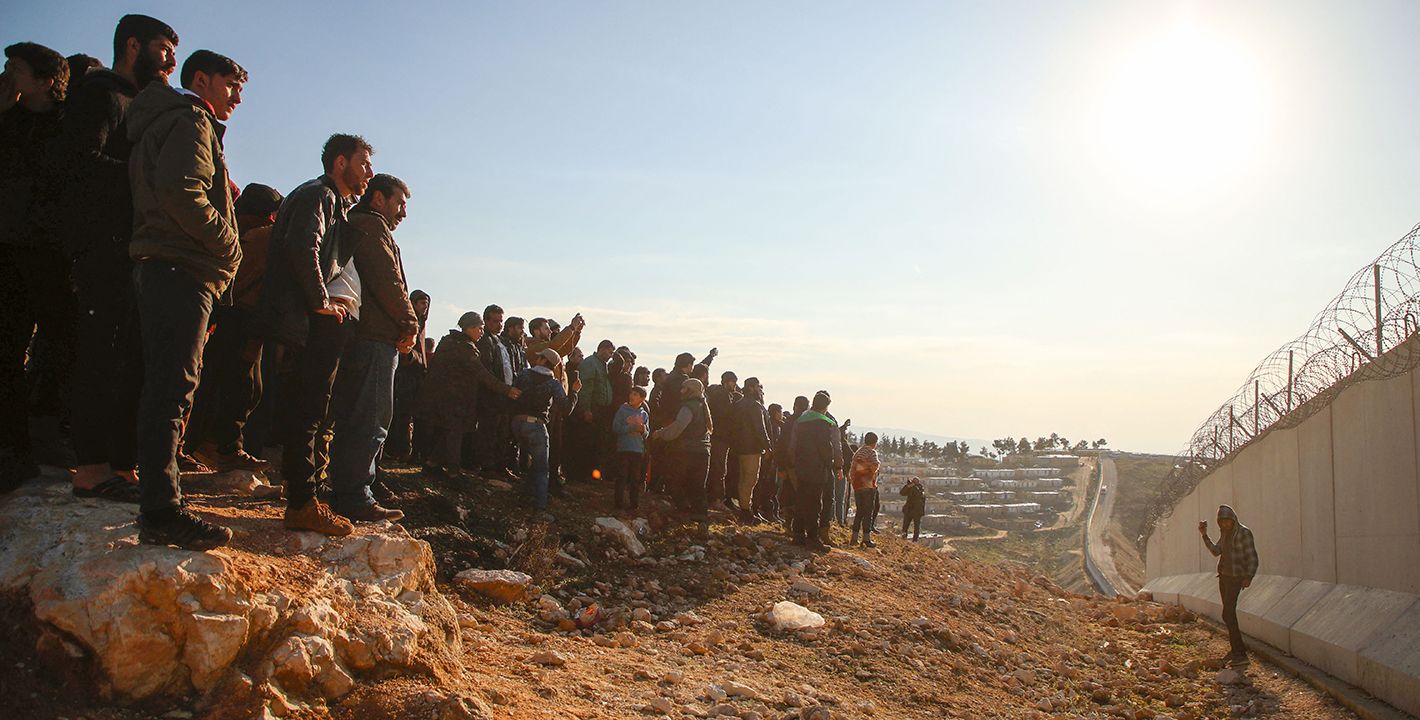
In Syria’s border regions, changes in demographics, economics, and security mean that an inter-Syrian peace process will require consensus among main regional powers that Syria must remain united, that no one side can be victorious, and that perennial instability threatens the region.

Kheder Khaddour, Armenak Tokmajyan