

Commentary
Andrei Kolesnikov
{
  "authors": [
    "Andrei Kolesnikov"
  ],
  "type": "commentary",
  "centerAffiliationAll": "",
  "centers": [
    "Carnegie Endowment for International Peace",
    "Carnegie Russia Eurasia Center"
  ],
  "collections": [
    "Inside Russia"
  ],
  "englishNewsletterAll": "",
  "nonEnglishNewsletterAll": "",
  "primaryCenter": "Carnegie Endowment for International Peace",
  "programAffiliation": "",
  "programs": [],
  "projects": [],
  "regions": [],
  "topics": [
    "Economy"
  ]
}
Source: Getty
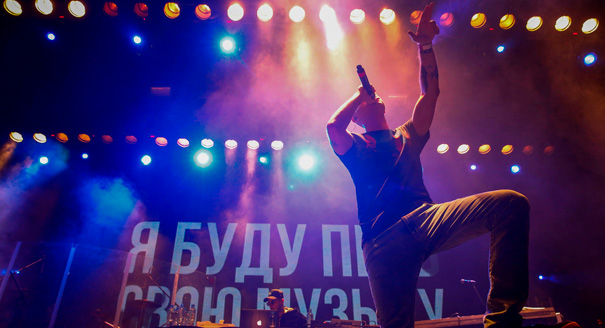
The Kremlin must win over Russia’s youth, but it does not speak their language, as its dialogue with rappers has demonstrated. Initiated amid a controversial crackdown on rap, the Kremlin’s outreach to rappers has seen it attempt to co-opt an entire youth subculture—to no avail. In the absence of a coherent policy on cultural figures, Russia’s federal agencies, including law enforcement bodies, will continue to prefer the stick to the carrot, impeding any efforts to make peace, let alone ally, with rappers and, by extension, their fans.
Source: Forbes.ru
The Kremlin has a survival plan that is both long-term and straightforward: control whomever possible, and buy everyone else’s loyalty. Such is its approach to dealing with Russia’s youth, the electorate of the future. Russia’s youth are familiar with carrot and stick alike, having been beaten by riot police, encouraged to denounce dissenters to the Prosecutor General, and entrapped in FSB sting operations, as well as enticed with the promise of social mobility and attempts at co-optation.
For example, the authorities are currently trying to co-opt rap, a youth subculture that might as well be an exotic tribe insofar as the Kremlin is concerned. Its efforts to engage with Russia’s youth in their own strange language—see the organization of a rap festival in Crimea by prominent state television anchor Dmitry Kiselev—have all fallen short. Indeed, it would be just as effective to rewrite United Russia’s charter as a rap song.
It’s not just that these social dialects—the “formal” language of officials and the “informal” language of youth—are largely incompatible, presenting, as they do, starkly different images of life in modern Russia. The problem also concerns stylistic differences. It was strange enough to see Paul McCartney perform before a young Vladimir Putin and Yuri Luzhkov, then the mayor of Moscow, in 2003; it would be completely ludicrous to have rappers perform alongside a military choir on Red Square in 2018.
Yet this is precisely what the presidential administration’s brightest minds understand as the successful co-option of a youth culture. The government has grown used to “nationalizing” civic initiatives and using them to further its own image, as it did with the Immortal Regiment.
Should the Kremlin fail to convert members of subcultures into supporters or use them as pawns in its game, it can always retire the carrot and bring out the stick, especially in the absence of a coherent policy on cultural figures, who are sometimes branded as extremists and accused of eroding Russia’s moral foundation. This leaves federal agencies, including law enforcement bodies, free to act as they see fit when dealing with cultural figures.
Indeed, there is no need to regularly ask the man at the top whether to use the carrot or the stick. Mistakes are possible, but it is always better to err on the side of strictness, “in accordance with the law,” than to permit something questionable—hence the disruption and cancellation of numerous rap concerts and the persecution of rappers across Russia since November. This, even though Kiselev and, as RT editor in chief Margarita Simonyan has said, “three people in the [presidential] administration” understand that bad-mouthing rap and other major subcultures merely boosts their popularity and causes them to take on an air of protest.
The regime’s steam roller cannot be turned back. It can only take a brief break, the engine still running. The Kremlin will continue trying to counter “foreign” subcultures in the same way that it battles opposition politicians and disrupts their rallies: causing electrical outages, “discovering” sewage leaks, organizing jam festivals, slashing tires, sending in Cossacks with whips and church banners, and, if need be, resorting to arrests.
Husky, a rapper targeted in the crackdown, may share the Kremlin’s view on Eastern Ukraine, but an alliance between the two is out of the question, largely because of stylistic differences. The Kremlin sees in the separatist republics an anti-Maidan and a counterrevolution, while the likes of Husky see in them an uprising of the common people against a government not too dissimilar to the one currently ruling Russia.
The government must decide whether to formulate a coherent policy on rap or continue to vacillate between seeking the support of rappers and their fans and wanting to punish them for “promoting sex, drugs, and violence,” in Putin’s words. Should the Kremlin attempt to bribe rappers into supporting the regime, it will succeed only in dividing the rap scene. The reality is that it cannot win over either Russia’s rappers or its youth with state-sponsored rap festivals alone.
Former Senior Fellow, Carnegie Russia Eurasia Center
Kolesnikov was a senior fellow at the Carnegie Russia Eurasia Center.
Recent Work
Andrei Kolesnikov
Andrei Kolesnikov
Carnegie does not take institutional positions on public policy issues; the views represented herein are those of the author(s) and do not necessarily reflect the views of Carnegie, its staff, or its trustees.

The armed forces champion a form of capitalism that is generating revenue, but its reliance on rent faces diminishing returns, leaving the country with massive sunk costs and deferred returns, deepening dependency on external borrowing.

Yezid Sayigh
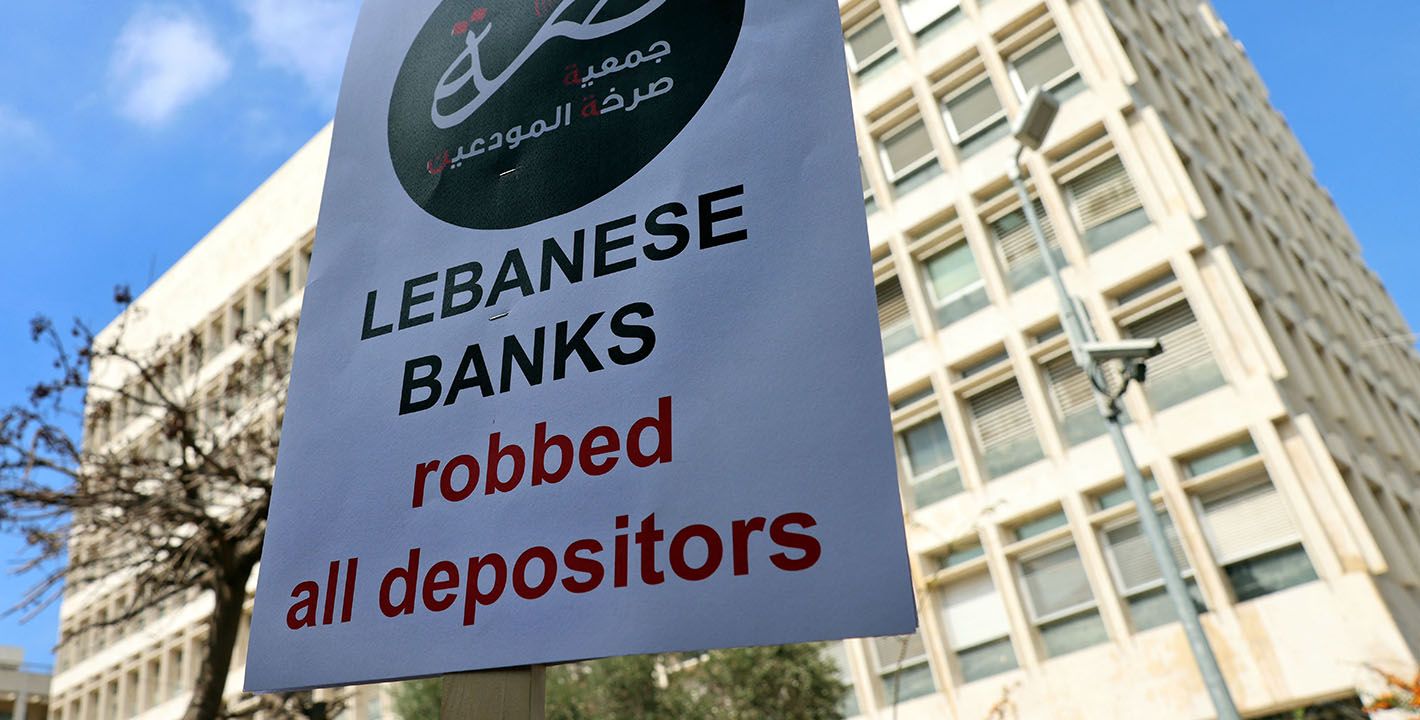
In an interview, Ishac Diwan looks at the merits and flaws in the draft legislation distributing losses from the financial collapse.

Michael Young

Mustaqbal Misr has expanded its portfolio with remarkable speed, but a lack of transparency remains.
Yezid Sayigh
Arab diaspora business communities in Egypt often mirror the same systemic challenges facing Egyptian businesses.

Nur Arafeh, Yezid Sayigh, Qaboul al-Absi, …
Largely characterized thus far by a single-minded focus on extractivism, Riyadh must commit to greater equitability in its approach to investment and development deals with Sudan, Ethiopia, and Eritrea.
Hesham Alghannam