

Commentary
Tatiana Stanovaya
{
  "authors": [
    "Tatiana Stanovaya"
  ],
  "type": "commentary",
  "centerAffiliationAll": "",
  "centers": [
    "Carnegie Endowment for International Peace",
    "Carnegie Russia Eurasia Center"
  ],
  "collections": [
    "Inside Russia"
  ],
  "englishNewsletterAll": "",
  "nonEnglishNewsletterAll": "",
  "primaryCenter": "Carnegie Endowment for International Peace",
  "programAffiliation": "",
  "programs": [],
  "projects": [],
  "regions": [],
  "topics": [
    "Economy"
  ]
}
Source: Getty
The powerful, monolithic, and robust state that Putin has been building since he came to power in 2000 is now devouring itself from within, demonstratively and ruthlessly locking up governors, ministers, and senators as though there were no Putin system or Putin appointees. The president, having focused too much of his attention on geopolitics, has opened the floodgates for the de-Putinization of the power vertical, creating a situation in which virtually no one except the head of state remains protected by the system’s legitimacy.
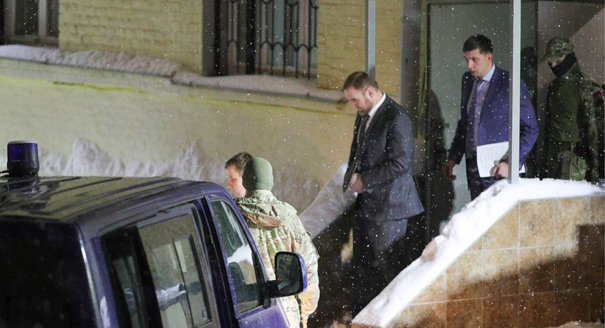
The recent arrest of Rauf Arashukov, a senator in the Federation Council—the upper chamber of the Russian parliament—on suspicion of ordering contract killings apparently came as a complete shock not only to the senator himself, but to all of Russia’s political establishment. The situation is reminiscent of the equally unexpected arrest on corruption charges of Economic Development Minister Alexei Ulyukayev in 2016 as he was leaving the headquarters of Rosneft after meeting with the oil giant’s CEO, Igor Sechin.
If in previous years the siloviki mostly moved against politicians on a regional scale, in the last couple of years, even federal figures have become vulnerable, and the value of parliamentary immunity has fallen sharply. The difference between the latest arrest and that of Ulyukayev is that this time the blow fell simultaneously on a multitude of political institutes, structures, and influence groups, while the real victor will be the Federal Security Service (FSB, a successor agency of the KGB).
The Ulyukayev case was of a political nature and was not only aimed at discrediting the minister himself, who had dared to oppose Rosneft’s intention of buying rival oil company Bashneft, but was also a way of revealing the bias and corruptibility of the liberals in the government (Ulyukayev was charged with accepting a bribe from Sechin). It was also a chance for the head of a major company—Sechin—to demonstrate his power and teach state officials a thing or two.
Arashukov, a senator representing Russia’s North Caucasus republic of Karachayevo-Cherkessia, can hardly be called a politically important figure, or even really a politician. He is a representative of the faceless class of businessmen who profit from their proximity to major corporations and the authorities, and who strive to obtain federal status to increase their stature. In the republics of Russia’s North Caucasus region, there is often a criminal element to such figures.
Arashukov’s arrest was a serious blow to many important parts of the Russian system of state governance. The first casualties were state gas behemoth Gazprom and one of its daughter companies, which, according to the investigation, sold gas to nonexistent consumers under a criminal scheme in which the senator was directly involved. Gazprom head Alexei Miller has cooperated fully with the investigation, but his reputation has taken a hammering. The country’s leadership will have serious questions for the head of the gas monopoly over what exactly he knew.
It’s also a major blow for Alexander Bastrykin, head of the Investigative Committee, whose position was already very shaky as a result of corruption scandals and his agency’s conflict with the FSB. Bastrykin’s formal presence at the arrest of Arashukov doesn’t disprove allegations that he was close to the latter, as alleged by the media.
Arashukov’s theatrical arrest in the middle of a Federation Council session has also torpedoed the position of the chamber’s speaker, Valentina Matvienko. The spectacle of exposing one of its members as a suspect in a whole range of serious crimes undermines the Federation Council as an institute—for which Matvienko bears political responsibility.
The arrest of Arashukov is in line with the political project to decriminalize the North Caucasus, and is a triumph for the federal siloviki, who are clearly trying to strengthen their exclusive role in the region and present themselves to the president as the only force capable of bringing order there.
What’s interesting is that the key role in the case was played by the leadership of the FSB, along with the presidential plenipotentiary in the North Caucasus federal district, Anatoly Matovnikov. The latter is a fascinating figure: a former first deputy commander of special operations within the Ministry of Defense’s General Staff who took part in operations in Ukraine and Syria, and who is now taking part in the investigation into Arashukov.
In other words, it was an operation carried out by the presidential administration together with the FSB, despite attempts by domestic policy managers to remove the siloviki from political affairs. Apparently, these attempts do not extend as far as the North Caucasus.
The siloviki have demonstrated their exclusive prerogative to drop in on suspects at any level of federal authority, even in the most protected places. All the political barriers to legal prosecution have suddenly turned out to be a house of cards.
This is all taking place against the backdrop of the authorities’ falling ratings, when even long-running problems are taking on a political tone. The gas debts of the North Caucasus have long been discussed. Back in 2013, Prime Minister Dmitry Medvedev said that the total owed by consumers there was 50 billion rubles: nearly half of the entire country’s debt. The response at the time from strongman Ramzan Kadyrov, head of the North Caucasus republic of Chechnya, was unambiguous: “To use that volume of gas, we would need another five republics with industrially developed factories like we used to have, and the pipelines would need to be three times bigger.”
Little has changed since then in the system of stealing gas. What has changed is the overall situation in Russia: falling ratings have politicized the issue of gas debts, which have started to provide federal siloviki with the corresponding political will.
In that respect, the gas strand of the Arashukov case plays right into the hands of Kadyrov. Though there was reportedly bad blood between him and the senator, it’s hard to imagine that Kadyrov—who has strained relations with the federal siloviki himself—could have been behind the case, but it certainly casts doubt on the methods used to calculate debts owed to Gazprom.
Naturally, the question arises of President Vladimir Putin’s role in all of this, other than as the person who gave the nod for the arrest. The head of state has long refrained from commenting on such goings-on, just as he did with Ulyukayev: he is in no hurry to take the credit for the successful operation.
This suggests that the details of the case against Arashukov and his arrest were largely the initiative of the siloviki themselves. In other words, the fight against corruption remains corporate, but not political, and that means that no large-scale bursts of activity can be expected in the near future.
The arrest of Arashukov has further increased the vulnerability of key institutes of political power, which are losing their sacred, elite status. Punches are thrown with no thought for collateral damage to the reputations of other state structures. The system is starting to expose itself by placing the interests of one of its parts above its interests as a whole.
The powerful, monolithic, and robust state that Putin has been building since he came to power in 2000 is now devouring itself from within, demonstratively and ruthlessly locking up governors, ministers, and senators as though there were no Putin system or Putin appointees. The president, having focused too much of his attention on geopolitics, has opened the floodgates for the de-Putinization of the power vertical, creating a situation in which virtually no one except the head of state remains protected by the system’s legitimacy.

Senior Fellow, Carnegie Russia Eurasia Center
Tatiana Stanovaya is a senior fellow at the Carnegie Russia Eurasia Center.
Recent Work
Tatiana Stanovaya
Tatiana Stanovaya
Carnegie does not take institutional positions on public policy issues; the views represented herein are those of the author(s) and do not necessarily reflect the views of Carnegie, its staff, or its trustees.

The armed forces champion a form of capitalism that is generating revenue, but its reliance on rent faces diminishing returns, leaving the country with massive sunk costs and deferred returns, deepening dependency on external borrowing.

Yezid Sayigh
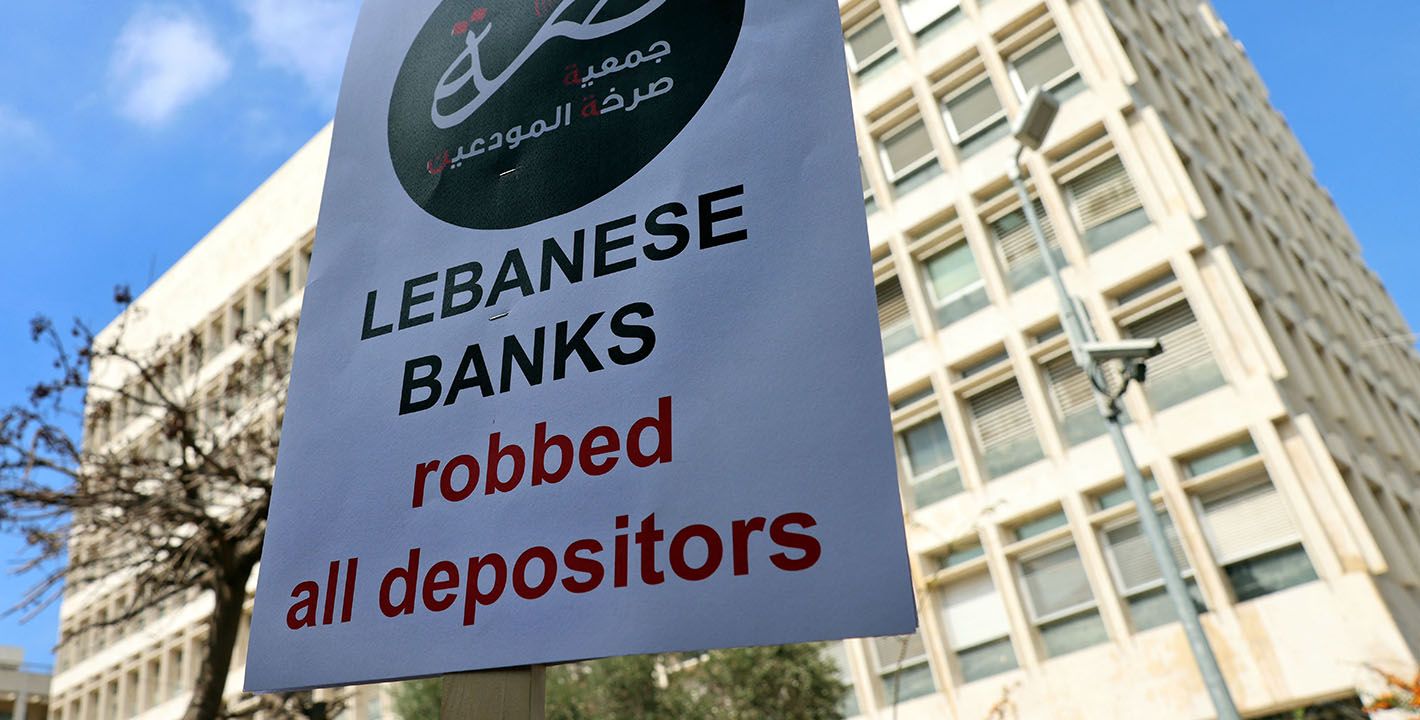
In an interview, Ishac Diwan looks at the merits and flaws in the draft legislation distributing losses from the financial collapse.

Michael Young
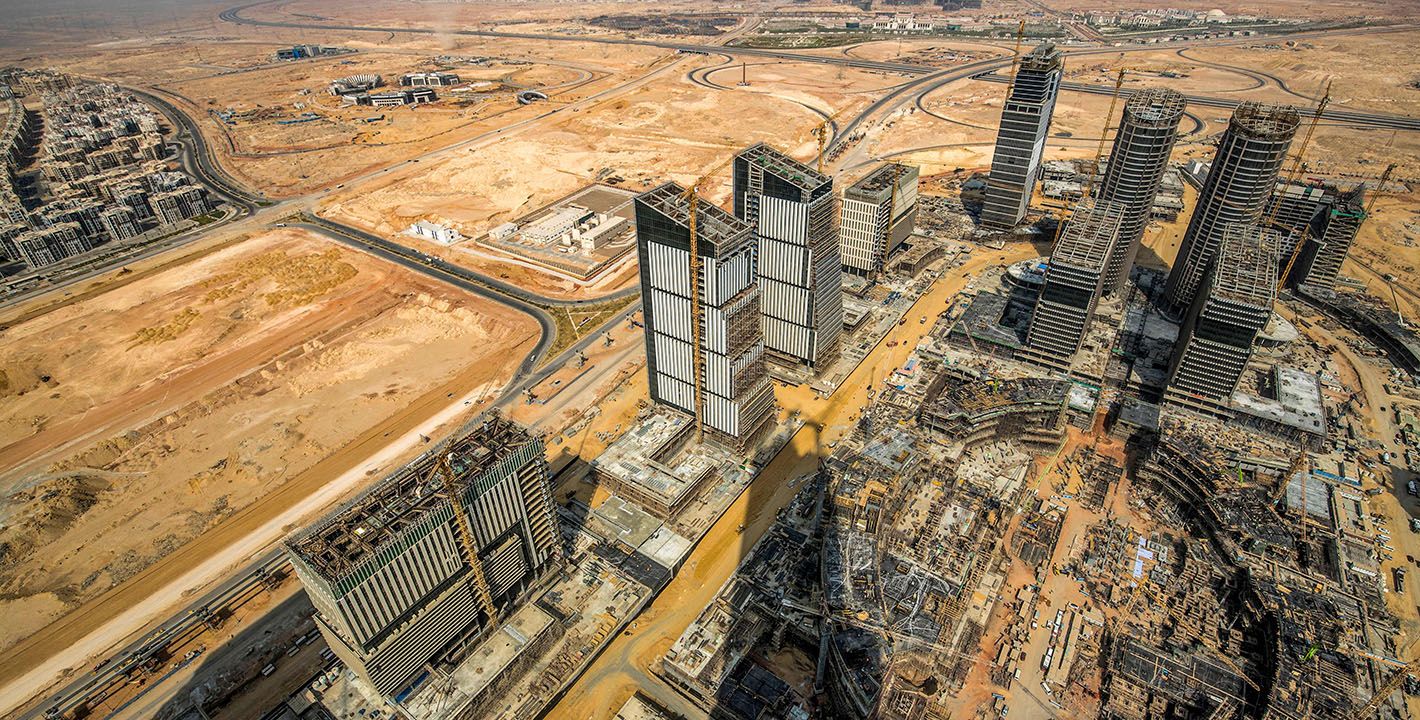
Mustaqbal Misr has expanded its portfolio with remarkable speed, but a lack of transparency remains.
Yezid Sayigh

Arab diaspora business communities in Egypt often mirror the same systemic challenges facing Egyptian businesses.

Nur Arafeh, Yezid Sayigh, Qaboul al-Absi, …
Largely characterized thus far by a single-minded focus on extractivism, Riyadh must commit to greater equitability in its approach to investment and development deals with Sudan, Ethiopia, and Eritrea.

Hesham Alghannam