

Commentary
In an interview, Rozina Ali discusses her new book on the rise and manifestations of Islamophobia in the United States.
Michael Young
{
  "authors": [
    "Sayuri Romei",
    "James L. Schoff",
    "Eric Heginbotham",
    "Koichi Isobe Isobe",
    "Masanori Nichi",
    "Kaleb Redden",
    "Nina Wagner"
  ],
  "type": "legacyinthemedia",
  "centerAffiliationAll": "",
  "centers": [
    "Carnegie Endowment for International Peace"
  ],
  "collections": [],
  "englishNewsletterAll": "",
  "nonEnglishNewsletterAll": "",
  "primaryCenter": "Carnegie Endowment for International Peace",
  "programAffiliation": "",
  "programs": [],
  "projects": [],
  "regions": [
    "North America",
    "United States",
    "East Asia",
    "Japan"
  ],
  "topics": []
}
Source: Getty
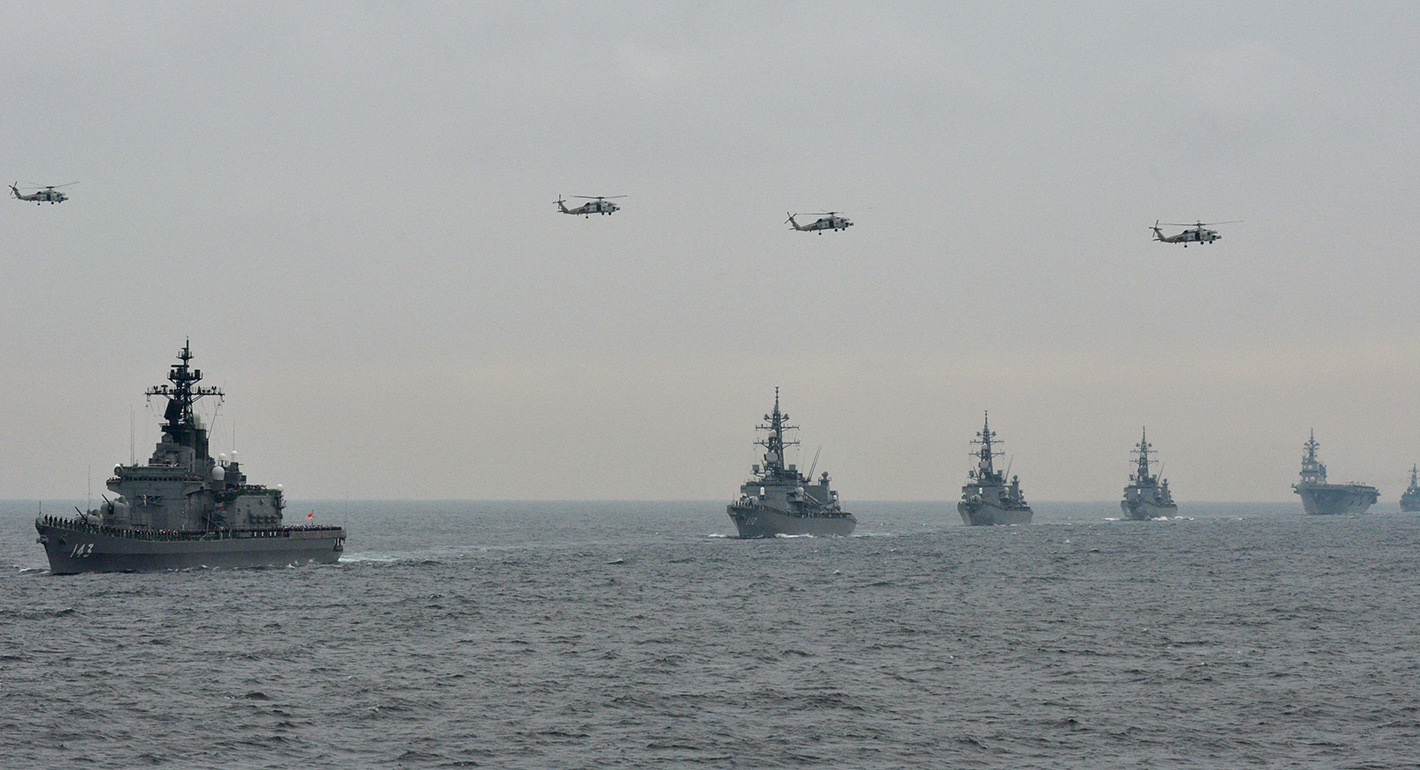
A bilateral group of Japanese and American scholars and former defense officials examine the policy implications of the new NDPG analyzing the global changes in the post-Cold War security environment.
Source: Sasakawa USA
The security environment in Northeast Asia has become increasingly complex since 2013, when Japan last revised its National Defense Program Guidelines (NDPG). The latest revision in December 2018 was the fourth time in the past fifteen years, and it represents a coda for significant defense policy changes that Prime Minister Shinzo Abe engineered during his tenure since 2012, such as liberalizing rules for military equipment exports, introducing a limited form of collective self-defense, and expanding the scope of possible SDF missions, among others.
In The New National Defense Program Guidelines: Aligning U.S. and Japanese Defense Strategies for the Third Post-Cold War Era, a bilateral group of Japanese and American scholars and former defense officials examine the policy implications of the new NDPG. In a collection of papers, they analyze the global changes in the post-Cold War security environment that stimulated adjustments to Japan’s defense policy, identify the common challenges faced by the two allies, and emphasize the opportunities for cooperation between the United States and Japan.
On January 11, 2019, in partnership with the Carnegie Endowment for International Peace, Sasakawa USA organized a symposium to discuss the NDPG. Panelists assessed Japan’s policy priorities and defense capabilities through the lens of its newly revised guidelines and Mid-Term Defense Plan. The discussion also considered implications for the U.S.-Japan alliance and regional security in the future. The New National Defense Program Guidelines: Aligning U.S. and Japanese Defense Strategies for the Third Post-Cold War Era brings together viewpoints shared at the symposium.
Sayuri Romei

Former Senior Fellow, Asia Program
James L. Schoff was a senior fellow in the Carnegie Asia Program. His research focuses on U.S.-Japan relations and regional engagement, Japanese technology innovation, and regional trade and security dynamics.
Eric Heginbotham
Koichi Isobe Isobe
Masanori Nichi
Kaleb Redden
Nina Wagner
Carnegie does not take institutional positions on public policy issues; the views represented herein are those of the author(s) and do not necessarily reflect the views of Carnegie, its staff, or its trustees.

In an interview, Rozina Ali discusses her new book on the rise and manifestations of Islamophobia in the United States.

Michael Young

In an interview, Ian Lustick and Eli Clifton discuss their new book on why a prominent ally has so much influence in America.
Michael Young

As the U.S. stumbles in its war with Iran, we are likely to see an acceleration of its disengagement from the region.
Michael Young

Middle Eastern states should welcome an accelerated U.S. disengagement from their region.
Michael Young

In an interview, former ambassador Charles Freeman assesses the Trump administration’s war against Iran.
Michael Young