

Commentary
Thomas de Waal
{
  "authors": [
    "Thomas de Waal"
  ],
  "type": "commentary",
  "centerAffiliationAll": "",
  "centers": [
    "Carnegie Endowment for International Peace",
    "Carnegie Europe",
    "Carnegie Russia Eurasia Center"
  ],
  "collections": [],
  "englishNewsletterAll": "",
  "nonEnglishNewsletterAll": "",
  "primaryCenter": "Carnegie Europe",
  "programAffiliation": "",
  "programs": [],
  "projects": [],
  "regions": [],
  "topics": [
    "Economy"
  ]
}
Source: Getty
The anger is not all about Russia. The Georgian Dream government is increasingly unpopular with large segments of the population
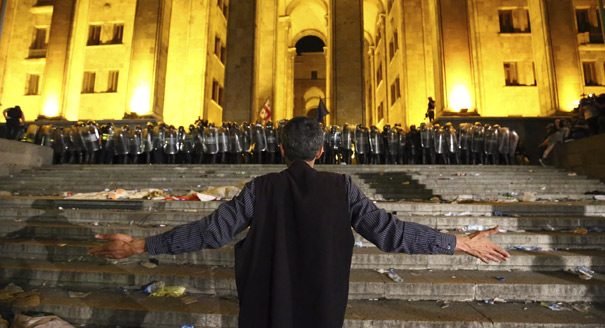
Georgia is an angry democracy. A recent Gallup survey found that 27 percent of Georgians said they felt angry “yesterday.” That was more than enough to bring large numbers of protestors out onto Rustaveli Avenue, Tbilisi’s traditional arena of protest on the night of June 20 — who were then met with extreme violence in the form of tear-gas and rubber bullets from the Georgian police.
Russians may be surprised at how quickly and violently events unfolded in the Georgian capital in response to the appearance of one Russian Duma deputy in the parliament. After all, on a people-to-people level, relations between the two countries have improved markedly since the 2008 war. One million Russian tourists visited Georgia last year.
This does not reckon with how feelings of anger and humiliation towards the Russian state have persisted since 2008. Had Sergei Gavrilov been an ordinary participant in the parliamentary session on June 20, he would probably have got away it. Yet the sight of him sitting in the speaker’s chair—“occupying” the speaker’s chair—in the parliament chamber was genuinely offensive to many Georgians.
The same Georgian can welcome a Russian tourist to his shop or vineyard but categorically reject any restoration of diplomatic relations with Moscow while Russian troops remain in Abkhazia and South Ossetia. In other words, improving people-to-people relations have stabilized the relationship between the two countries, but cannot resolve the deep political differences.
The anger is not all about Russia, however. The Georgian Dream government is increasingly unpopular with large segments of the population. The urban professional classes in Tbilisi resent the shadowy unaccountable figures who are running the country from behind the scenes. The popularity rating of the godfather of Georgian Dream, Bidzina Ivanishvili, has dropped sharply in recent times and the man who was hailed as a savior in 2012 is now the most “negatively viewed” politician in Georgia.
Ivanishvili is clever enough and Georgia has enough of a democratic culture to heed calls for change. So the man who should have been sitting in the speaker’s chair on June 20, Irakli Kobakhidze, has paid the price for this error of judgment and resigned. Never a popular politician, Kobakhidze is the ritual sacrifice Georgian Dream party makes for its mistakes.
Yet, the anger always spills out on the streets. There are some political forces in Georgia who want to force regime change from the street and are looking for pretexts to do it. Former president Mikheil Saakashvili urged his supporters to come out on the streets yesterday. He still has a loyal television channel Rustavi-2 to broadcast his message. A small number of these protestors made maximalist demands—the resignation of the whole government—and some of them tried to storm the parliament building.
This points to a persistent weakness of Georgia. Its politics is so polarized that there is no single leader who can speak for the whole nation. Formerly, in some circumstances, Patriarch Ilya II could fulfil that role, but the 86-year-old church leader now lacks the physical strength to do so. The big names—nominal head of state President Salome Zurabishvili, behind-the-scenes leader Bidzina Ivanishvili, former leader Saakashvili—are all engaged in aggressive rhetoric that divides and does not unite.
Instead, as before Georgians are looking to make change in political life from the street, from one specific street—Rustaveli Avenue. In 1956, 1978, 1989, 1991, 2003, 2007 and 2012 and again in the last two days, Rustaveli has been the stage-set for political drama, sometimes bloody, sometimes peaceful.
It is unfortunate that, despite having built democratic institutions, Georgia is still resolving its disputes in this way. A decade ago, the Georgian author Guram Odisharia wrote, “Without the emergence of a new political culture, without a harmonic relationship between the authorities and society, the people’s hopes will always be deceived and the main player in our country’s political history will be Rustaveli Avenue and not Georgian politicians.”
The same unfortunate scenario played out again in Tbilisi in the last two days.

Senior Fellow, Carnegie Europe
Thomas de Waal is a senior fellow at Carnegie Europe, specializing in Eastern Europe and the Caucasus.
Recent Work
Thomas de Waal
Thomas de Waal
Carnegie does not take institutional positions on public policy issues; the views represented herein are those of the author(s) and do not necessarily reflect the views of Carnegie, its staff, or its trustees.

The armed forces champion a form of capitalism that is generating revenue, but its reliance on rent faces diminishing returns, leaving the country with massive sunk costs and deferred returns, deepening dependency on external borrowing.

Yezid Sayigh
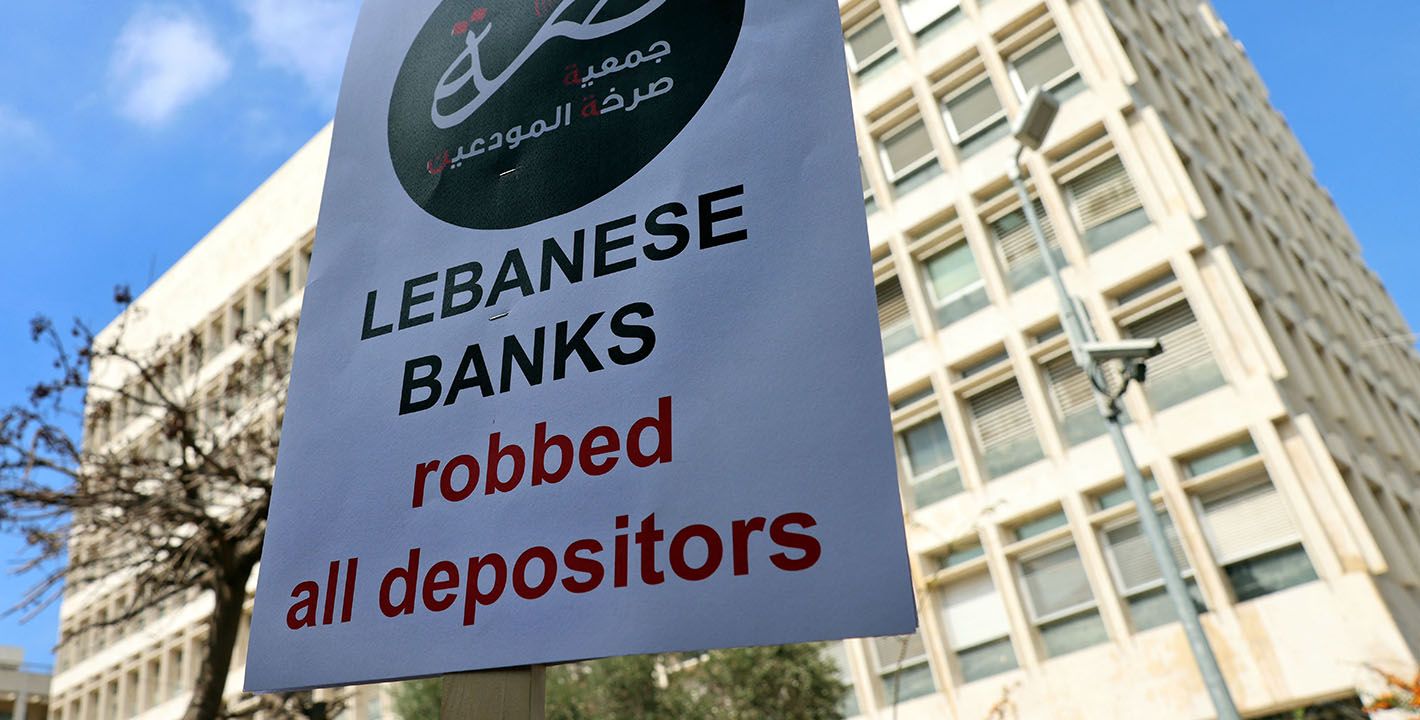
In an interview, Ishac Diwan looks at the merits and flaws in the draft legislation distributing losses from the financial collapse.

Michael Young
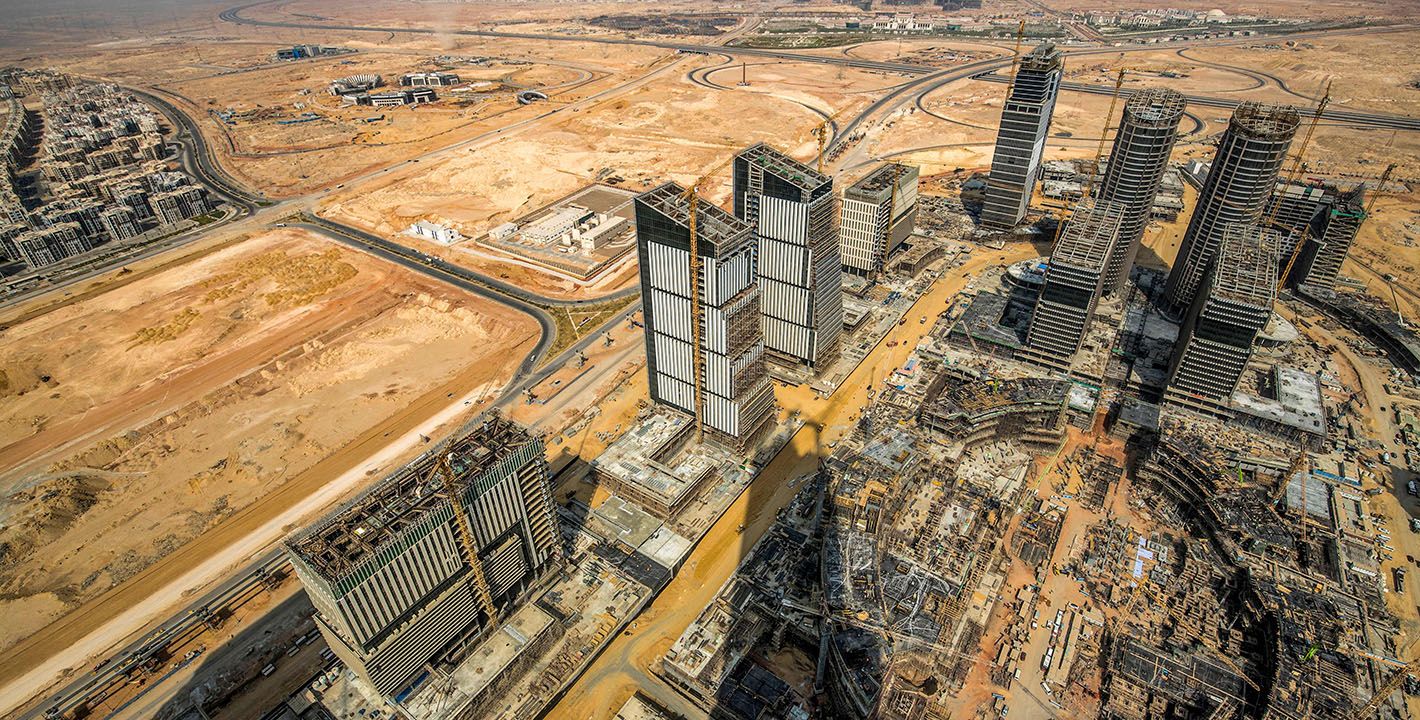
Mustaqbal Misr has expanded its portfolio with remarkable speed, but a lack of transparency remains.
Yezid Sayigh
Arab diaspora business communities in Egypt often mirror the same systemic challenges facing Egyptian businesses.
Nur Arafeh, Yezid Sayigh, Qaboul al-Absi, …
Largely characterized thus far by a single-minded focus on extractivism, Riyadh must commit to greater equitability in its approach to investment and development deals with Sudan, Ethiopia, and Eritrea.

Hesham Alghannam