

Commentary
Thomas de Waal
{
  "authors": [
    "Thomas de Waal"
  ],
  "type": "commentary",
  "blog": "Strategic Europe",
  "centerAffiliationAll": "",
  "centers": [
    "Carnegie Endowment for International Peace",
    "Carnegie Europe"
  ],
  "englishNewsletterAll": "",
  "nonEnglishNewsletterAll": "",
  "primaryCenter": "Carnegie Europe",
  "programAffiliation": "",
  "regions": [
    "Europe",
    "Eastern Europe"
  ],
  "topics": [
    "Political Reform",
    "Foreign Policy",
    "EU",
    "Trade"
  ]
}
Source: Getty
A prophetic Romanian novel about a town at the mouth of the Danube carries a warning: Europe decays when it stops looking outward. In a world of increasing insularity, the EU should heed its warning.
“Nostalgia is not a strategy,” said Canadian Prime Minister Mark Carney in a January 2026 speech at the World Economic Forum in Davos, which has been hailed across the world for its prescience.
Carney could have gone further. In politics, nostalgia is always dangerous. When liberal transatlanticists pine for the vanishing moment when the EU seemed to set the global norms, they forget just how much they depended on the benevolence of the United States.
From the vantage point of 2026, as the United States morphs into something strange and menacing, that time now appears like a period of historic luck. In the bigger story of European history, an era of peace, consensus, and incrementalism is more an exception than the rule.
Another variety of nostalgia—a far-right hankering for “European civilization” and an age of stronger, more homogenous nation-states—is even more misguided. No one should want to turn Europe’s clock back to the inferno of the first half of the twentieth century.
The resonantly-titled novel Europolis by Romanian author Eugeniu Botez, writing under the pseudonym Jean Bart, offers a strong remedy to the curse of nostalgia. First published in 1933, it was published in English for the first time in 2025, in a translation by Stephen Henighan.
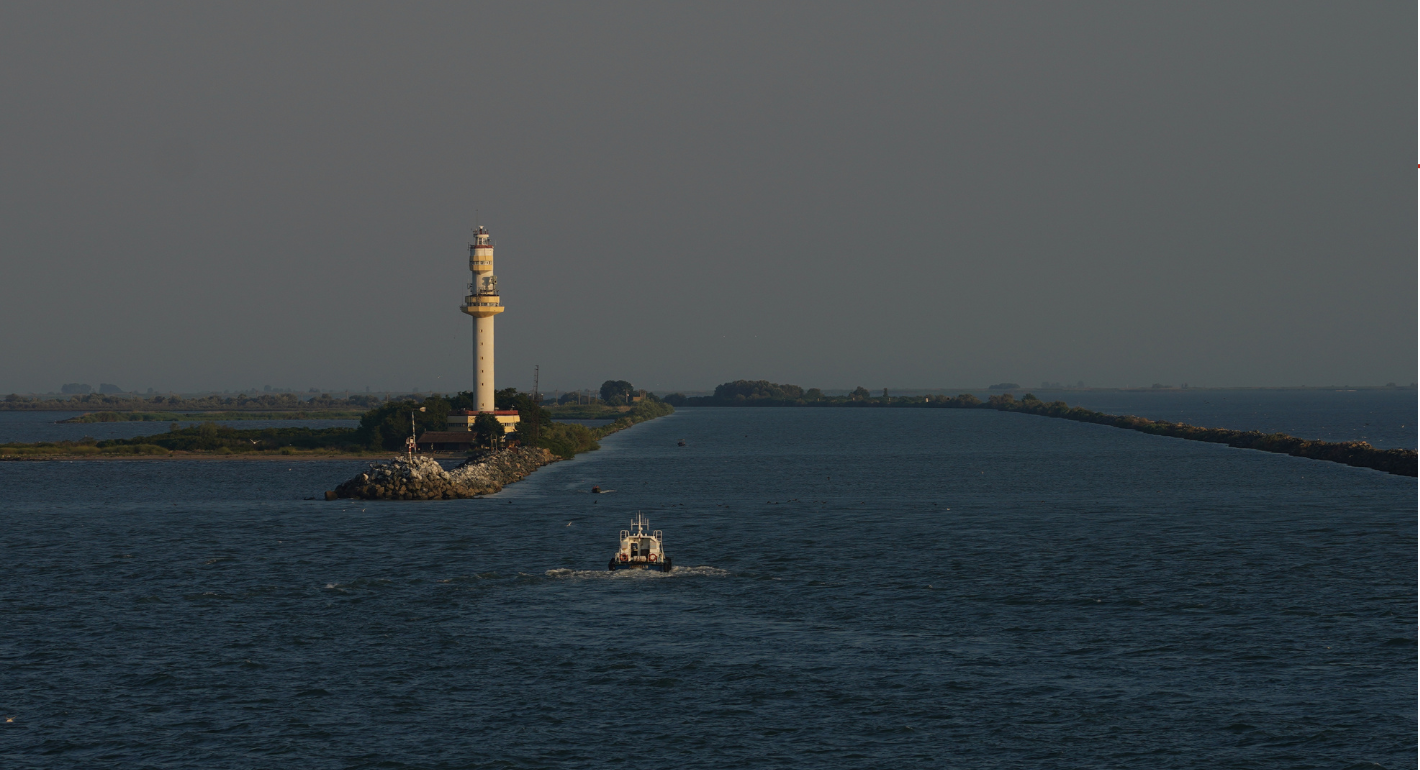
The book’s main character is the little Romanian port town of Sulina, situated where the Danube flows into the Black Sea. Botez knew the place intimately, having served as a navy officer and its port administrator. Set around 1930, his novel is a witty, vivid, and ultimately very dark portrait of its decline. It also tells a cautionary tale, eerily foretelling the current existential debates Europeans are grappling with.
In this tale, Sulina is a port where mainland Europe ends, a frontier town and trading hub, an unruly “mosaic of races” inhabited by Greek merchants, café owners, Romanian sailors, and Russian Old Believer fishermen, all of whom mix with European river bureaucrats. Smuggling is still rife. Ships still bring in wares from Marseilles and Alexandria. Armenians, Kurds, and Turks come to work there. But it is all ending.
In 2026, this portrait reads like a riposte to the notion of “civilizational decay” levelled at Europe in the recent U.S. National Security Strategy. Europolis turns that notion on its head, defining the continent not by what it guards inside its borders but by its cultural and mercantile exchange with the outside world: Eurasia and the Levant. Europe does not have clear boundaries, after all.
Formerly, Sulina was open and prosperous. If it is now decaying, it is because it is turning inward, not outward.
The author gives us biting social commentary on how the increasingly inward-looking town destroys the lives of two arrivals. A Greek named Nikola Marulis returns home from America with his black daughter. At first both are feted, spoiled, and courted because the locals assume Marulis is a millionaire coming to spend his fortune. When it transpires that he is actually penniless and the America is he is coming from is in fact a Caribbean penal colony, both father and daughter suffer prejudice and rejection.
The interwar period was the era when the vibrant cosmopolitan towns of the Black Sea—from Trabzon to Odessa to Sulina—were homogenized and absorbed into a world of hard frontiers and national flags. Then-British foreign secretary Lord Curzon called it the great “unmixing” of southeastern Europe: Its division into nation-states where a majority-national community sets the rules and minorities must get with the program. In Europolis, the local Greek consul embodies this new era. Having spent large sums on entertaining the supposed millionaire, he renounces Marulis when his destitution is discovered, on the excuse that he doesn’t possess a Greek passport.
The novel has another big personality: the grand, murky, and mysterious River Danube. Sulina was the operational base of the European Commission of the Danube, founded in 1856 to manage the navigation regime of Europe’s longest river. The ceaseless engineering work it carried out to dredge the Danube and keep traffic moving helped Sulina and wider Black Sea trade to flourish.
Some call the commission the earliest version of a pan-European organization, the precursor to the EU. In Botez’s novel it is depicted as being past its heyday, its well-groomed officers keeping an aloof distance from the rest of the town in villas with tennis courts and neat flower beds. The commissioners still perform their main job of keeping the great river dredged and flowing. But their days are numbered.
The novel’s ending, written as Botez himself was dying, is gloomy: “Sulina was dying. The mouth of the Danube was clogging up […] What had been water was now land.”
In the real world, much worse was to come. The Danube commission was nationalized by Romania, the Second World War broke out, and then the whole delta disappeared behind the Iron Curtain as the Black Sea became a de facto Soviet lake.
Since the 2000s, what we might call the “remixing” project of the EU has revived some of the old mercantile connections, but Sulina and other Black Sea ports will never recover their former dynamism. Botez’s warnings remains valid. Europolis is not just a story of where Europe ends, but of how it ends.
Subscribe to Strategic Europe, delivered every Tuesday and Thursday!

Senior Fellow, Carnegie Europe
Thomas de Waal is a senior fellow at Carnegie Europe, specializing in Eastern Europe and the Caucasus.
Recent Work
Thomas de Waal
Thomas de Waal
Carnegie does not take institutional positions on public policy issues; the views represented herein are those of the author(s) and do not necessarily reflect the views of Carnegie, its staff, or its trustees.

While the EU and European governments are embracing the much-lauded middle-power moment, this entails three difficult conundrums.

Richard Youngs

Much has been said of the changes Brussels is trying to make to the EU enlargement process. Here’s why gradual integration might—or might not—be the answer.

Dimitar Bechev

The European Commissioner for Trade is headed to China. But after President Xi’s bridge-building visit to Washington, can a more isolated EU overcome Beijing’s stranglehold on critical raw materials? Who will blink first?

Rym Momtaz, ed.

The domestic impacts of how long it is taking to end the war in Ukraine have pushed the French electorate to the political extremes and compromised the country’s diplomatic capacity.
Rym Momtaz

Before the next wave of EU enlargement takes place, the union needs to grapple with thorny questions of how power is distributed among its members.


Emil Sondaj Hansen, Ditte Brasso Sørensen