

Commentary
Alexander Gabuev
{
  "authors": [
    "Alexander Gabuev"
  ],
  "type": "commentary",
  "centerAffiliationAll": "",
  "centers": [
    "Carnegie Endowment for International Peace",
    "Carnegie Russia Eurasia Center"
  ],
  "collections": [
    "Pax Sinica"
  ],
  "englishNewsletterAll": "",
  "nonEnglishNewsletterAll": "",
  "primaryCenter": "Carnegie Endowment for International Peace",
  "programAffiliation": "",
  "programs": [],
  "projects": [],
  "regions": [],
  "topics": []
}
Source: Getty
With sharp twists and turns reminiscent of the jagged angles of Russian mountain ranges, China’s image in Russia has drastically changed since the founding of the People’s Republic of China seventy years ago.
To Russia, China has been many different countries over the past seventy years. In the 1950s, China was a junior partner and a treaty ally. From 1960 until the 1980s, it was a strategic adversary, and then, during the 1990s, a distant and distrusted neighbor. In the 21st century, China has become a key strategic global partner to Russia, in an increasingly asymmetrical relationship.
Soviet Russia was an important outside contributor to the establishment of the People’s Republic of China. The Kremlin’s help to Mao Zedong was not an act of idealism, but a well-calculated move in the Cold War context. As China healed from the wounds of a devastating civil war, the Soviet Union viewed it as a junior partner in a global family of communist regimes, led by Moscow. It made an enormous contribution to China’s industrial development and the training of its new elite. Both countries concluded a formal alliance, and fought jointly against the United States in the Korean War.
However, after the death of Stalin, the relationship between Moscow and Beijing deteriorated. This split led to decades of confrontation, culminating in a 1969 border conflict. For several decades, China turned into a major security threat on Russia’s eastern flank.
Towards the end of the 1980s, Mikhail Gorbachev and Deng Xiaoping realized that their fruitless confrontation was draining both countries’ resources, and started to normalize relations. This process culminated at the turn of 21st century, when Vladimir Putin signed a friendship treaty with China, and both sides resolved their border dispute. China became an important ally, but still not a major partner for the Kremlin.
Another bend happened in 2014, following Russia’s takeover of Crimea and the EU and U.S. sanctions that followed. Fueled by Russia’s schism with the West, Beijing has since become Moscow’s single most important foreign partner in all areas, from trade and investment to security. China now has the upper hand in what has become an increasingly asymmetrical axis, where Russia is the needier partner.
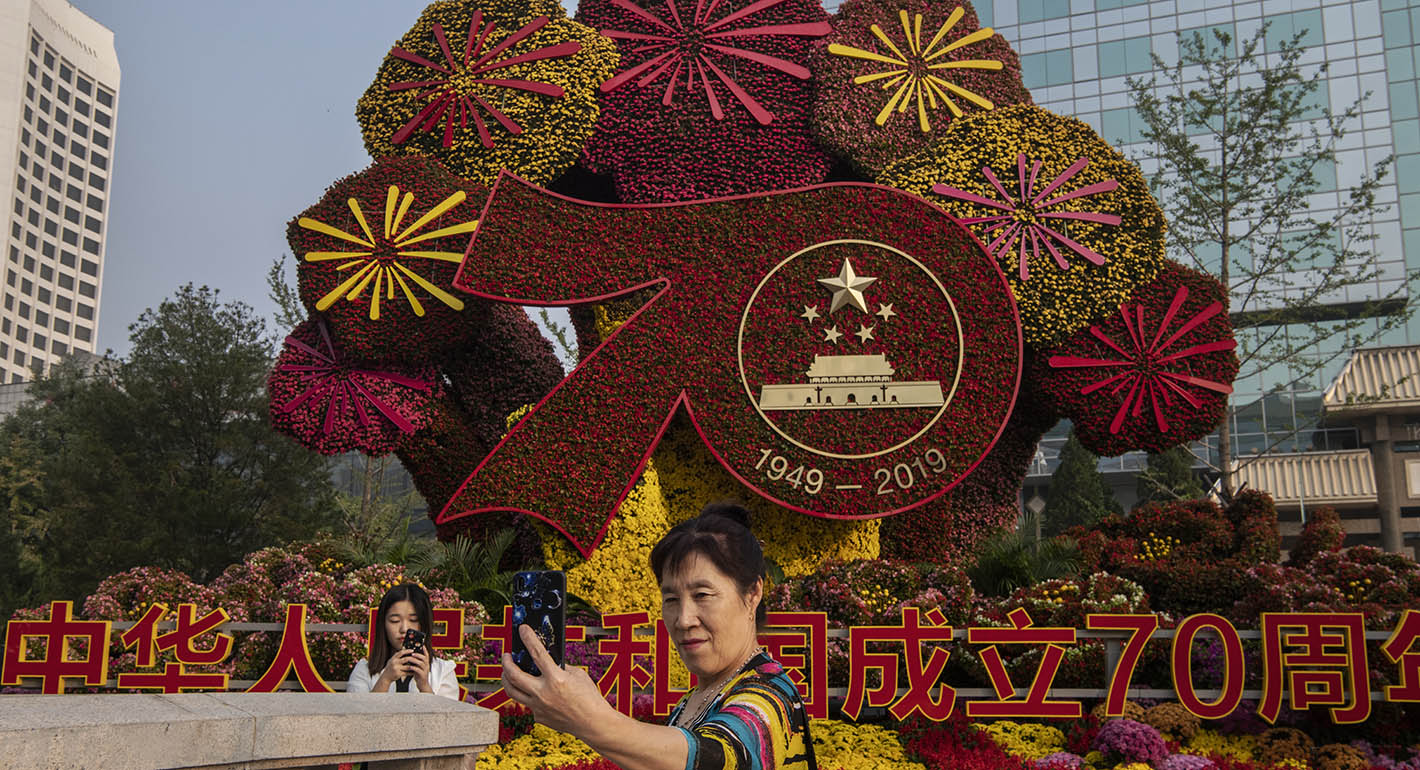
This quick take is part of a series authored by scholars from across the Carnegie Endowment’s global network, in advance of the seventieth anniversary of the founding of the People’s Republic of China.

Director, Carnegie Russia Eurasia Center
Alexander Gabuev is director of the Carnegie Russia Eurasia Center. Gabuev’s research is focused on Russian foreign policy with particular focus on the impact of the war in Ukraine and the Sino-Russia relationship. Since joining Carnegie in 2015, Gabuev has contributed commentary and analysis to a wide range of publications, including the Financial Times, the New York Times, the Wall Street Journal, and the Economist.
Recent Work
Alexander Gabuev
Alexander Gabuev
Carnegie does not take institutional positions on public policy issues; the views represented herein are those of the author(s) and do not necessarily reflect the views of Carnegie, its staff, or its trustees.