

Commentary
The accord represents a pivotal moment in the region to avert a security vacuum in the Gulf.
Azeema Cheema, Mohanad Hage Ali
{
  "authors": [
    "Harith Hasan",
    "Harout Akdedian"
  ],
  "type": "other",
  "centerAffiliationAll": "dc",
  "centers": [
    "Carnegie Endowment for International Peace",
    "Malcolm H. Kerr Carnegie Middle East Center"
  ],
  "collections": [],
  "englishNewsletterAll": "menaTransitions",
  "nonEnglishNewsletterAll": "",
  "primaryCenter": "Malcolm H. Kerr Carnegie Middle East Center",
  "programAffiliation": "MEP",
  "programs": [
    "Middle East"
  ],
  "projects": [],
  "regions": [
    "Levant",
    "Syria",
    "Iraq",
    "Middle East"
  ],
  "topics": [
    "Political Reform"
  ]
}
Source: Getty
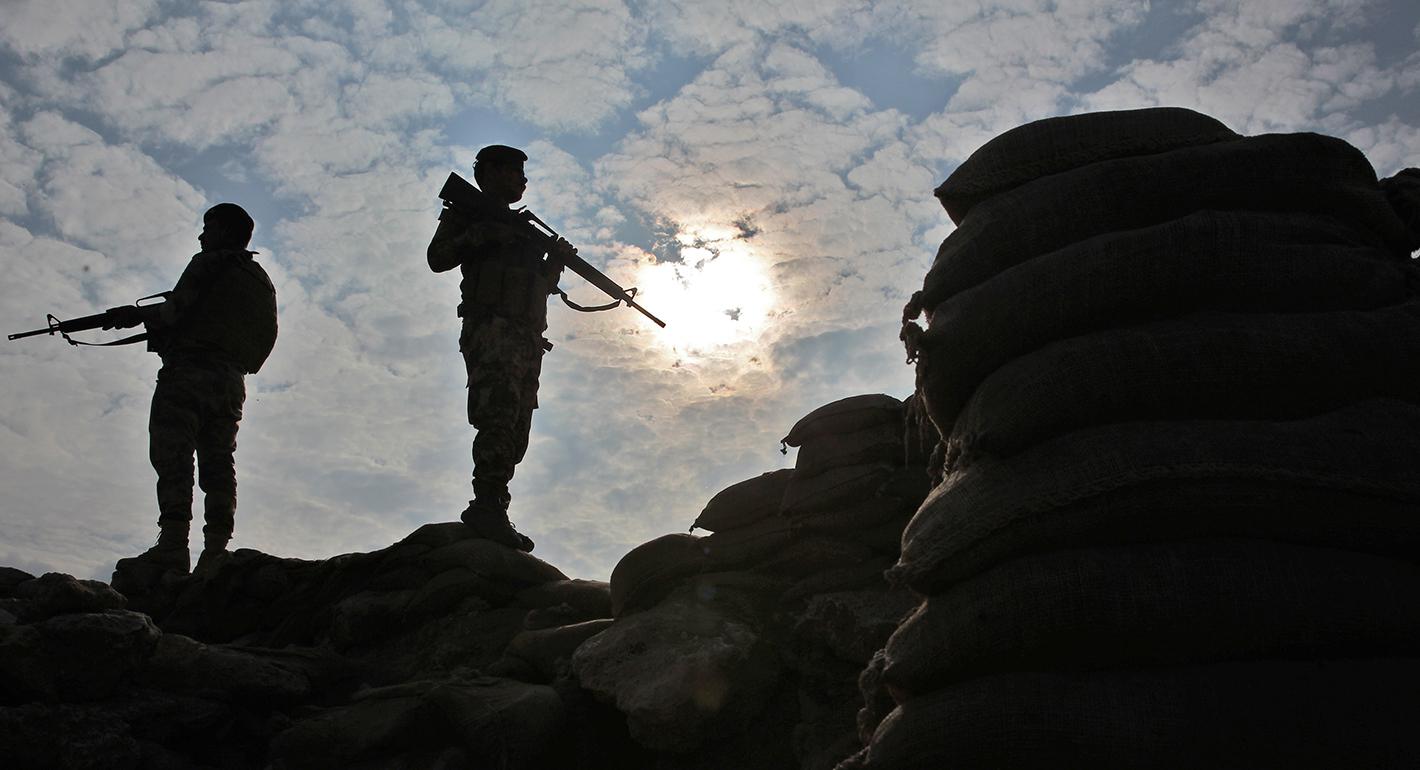
Since 2011, borderlands in the MENA region transformed into considerable sites of contested power by a plethora of actors.
Source: Elsevier's Political Geography journal
Circumstances in the MENA region invite us to redirect our attention to geographic areas that emerged as primary sites of power-contest. This paper looks into emerging trends in the unraveling of bounded sovereign territoriality in borderlands by examining the contest over military, economic, and socio-political spaces in the wake of the devolution of the monopoly of violence and the rise of a multitude of new and old actors to local prominence. Since 2011, borderlands in the MENA region transformed into considerable sites of contested power by a plethora of actors. The paper points out emergent patterns of deterritorialization and reterritorialization of power in its various forms and manifestations in borderlands. The dynamics of ‘place and performance’ in the borderlands of Syria and Iraq showcase the variety of ways borders were instrumentalized under circumstances of state atrophy and their destructive tendencies for borderlands.
This paper was originally published in Elsevier's Political Geography journal.

Associate researcher at the Arab Center for Research and Policy Studies.
Harith Hasan is an associate researcher at the Arab Center for Research and Policy Studies.
Harout Akdedian
Carnegie does not take institutional positions on public policy issues; the views represented herein are those of the author(s) and do not necessarily reflect the views of Carnegie, its staff, or its trustees.

The accord represents a pivotal moment in the region to avert a security vacuum in the Gulf.


Azeema Cheema, Mohanad Hage Ali

In an interview, Jason Burke discusses his sweeping account of the “revolutionists” who so shaped the 1970s and early 1980s.

Michael Young
In an interview, Sohaib Jawhar analyzes the profound changes in the ties between the neighboring countries.
Michael Young
Following its deal with the United States, Iran may act against Iraq-based dissidents.
Wladimir van Wilgenburg
There is a disturbing structural parallel between the old global energy economy and the new green transition.

Angie Omar