

Paper
Raluca Csernatoni, Alicia Wanless
{
  "authors": [
    "Alicia Wanless"
  ],
  "type": "commentary",
  "centerAffiliationAll": "dc",
  "centers": [
    "Carnegie Endowment for International Peace"
  ],
  "collections": [
    "Coronavirus"
  ],
  "englishNewsletterAll": "ctw",
  "nonEnglishNewsletterAll": "",
  "primaryCenter": "Carnegie Endowment for International Peace",
  "programAffiliation": "TIA",
  "programs": [
    "Technology and International Affairs"
  ],
  "projects": [
    "Partnership for Countering Influence Operations"
  ],
  "regions": [
    "Iran"
  ],
  "topics": [
    "Technology"
  ]
}
Source: Getty
The world’s influence operators are exploiting fear and uncertainty around the coronavirus. It will take discipline and discernment to dodge their traps.
There’s no time like a crisis for propaganda, so it is no surprise that states and other influence operators are seizing the new coronavirus outbreak to better position themselves at home and abroad.
Crises simultaneously create information voids and a tremendous public hunger for information. This combination opens the door for savvy propagandists to spin narratives much more easily. In the absence of widely accepted explanations, propagandists are free to make up whatever they like—at least until evidence emerges that proves otherwise. And even then, there is no guarantee of correction. For example, the virus that caused a pandemic in 1918 is still known as the “Spanish flu,” although it likely did not originate in Spain.
Influence operators prey on people’s fears of ambiguity. The same part of the brain that processes fear is also activated in ambiguous situations, driving people to seek information to address the discomfort of uncertainty. In the absence of quality information, any answers satisfy, including rumors and disinformation.
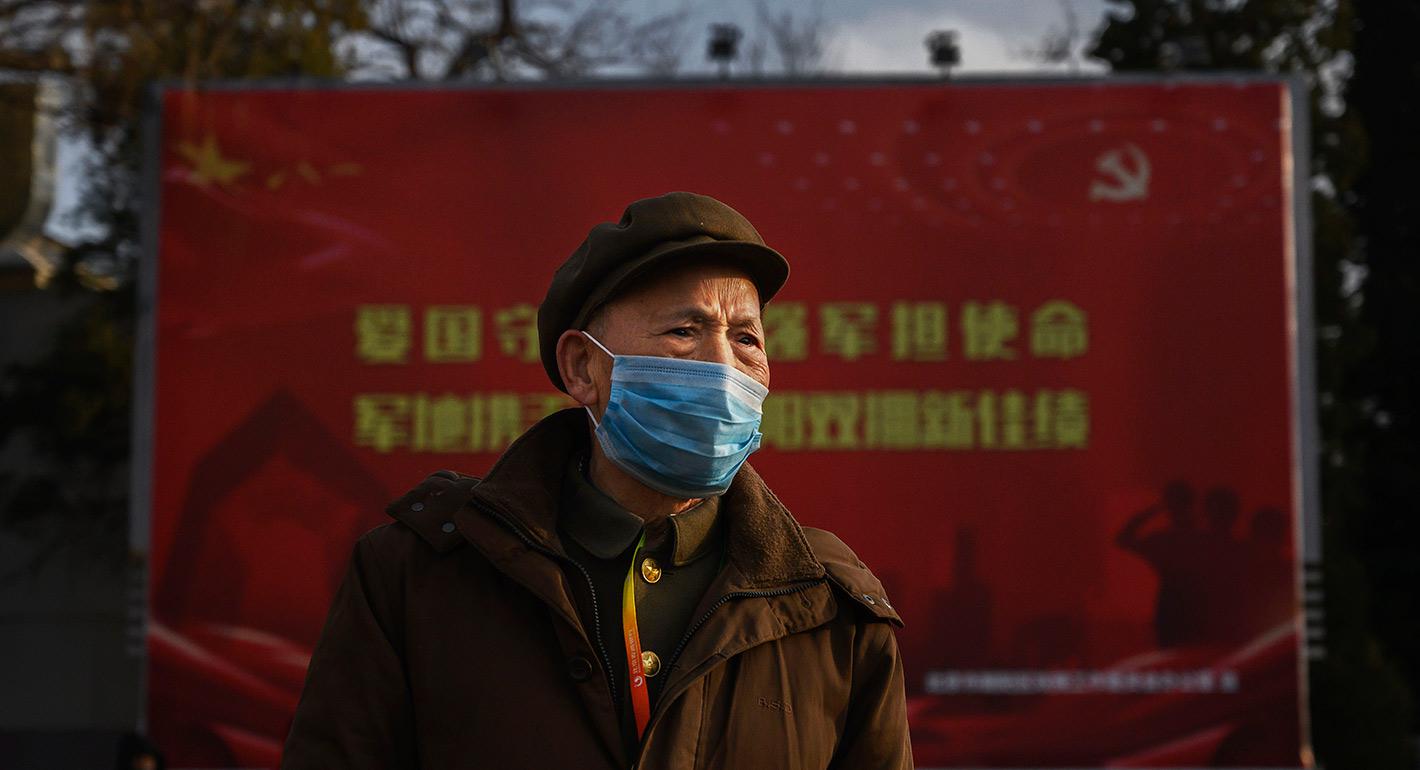
Chinese and U.S. officials have most visibly made claims of dubious veracity related to the coronavirus. A Chinese diplomat speculated that the United States caused the pandemic through infected personnel participating in the 2019 Military World Games in Wuhan, China, the epicenter of the outbreak. Similarly, various U.S. politicians have floated the notion that the virus is a Chinese bioweapon gone awry.
For some influence operators, the pandemic presents a chance to position their governance models as more successful than others in dealing with crises. China, for instance, has cast its virus containment efforts as an early success and positioned itself as a world leader by providing aid to hard-hit Italy. Russia seized the opportunity to validate its worldview—especially, as Carnegie scholar Dmitri Trenin writes, its “wisdom of self-reliance in a globalized world driven by individual countries’ self-interests.”
Some states have reasserted their own authority. While more centralized authority might enable swift responses, however, greater power comes with greater responsibility. The unique characteristics of democracy may appear to complicate matters, but all states face public relations challenges in their response to crisis. Even strong states that fail to protect their populations may not be able to survive by falling back on propagandistic schadenfreude.
Terrorists have found their own uses for coronavirus propaganda, particularly to project legitimacy. The self-proclaimed Islamic State, for example, has issued travel advisories to further its pretensions of statehood. Other leaders desperately turn to propaganda to save themselves from their failure to prepare for crisis. Take President Donald Trump’s referring to the infectious agent behind the current pandemic as the “Chinese virus”—an effort to shift criticism of U.S. response efforts toward those of China.
The use of propaganda by non-state actors creates another category of risk. In the United States, examples abound of public figures using the coronavirus for domestic political purposes. On Twitter, the former sheriff of Milwaukee County David Clarke contradicted advice from public health officials urging people to stay home, claiming those orders were a form of “government control” and “an exploitation of crisis.” Clarke further alleged the pandemic was an “orchestrated attempt to destroy capitalism.” Twitter deleted those tweets for violating its policies against encouraging self-harm. If the crisis itself is politicized by domestic actors, the mixed messaging citizens receive will increase uncertainty and fear and put them in direct danger.
Propagandists will no doubt continue using this crisis to compete for power and influence. Rather than being swept along by the current, citizens need to steer a careful course by being more discerning in their search for facts and taking guidance from the fact checkers, academics, and impartial experts striving to provide reliable information. Social media and political intake around the coronavirus will have to be tempered with information from clearly nonpolitical sources, such as the World Health Organization. The public should heed health officials and their directives—after all, they and their colleagues are on the front line of the pandemic, and public carelessness puts them at risk.
Above all else, fear of the unknown cannot be allowed to benefit propagandists seeking financial gain or societal chaos. While the coronavirus may be temporarily suspending physical freedoms, citizens must continue the search for reliable information, empowering themselves to resist unjustified fear and take responsible action.

Senior Fellow, Technology and International Affairs, Director, Information Environment Project
Alicia is the director of the Information Environment Project and the author of The Information Animal: Humans, Technology and the Competition for Reality. Alicia was a technical advisor to the Aspen Institute’s Commission on Information Disorder and is a founding member of its Global Cybersecurity Group.
Recent Work

Raluca Csernatoni, Alicia Wanless



Sophia Besch, Steve Feldstein, Stewart Patrick, …
Carnegie does not take institutional positions on public policy issues; the views represented herein are those of the author(s) and do not necessarily reflect the views of Carnegie, its staff, or its trustees.

As the U.S. stumbles in its war with Iran, we are likely to see an acceleration of its disengagement from the region.

Michael Young

Middle Eastern states should welcome an accelerated U.S. disengagement from their region.
Michael Young

In an interview, former ambassador Charles Freeman assesses the Trump administration’s war against Iran.
Michael Young

Morocco and Algeria, each in its own way, are having to navigate the global economic fallout of the U.S.-Israeli military campaign against Iran.

Yasmine Zarhloule
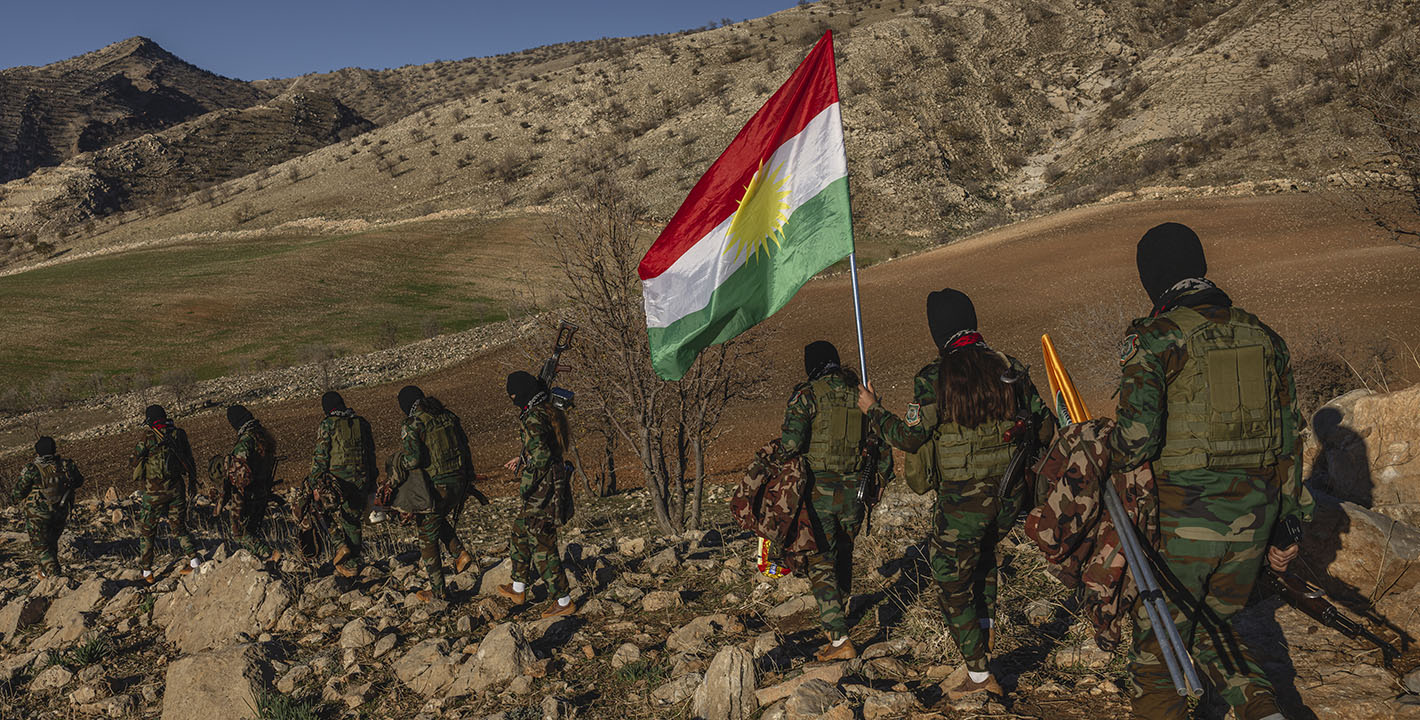
Following its deal with the United States, Iran may act against Iraq-based dissidents.
Wladimir van Wilgenburg