

Commentary
Marc Pierini
{
  "authors": [
    "Marc Pierini"
  ],
  "type": "legacyinthemedia",
  "centerAffiliationAll": "dc",
  "centers": [
    "Carnegie Endowment for International Peace",
    "Carnegie Europe",
    "Malcolm H. Kerr Carnegie Middle East Center"
  ],
  "collections": [
    "Turkey’s Transformation",
    "Transatlantic Cooperation"
  ],
  "englishNewsletterAll": "ctw",
  "nonEnglishNewsletterAll": "",
  "primaryCenter": "Carnegie Europe",
  "programAffiliation": "EP",
  "programs": [
    "Europe"
  ],
  "projects": [],
  "regions": [
    "Europe",
    "Türkiye",
    "Middle East",
    "Iran"
  ],
  "topics": [
    "Foreign Policy",
    "Security",
    "Political Reform"
  ]
}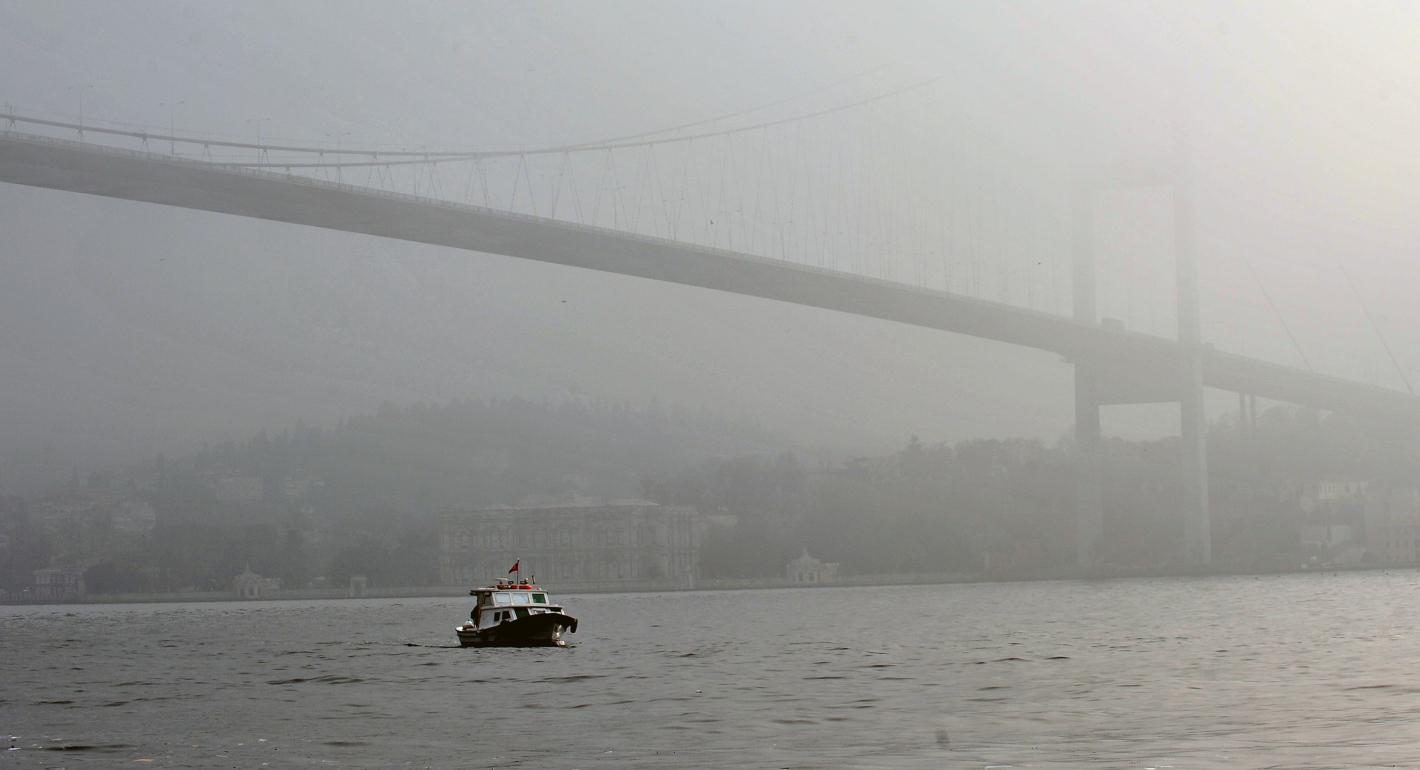
Source: Getty
Turkey’s misguided economic policies and slide toward autocracy have exacerbated the country’s relationship with the West. Meanwhile, Ankara’s bipolar foreign policy largely escapes Western leaders and analysts.
Hellenic Foundation for European and Foreign Policy
It has been common, in the past few years and especially the past few weeks, to say that Turkey’s relationship with the West, in particular with Europe, had become increasingly protracted. This may now be an understatement and ‘labyrinthine’ may be a better description.
Ankara’s choices on governance, economic policy, military operations abroad, missile defence, or most recently maritime boundaries have puzzled many of the country’s traditional partners. Even more than substance, it’s the methods and the words used by the leadership that have left most Western political leaders befuddled. Conversely, in reaction to Ankara’s latest initiatives in the Eastern Mediterranean, EU member states and the European Union itself have strongly opposed Turkey’s course of action.
Inevitably, trying to understand Turkey’s current policies is highly risky for a foreign observer. But, international relations being as much about perceptions as they are about substance, it is important to distinguish one from the other, especially in a situation where a Western ally turns aggressively against its partners.
This article is not academic in nature, but is rather an attempt to shed some light, from a Western standpoint, on where stakeholders collectively stand and where they might go from here.
This article was originally published by the Hellenic Foundation for European and Foreign Policy.


Senior Fellow, Carnegie Europe
Marc Pierini is a senior fellow at Carnegie Europe, where his research focuses on developments in the Middle East and Turkey from a European perspective.
Recent Work
Marc Pierini
Marc Pierini
Carnegie does not take institutional positions on public policy issues; the views represented herein are those of the author(s) and do not necessarily reflect the views of Carnegie, its staff, or its trustees.

The accord represents a pivotal moment in the region to avert a security vacuum in the Gulf.


Azeema Cheema, Mohanad Hage Ali

In an interview, Jason Burke discusses his sweeping account of the “revolutionists” who so shaped the 1970s and early 1980s.

Michael Young

By failing to address Palestinian representation, the current process is bound to lead to just another temporary arrangement.

Nathan J. Brown

Morocco and Algeria, each in its own way, are having to navigate the global economic fallout of the U.S.-Israeli military campaign against Iran.

Yasmine Zarhloule
Following its deal with the United States, Iran may act against Iraq-based dissidents.
Wladimir van Wilgenburg