

Article
Paul Staniland
{
  "authors": [
    "Paul Staniland"
  ],
  "type": "legacyinthemedia",
  "centerAffiliationAll": "dc",
  "centers": [
    "Carnegie Endowment for International Peace"
  ],
  "collections": [],
  "englishNewsletterAll": "ctw",
  "nonEnglishNewsletterAll": "",
  "primaryCenter": "Carnegie Endowment for International Peace",
  "programAffiliation": "SAP",
  "programs": [
    "South Asia"
  ],
  "projects": [],
  "regions": [
    "North America",
    "United States"
  ],
  "topics": [
    "Political Reform",
    "Democracy",
    "Security",
    "Military",
    "Civil Society"
  ]
}
Source: Getty
The Trump administration has reportedly pressured law enforcement agencies to downplay the threat posed by these organizations, allowing nonstate violence to creep back into the political mainstream to a degree not seen since the 1960s and 1970s.
Source: Foreign Affairs
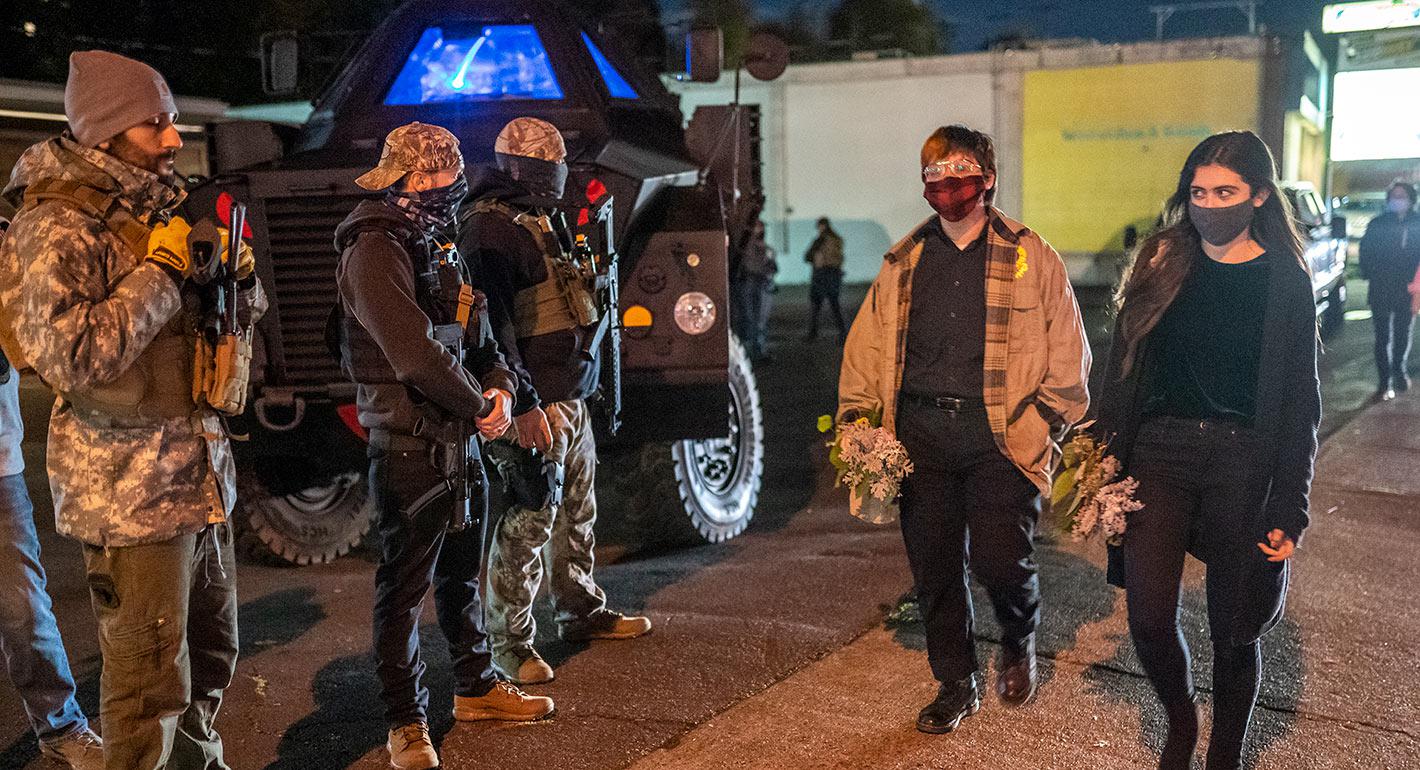
Over the last four years, U.S. President Donald Trump has shown more sympathy for far-right groups, many of them armed, than any president in recent memory. At the same time, his administration has reportedly pressured law enforcement agencies to downplay the threat posed by these organizations, allowing nonstate violence to creep back into the political mainstream to a degree not seen since the 1960s and 1970s. Just last month, a group of antigovernment extremists was arrested for plotting to kidnap Michigan’s Democratic governor, Gretchen Whitmer, after she defied Trump’s demand to “LIBERATE MICHIGAN” from COVID-19 restrictions. More violence could erupt ahead of next week’s presidential election, as well as in its aftermath.

Nonresident Scholar, South Asia Program
Paul Staniland is a nonresident scholar in the South Asia Program at the Carnegie Endowment for International Peace.
Recent Work
Paul Staniland
Paul Staniland
Carnegie does not take institutional positions on public policy issues; the views represented herein are those of the author(s) and do not necessarily reflect the views of Carnegie, its staff, or its trustees.

In an interview, Ian Lustick and Eli Clifton discuss their new book on why a prominent ally has so much influence in America.

Michael Young

As the U.S. stumbles in its war with Iran, we are likely to see an acceleration of its disengagement from the region.
Michael Young

Middle Eastern states should welcome an accelerated U.S. disengagement from their region.
Michael Young

In an interview, former ambassador Charles Freeman assesses the Trump administration’s war against Iran.
Michael Young

By failing to address Palestinian representation, the current process is bound to lead to just another temporary arrangement.

Nathan J. Brown