• Research
  • Diwan
  • About
  • Experts
Carnegie Middle East logoCarnegie lettermark logo
LebanonIran
REQUIRED IMAGE

REQUIRED IMAGE

Article

India Anticipates a "Winning Combination"

The United States and India have revived military-to-military ties for the first time since they were severed in the aftermath of India's nuclear tests in May 1998. For India, these ties reflect the country's growing global status, confirmed by President Bush in his State of the Union address, when he praised relations with India in the same breath as relations with Russia and China.

Link Copied
Published on Feb 5, 2002

The United States and India have revived military-to-military ties for the first time since they were severed in the aftermath of India's nuclear tests in May 1998. For India, these ties reflect the country's growing global status, confirmed by President Bush in his State of the Union address, when he praised relations with India in the same breath as relations with Russia and China.

From the early days of the Bush administration, the Pentagon had indicated that it was keen to restart defense ties with India. The first stage of deepening defense ties began February 4 with a meeting of the Joint Army Steering Committee. This committee is headed by Major General James Campbell and by India's Director General of Military Operations, Lieutenant General S.S. Chahal. As Campbell expressed U.S. gratitude for India's "prompt and whole-hearted support" after September 11, Chahal looked forward to a "winning combination," given the U.S. technological superpower status and India's "exceptional experience" in combating terrorism.

On February 5 a Joint Naval Executive Steering Committee met, headed on the American side by the commander of the U.S. 7th fleet and on the Indian side by the deputy chief of Naval Staff. The Air Force joint meeting is scheduled for Hawaii between February 18-21.

Indian policy-makers are eagerly anticipating the "winning combination" of expanding Indo-U.S. ties, beginning with counter-terrorism and intelligence sharing. The high praise for Pakistan's President Mussharef notwithstanding, President Bush endeared himself to India in his State of the Union address when he referred to the Pakistan-based Jaish-e-Mohammed, responsible for a foiled terrorist attack on India's parliament, as part of the "terrorist underworld."

The president's next reference to India was even more welcome to New Delhi: "In this moment of opportunity, a common danger is easing old rivalries. America is working with Russia and China and India in ways we never have before to achieve peace and prosperity…." The Times of India editorialized that Bush's statement is "bound to be interpreted as a very significant victory for Indian diplomacy." New Delhi sees this as a signal that the United States now views India in the same league as Russia and China. These two countries have what India wants: status embodied by a permanent veto-holding seat in the UN Security Council - and accepted nuclear arsenals.

South Asia

Carnegie does not take institutional positions on public policy issues; the views represented herein are those of the author(s) and do not necessarily reflect the views of Carnegie, its staff, or its trustees.

More Work from Malcolm H. Kerr Carnegie Middle East Center

  • Research
    The Military and Private Business Actors in the Global South: The Politics of Market Access

    The interaction of national armed forces and private business sectors offers a useful lens for viewing the politics of numerous countries of the so-called Global South. A rising trend of military political activism—often accompanied by military commercial activity—underlines the importance of drivers and outcomes in these relationships.

      Yezid Sayigh, Hamza Meddeb

  • Commentary
    The Gaza War and the Rest of the World

    Scholars from Carnegie’s global network comment on how the ongoing conflict between Israelis and Palestinians is affecting their areas of interest, and what the implications of this may be.

      • +11

      Maha Yahya, Rosa Balfour, Judy Dempsey, …

  • Commentary
    Diwan
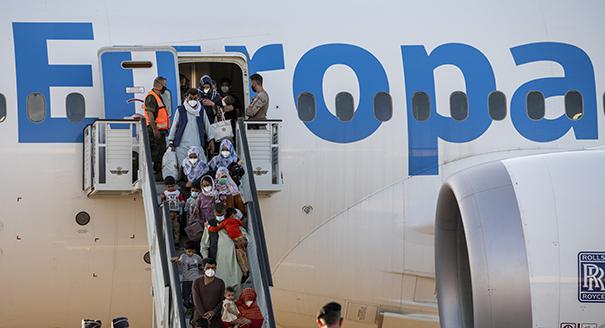
    Calculations in Kabul

    Turkey’s success in finding a role in Afghanistan could bring its leadership valuable benefits.

      Marc Pierini

  • Commentary
    Diwan
    A Fatal Life

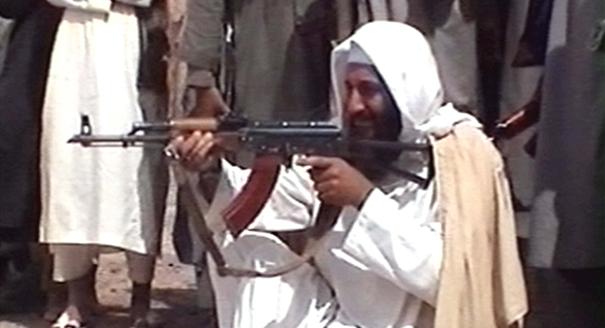
    In an interview on the twentieth anniversary of the 9/11 attacks, Peter Bergen discusses his new biography of Osama bin Laden.

      Michael Young

  • Commentary
    Diwan
    Autonomy Minus a Strategy

    In an interview, Rosa Balfour discusses European tensions with the United States over the chaotic Afghanistan withdrawal.

      Michael Young

Get more news and analysis from
Malcolm H. Kerr Carnegie Middle East Center
Carnegie Middle East logo, white
  • Research
  • Diwan
  • About
  • Experts
  • Projects
  • Events
  • Contact
  • Careers
  • Privacy
  • For Media
Get more news and analysis from
Malcolm H. Kerr Carnegie Middle East Center
© 2026 Carnegie Endowment for International Peace. All rights reserved.