

Research
- +6
Yasmine Farouk, Nathan J. Brown, Maysaa Shuja Al-Deen, …
Source: Getty
The critical moments of the general congress of Egypt’s ruling National Democratic Party (NDP) came when the delegates voted on amendments to the party’s bylaws and on new leadership bodies. The votes served as evidence that the NDP has been sufussed with supporters of Gamal Mubarak and the modernizing agenda he represents.
The critical moments of the general congress of Egypt’s ruling National Democratic Party (NDP), held November 3-6, 2007, came when the 6,000 delegates voted on amendments to the party’s bylaws and on new leadership bodies. By contrast, policy speeches by President Hosni Mubarak, his son Gamal, and Prime Minister Ahmad Nazif—which grabbed headlines at party conferences in previous years—contained few new ideas. Insiders in the party’s self-proclaimed new generation, the coterie surrounding Gamal Mubarak, saw the fact that delegates voted in greater numbers for the party’s General Secretariat (packed with new generation leaders) than for the party Politburo (a mix of old and new guard) as evidence that they had succeeded in suffusing the NDP with “new blood”—that is, with supporters of Gamal Mubarak and the modernizing agenda he represents. In the last five years, Gamal’s supporters had held primarily policy formation positions, but they are now contesting organization and management of the party at all levels. In particular, steel magnate and Gamal confidant Ahmad Ezz has become extremely active, managing an extensive and controversial process that elected the 6,000 delegates to local NDP positions in recent months.
At first glance it is difficult to see why the NDP new guard is working so hard at reengineering the party. Many, perhaps most, Egyptians now assume that when 79-year old President Mubarak departs the scene, his son Gamal will be the NDP candidate for the presidency and will be elected. And in Egypt, the party belongs to the president, not vice versa. But from the beginning of Gamal Mubarak’s political career nearly a decade ago, he has demonstrated a marked desire to be seen not as the filial inheritor of power (akin to Bashar al-Assad in Syria) but as a leader with a legitimate constitutional mandate. He may need this mandate party because it is unclear what degree of support he enjoys in Egypt’s powerful and introverted military and security establishment. In addition, there have been persistent, though not widespread, opposition protests at the idea of a son inheriting power in a presidential republic.
Since 2005, President Mubarak and the NDP have brought about a series of changes—from the institution of direct popular election of the president to detailed constitutional amendments and laws—to ensure their control over selection of Egypt’s next president. The recent party congress passed painstaking amendments to party bylaws, establishing a Supreme Council (hay’a ‘ulya) that will vote on the NDP candidate. The Council even rehabilitates a few old guard leaders such as former NDP Deputy Secretary General Kamal al-Shazli—but ensures that Gamal’s new guard has the upper hand in numbers. Furthermore, the 6,000 strong party congress will have to meet and approve by simple majority the candidate nominated by the Supreme Council, thereby strengthening the appearance that he enjoys broad support.
The NDP Policy Secretariat headed by Gamal Mubarak put out policy papers on a number of topics that were also featured during the recent Congress’s major speeches, but the ideas expressed were mostly repetitions or expansions of themes developed during recent years, such as that the party must work harder to ensure that the economic benefits of increased investment trickle down to the poorest citizens. Prime Minister Nazif broached the politically sensitive subject of subsidies during his speech, elaborating the billions the state spends on food and fuel subsidies enjoyed by all Egyptians and arguing that it must find a way to end this system eventually and transition to more targeted payments to the poor.
Another implicit theme of the conference was determination to combat the political threat of the Muslim Brotherhood, which is forbidden from forming a party but won nearly a quarter of parliamentary seats in 2005 though candidates running as independents. Since 2005 the NDP has hardened its position against enfranchising the Brotherhood seems determined not only to contain but to diminish the Brotherhood’s share in political life. Members of the new guard expressed pride in private conversations that their policy paper on “Citizenship and Democracy” represented a sharp contrast to the recently-released Brotherhood platform, which has been criticized by secular Egyptian commentators as representing a political vision giving clerics too much power and discriminating against women and Copts. The NDP is trying to hammer home a contrasting philosophy, emphasizing—as President Mubarak said in his speech—that Egypt is a “civil” (that is, non-religious) state based on “citizenship”—which has become a code word meaning equal rights for Muslims and Christians.
While it is clear that Gamal Mubarak and his supporters are increasingly in charge of the NDP and rebuilding it to fit their needs, there are still many uncertainties about what Egypt’s future holds. Some Egyptian observers believe that the military will intervene and put one of its own into the presidency instead of Gamal, perhaps with support from members of the NDP old guard. As there are no military officers in the Supreme Council, such a course would require setting aside or twisting the elaborate legal and constitutional framework developed in the last two years, which seems unlikely under present circumstances but remains possible.
Should Gamal Mubarak and the NDP new guard manage to reach power, it seems clear that they intend to continue and expand economic reforms, perhaps ambitious ones such as moving from a system of subsidies to social welfare payments as Nazif mentioned—gradually, and with efforts to avoid creating instability. Members of the NDP new guard state with conviction that the need for global economic competitiveness will require greater openness, modernization, and improved governance, all of which would be a challenge to a potentially weak new president facing a nation of 80 million that is still largely poor.
On future political reform, however, signals from the NDP new guard are much less encouraging. While some members of the new guard now say openly that Egypt is “in a transition to democracy”—a phrase not politically acceptable a few years ago—the actual reform initiatives they have championed have done much to strengthen NDP control and disadvantage the opposition. Furthermore, the NDP’s declared commitment to freedom of expression and party pluralism is hardly credible in light of recent prosecution of independent newspaper editors and continued legal and extralegal restrictions on the activities of opposition parties. Some NDP members express regret that secular opposition parties have been undermined—and in a few cases destroyed outright—for so many years, leaving the political field now bare except for the Brotherhood. But when a foreign observer asked Gamal Mubarak during the party congress whether it would be the best testimony to the NDP’s reform drive if the party some day lost a parliamentary election, Mr. Mubarak demurred that Egypt was not prepared for such an outcome. So far, NDP calls for “political pluralism” and “activating the role of political parties” remain slogans only, unsupported either by changes in law or in the behavior of Egypt’s intrusive security services.

Former Nonresident Scholar, Middle East Program
Michele Dunne was a nonresident scholar in Carnegie’s Middle East Program, where her research focuses on political and economic change in Arab countries, particularly Egypt, as well as U.S. policy in the Middle East.
Recent Work


Yasmine Farouk, Nathan J. Brown, Maysaa Shuja Al-Deen, …
Robert Springborg, Emile Hokayem, Becca Wasser, …
Carnegie does not take institutional positions on public policy issues; the views represented herein are those of the author(s) and do not necessarily reflect the views of Carnegie, its staff, or its trustees.

As the U.S. stumbles in its war with Iran, we are likely to see an acceleration of its disengagement from the region.

Michael Young
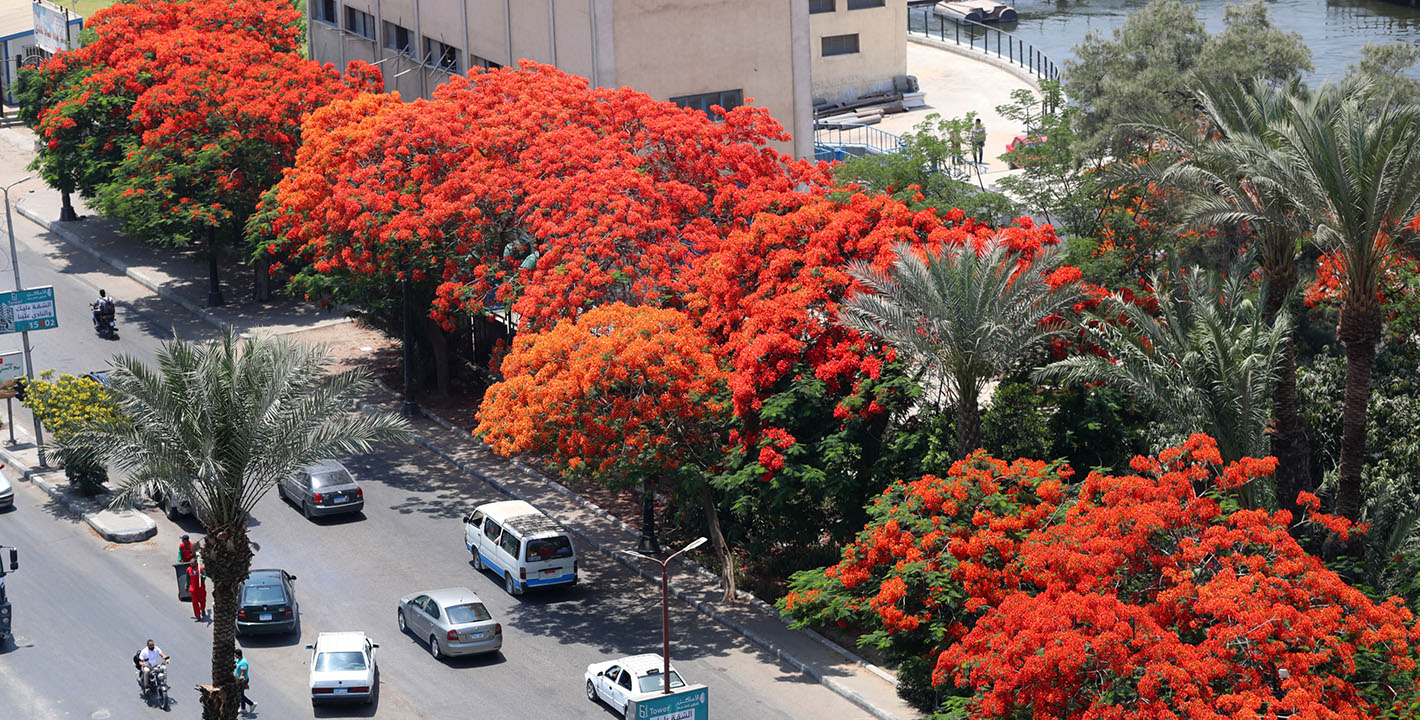
In Egypt’s dense cities, the disappearance of foliage has health implications and punishes daily commuters.

Angie Omar

Huawei pushed hard to enter the Egyptian data centers market, until the Americans made a better offer.
Angie Omar

The accord represents a pivotal moment in the region to avert a security vacuum in the Gulf.


Azeema Cheema, Mohanad Hage Ali

In an interview, Jason Burke discusses his sweeping account of the “revolutionists” who so shaped the 1970s and early 1980s.
Michael Young