

In The Media
Shahram Chubin
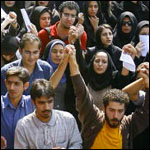
Source: Getty
The conventional wisdom in the West has been that Iranians support these policies and that there is at best only a difference of “tone” between the various factions in this area. This is mistaken. Recent events underline how much foreign policy has been used by hardliners for partisan purposes and how much scope there is for meaningful change in this area, explains Shahram Chubin.
Iran's nuclear ambitions and behavior regionally have generated concerns, internationally, eliciting EU and UN Security Council reactions. The conventional wisdom in the West has been that Iranians support these policies and that there is at best only a difference of "tone" between the various factions in this area. This is mistaken. Recent events underline how much foreign policy has been used by hardliners for partisan purposes and how much scope there is for meaningful change in this area.
One of the surprises of the recent election campaign was the central role foreign policy issues played in it and the divergences on it. The Islamic Republic has never consulted on, or encouraged, any debate on foreign policy and its leaders have appropriated for themselves its direction. For the most part, foreign policy has been used as an excuse for poor economic performance, to justify repression and to keep mobilized a domestic constituency that wants permanent revolution.
Ahmadinejad has accused his predecessors of capitulation and retreat compared to his own policy of confronting arrogant powers and giving Iranians back their self-confidence. His policy is long on "revolutionary duty" and the promotion of Iran's "resistance model" and short on national interest or attention to costs. He has the support of the Supreme Leader who feels that his own influence has grown with Iran's "active" foreign policy. The critics of this approach emphasize the need to use diplomacy, to build confidence and to engage with the world peacefully, even on the issue of Iran's right to enrichment. They are sensitive to the impact of sanctions and bellicose rhetoric on Iran’s economy and standing.
Far from being merely matters of "tone" these differences reflect different views of the world and Iran's role in it. One view sees the world as an unjust hostile, order that Iran should confront and change and to do so it needs modern arms as well as revolutionary commitment. The second view sees no such inherent hostility and wishes to engage the world as a normal state, with the right to respect and reciprocity that this implies.
Of course it suits some foreign analysts and governments to attribute to Iran a monolithic unity verging on caricature. This way you know where you stand. In this view foreign policy is insensitive to changes in President since final decisions are taken by Khamenei. The Supreme Leader, it is true, prefers the "hard line" if only because it keeps the country "revolutionary" and himself in power. But he is as much follower as leader and can be convinced of a different approach if public opinion or prudence dictates it. This was evident in the period of Khatami's presidency in general but notably between 2003-2005 when Iran suspended enrichment and applied the Additional Protocol regarding inspections, both measures which the West would dearly like to revive.
In fact, Iranians in polls overwhelmingly reject the acquisition of nuclear weapons and confrontational policies and want normal relations with the US and the world.[1]
It should be obvious that a more democratic Iran would be more transparent and trustworthy and less reflexively hostile to the world. It is therefore in the interests of the international community as much as Iranians themselves that a popularly accountable government be established. The West should not confuse non-interference with indifference or neutrality in Iran's domestic politics.
This article was originally published in French in Le Temps (Geneva).
Shahram Chubin is nonresident senior associate at the Carnegie Endowment for International Peace, and former director of studies at the Geneva Centre for Security Policy, Switzerland.
Notes
1. See Ken Ballen and Patrick Doherty, “The Iranian People Speak,” The Washington Post, June 15, 2009.
Former Nonresident Senior Fellow, Nuclear Policy Program
Chubin, who is based in Geneva, focuses his research on nonproliferation, terrorism, and Middle East security issues. He was director of studies at the Geneva Centre for Security Policy, Switzerland, from 1996 to 2009.
Recent Work
Shahram Chubin
Shahram Chubin
Carnegie does not take institutional positions on public policy issues; the views represented herein are those of the author(s) and do not necessarily reflect the views of Carnegie, its staff, or its trustees.

As the U.S. stumbles in its war with Iran, we are likely to see an acceleration of its disengagement from the region.

Michael Young

Middle Eastern states should welcome an accelerated U.S. disengagement from their region.
Michael Young

In an interview, former ambassador Charles Freeman assesses the Trump administration’s war against Iran.
Michael Young

The accord represents a pivotal moment in the region to avert a security vacuum in the Gulf.


Azeema Cheema, Mohanad Hage Ali

In an interview, Jason Burke discusses his sweeping account of the “revolutionists” who so shaped the 1970s and early 1980s.
Michael Young