

Q&A
Christopher Boucek
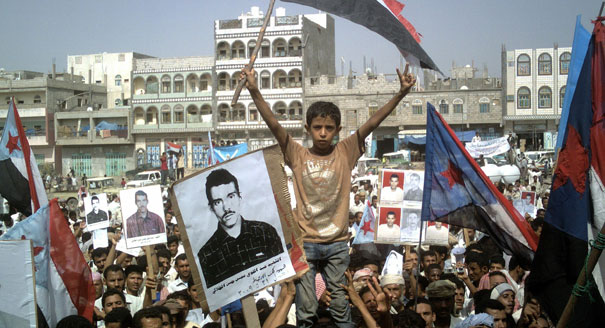
Source: Getty
If the Yemeni central government cannot fully control its territory, violent extremists will have a space to regroup and launch new attacks. Yemen's problems potentially threaten the region and the international community.
A confluence of looming challenges—economic ruin, an emerging water shortage, violent extremism, and a growing secessionist movement—threaten to overwhelm the Yemeni government, provide a breeding ground for terrorists, and destabilize the region. Yemen has survived past crises but the current risks are unprecedented in their scope and interconnectivity, warns a new paper by Christopher Boucek.
Key Conclusions:
Recommendations:
Boucek concludes:
“If left unaddressed, Yemen’s problems could potentially destabilize Saudi Arabia and the other Gulf states. The inability of the Yemeni central government to fully control its territory will create space for violent extremists to regroup and launch attacks against domestic and international targets. The international community must be realistic about the limitations of intervention in Yemen. In the near term, however, inaction is not an option.”

Former Associate, Middle East Program
Boucek was an associate in the Carnegie Middle East Program where his research focused on security challenges in the Arabian Peninsula and Northern Africa.
Recent Work
Christopher Boucek

Christopher Boucek, Karim Sadjadpour
Carnegie does not take institutional positions on public policy issues; the views represented herein are those of the author(s) and do not necessarily reflect the views of Carnegie, its staff, or its trustees.

In an interview, Ian Lustick and Eli Clifton discuss their new book on why a prominent ally has so much influence in America.

Michael Young

Middle Eastern states should welcome an accelerated U.S. disengagement from their region.
Michael Young

The accord represents a pivotal moment in the region to avert a security vacuum in the Gulf.


Azeema Cheema, Mohanad Hage Ali

By failing to address Palestinian representation, the current process is bound to lead to just another temporary arrangement.

Nathan J. Brown

The armed forces champion a form of capitalism that is generating revenue, but its reliance on rent faces diminishing returns, leaving the country with massive sunk costs and deferred returns, deepening dependency on external borrowing.

Yezid Sayigh