

Commentary
In an interview, Marc Lynch discusses his new book decrying the post-1990 U.S.-dominated order in the Middle East.
Michael Young
Source: Getty
Before the Nobel Peace Prize was awarded in 2017, the G20 countries’ reactions to the Nuclear Weapons Ban Treaty were based on their own interests and loyalties.
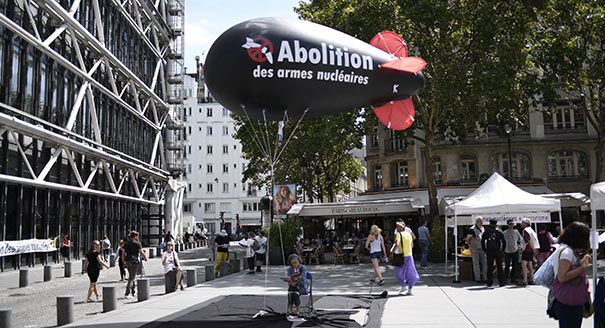
On October 6, 2017, the Nobel Peace Prize was awarded to the International Campaign to Abolish Nuclear Weapons (ICAN)—a young and relatively little-known civil society organization. The Norwegian Nobel Committee selected ICAN as the recipient of the prize, in part, for the campaign’s “ground-breaking efforts to achieve a treaty-based prohibition of [nuclear] weapons.” The Treaty on the Prohibition of Nuclear Weapons was concluded in July 2017, when 122 countries voted to approve it. Currently, fifty-six states have signed the treaty, and Guyana, the Holy See, and Thailand have ratified it.
The Nuclear Weapons Prohibition Treaty cuts to the core of a long-standing international dispute over progress toward nuclear disarmament. Nevertheless, the immediate responses from the Group of Twenty (G20)—the world’s wealthiest and most politically influential states—to the treaty were largely muted. This collective silence raises many intriguing questions about the implications of the prohibition treaty for the international politics of nuclear disarmament and nonproliferation.
The Treaty on the Prohibition of Nuclear Weapons commits all state parties to forswear the development, testing, production, manufacture, acquisition, and possession of nuclear weapons or “other nuclear explosive devices.” States party to the treaty further agree not to transfer or receive nuclear weapons or control over the weapons either “directly or indirectly.” Ratifying states also consent never to “assist, encourage or induce” anyone to violate the above-listed stipulations of the treaty or to receive any assistance to violate the treaty themselves. Importantly for states with extended nuclear deterrence protection, countries that accede to the prohibition treaty will not permit nuclear weapons to be placed on their territory or areas under their “jurisdiction or control.” The other main provisions of the treaty provide for reparations to victims of nuclear testing, repayment for environmental damage caused by testing, and two pathways for states possessing nuclear weapons to disarm and join the prohibition treaty.
Crucially, the Nuclear Weapons Prohibition Treaty emerges against a backdrop of protracted, acrimonious disagreement among and between states that rely on nuclear weapons for deterrence (directly or through allies) and those that do not. The principal source of strife is the perceived lack of progress on nuclear disarmament by states that possess nuclear arms. This group of states encompasses the five official nuclear weapon states recognized by the 1968 Nuclear Non-Proliferation Treaty (NPT) and the four other nuclear-armed states: India, Israel, North Korea, and Pakistan. Non-nuclear-weapon states that depend on nuclear deterrence extended by allies have taken the side of their nuclear patrons in this dispute, albeit with varying degrees of discomfort.1 On the other side of the nuclear divide are at least 122 non-nuclear-weapon states and a handful of effective nongovernmental organizations, including ICAN and, of course, the Norwegian Nobel Committee.
Under the “grand bargain” of the NPT, non-nuclear-weapon states agreed not to acquire nuclear weapons in exchange for access to peaceful uses of nuclear energy, and nuclear weapon states pledged to work toward “effective measures relating . . . to nuclear disarmament, and on a treaty on general and complete disarmament.” Increasingly, the overwhelming majority of non-nuclear-weapon states believe that their nuclear-armed counterparts are failing to fulfill these obligations. Many non-nuclear-weapon states further chafe at Western-led efforts to seek toughened nonproliferation rules and procedures that would, for the most part, only apply to states without nuclear weapons. The ongoing modernization (and expansion in several cases) of the nuclear-armed states’ arsenals only lends credence to non-nuclear-weapon states’ perceptions of injustice.
When the present article was first drafted, the 2017 Nobel Peace Prize had not yet been awarded. The prize may or may not enduringly change how the prohibition treaty is regarded internationally. In order to make an assessment about the award’s effect, countries’ responses to the treaty before and after the Nobel announcement must be compared. This article examines how the world’s most influential countries responded to the prohibition treaty prior to the announcement. The subsequent influence (or lack thereof) of the internationally prestigious award on these countries’ reactions can then be isolated and examined separately in a follow-up piece. The membership of the G20 is a helpful proxy for this particular type of study. The G20 countries are a fairly diverse group that comprises the world’s twenty leading political economies (counting the European Union as a single entity). Twelve of the group either possess nuclear weapons or rely on nuclear deterrence extended by allies.3
By coincidence, the most recent G20 summit began on the same day—July 7, 2017—that the prohibition treaty was approved by the UN General Assembly. However, it does not appear that the treaty was discussed during this gathering of the G20 heads of state. The public comments made following the treaty’s approval came from lower-ranking officials of states both for and against the agreement.
Among the G20 countries, the United States, the United Kingdom, and France emerged as the leaders of the treaty’s opponents. All three boycotted the negotiations and final UN General Assembly vote. Shortly after the vote, the U.S., British, and French foreign ministries published statements online that voiced essentially identical criticisms of the treaty. Indeed, the three countries’ permanent representatives to the United Nations issued a joint statement in response to the treaty’s approval. The individual press releases for each country reflected almost verbatim the views contained in the joint press statement.
The foreign ministers of the United States, the United Kingdom, and France have not commented publicly on the treaty. Their subordinates have argued primarily that the document fails to address international security concerns, particularly North Korea’s nuclear weapon program and the threats facing NATO member states and U.S. treaty partners in East Asia. The three countries sidestep the risks of humanitarian disaster that nuclear war would pose and instead focus on nuclear deterrence as a vital means of preventing interstate war. The U.S. State Department’s press release asserts that “a transformation of the international security environment” is a necessary precondition for nuclear disarmament, which can only be achieved through “consensus-based approaches.” The prohibition treaty, according to the State Department, subverts nuclear deterrence and the global nuclear nonproliferation regime.
Although more tempered in the tone of its comments, London repudiated any legal obligations or effect on customary international law stemming from the prohibition treaty, as did Washington and Paris. Reaffirming their support for the NPT, the three called for measured steps within that treaty framework to move toward nuclear disarmament. Yet, the United States, the United Kingdom, and France have not offered concrete proposals for reinvigorating the step-by-step approach to nuclear disarmament that they claim to favor. Russia, China, and the four other nuclear-armed states similarly have not advanced any proposals either.
Officials from two U.S. treaty allies that do not possess nuclear weapons—Japan and Australia—demonstrated solidarity with the American position in their public comments. Speaking to the press in July 2017, then foreign minister of Japan Fumio Kishida acknowledged the treaty’s existence but insisted that Japan would not sign the agreement due to differences in “view” and “approach.” Japan’s “view and approach,” he explained, are aimed at achieving total and general nuclear disarmament through “concrete and practical measures.” These measures include working through the existing avenues of the Nuclear Non-Proliferation Treaty and the Comprehensive Nuclear-Test-Ban Treaty (CTBT) as well as finalizing the Fissile Material Cutoff Treaty. Acknowledging the frustration of non-nuclear-weapon states with the slow progress on disarmament, Kishida assured reporters that Japan shared those states’ hopes for the achievement of “substantial progress quickly” toward nuclear disarmament. To achieve this goal, he urged nuclear and non-nuclear-weapon states to “rebuild their relationship of trust” as a first priority.
It is likely that Japan’s unique situation (as well as Kishida’s ties to his birthplace, Hiroshima) prompted the foreign minister’s public remarks. As a reporter pointed out during the question and answer session with Kishida, Japan is both a current beneficiary of the U.S. nuclear umbrella and the lone victim of nuclear weapon use in an act of war. The minister’s demurral to comment on this point illustrates the sensitivity of the prohibition treaty issue and simultaneously the necessity of addressing it. The majority of the Japanese populace opposes nuclear weapons, given the legacy of Hiroshima and Nagasaki, and remains overwhelmingly pacifistic. Further, the mayors of the two bombed cities as well as the hibakusha—the Japanese survivors of the atomic bombings—publicly and actively supported the prohibition treaty.
Australia’s Foreign Affairs and Trade Department website offers a comparatively in-depth discussion of the prohibition treaty. The Australian position reiterates the same criticisms expressed by the United States, France, and the United Kingdom, but the tone is much more measured and conciliatory in contrast to the aggressiveness of the U.S.-UK-French joint press release. The Australian department acknowledges the dire humanitarian consequences of nuclear weapons and points to Australia’s participation in the Humanitarian Impact of Nuclear Weapons (HINW) Conferences. The discussion of the prohibition treaty concludes by proffering an olive branch to the treaty’s proponents and reaffirms Australia’s commitment to nuclear disarmament: “Australia will continue to push hard to build that political will, and to promote the practical steps that will be necessary to bring about the elimination of nuclear weapons.”
Others among the G20 countries strongly promoted and supported the prohibition treaty. However, these states greeted the treaty’s approval by the General Assembly without much rhetorical fanfare from their top political leaders.
Argentina, Brazil, Indonesia, Mexico, Saudi Arabia, and South Africa voted in favor of the treaty in the General Assembly. Several months passed before Brazil’s and South Africa’s heads of state made public remarks about the agreement, and they simply echoed their ambassadors’ support for the treaty.
From this cluster of G20 states that had voted for the prohibition treaty, the only foreign minister who publicly commented on the agreement was Brazil’s in an op-ed in the Folha de S. Paulo, a major Brazilian daily newspaper. Foreign Minister Aloysio Nunes Ferreira hailed the treaty’s approval in celebratory terms, calling it a “victory of humanity in the search for a world free of the absurdity of nuclear weapons.” He underscored the “resistance from nuclear weapons states” and the support the treaty enjoyed from the “large majority of the international community.” Disagreeing with the criticisms levied by treaty opponents, Ferreira argued instead that “the new Treaty is an important complement to Article 6 of the Treaty on the Non-Proliferation of Nuclear Weapons (NPT), which established the obligation of nuclear disarmament.”
Of the treaty’s supporters among the G20, only Mexico’s ministry of foreign affairs issued a press release about the treaty’s passage. The official statement of the Mexican Secretariat of Foreign Affairs “welcome[d]” the adoption of the treaty by the General Assembly and observed that it is the first treaty ever adopted that globally prohibits nuclear weapons. The statement further noted that the prohibition treaty is consistent with Mexico’s historic diplomatic tradition of supporting nuclear nonproliferation and disarmament. Alfonso García Robles, then Mexico’s state secretary in the Secretariat of Foreign Affairs, is often credited as the father of the 1967 Treaty of Tlatelolco, which established world’s first nuclear-weapon-free zone over Latin America and the Caribbean.
Most vocal on the issue were the supporting states’ representatives to the United Nations. Immediately after the General Assembly vote, Argentina’s representative spoke to a UN reporter and expressed “regret” that the treaty did not mention transportation of nuclear weapons and that nuclear weapon states boycotted the negotiations. The Argentinian diplomat also cautioned against the creation of alternative international authorities on nuclear nonproliferation, emphasizing that the treaty’s verification mechanisms should rely on the International Atomic Energy Agency and like institutions. Similarly, Indonesia’s representative offered the assessment that “no treaty was perfect” and commended the treaty as a “big step forward” in the pursuit of general and complete disarmament. The ambassador volunteered Indonesia’s help “to bring nuclear-weapons States on board” with the agreement. Brazil’s UN representative effusively supported the treaty, praising it as “a significant step closer to a nuclear-weapon-free world” and a landmark agreement. He called for the treaty’s speedy entrance into force as well as dialogue with nuclear weapon states and others that did not participate in the negotiation or vote. The Brazilian representative also recognized the contribution of civil society during the negotiations and the openness of the drafting conference.
The only defense minister in the G20 to comment on the prohibition treaty was Brazil’s. Speaking to a Brazilian news outlet, Defense Minister Raul Jungmann pointed out that the other two types of weapons of mass destruction—chemical and biological weapons—are both banned by international conventions; nuclear weapons, the most dangerous of the three, must also be prohibited. Further, Jungmann stated, “Nuclear disarmament, rather than a strategic option, is a moral imperative.” Notwithstanding his previous comments, Jungmann maintained that “deterrence and cooperation” are crucial to Brazil’s defense strategy of protecting “its sovereignty, its heritage, and its interests.”
Prior to the Nobel Prize announcement, the overall picture that emerged following the approval of the Treaty on the Prohibition of Nuclear Weapons was conspicuous, pervasive silence from top-level officials of G20 states—both those supportive of, and those opposed to, the prohibition treaty. Behind this silence is a mesh of competing interests and loyalties.
Treaty proponents portray the conflict over the treaty as a struggle of the majority (non-nuclear-weapon states) against the dominant minority (nuclear weapon states). But such a view is reductive. U.S. treaty allies that do not possess nuclear weapons—including Japan, South Korea, Australia, and almost all NATO member states—oppose the prohibition treaty.
It is equally untrue to believe that the disagreement is between those who wish to improve global security (namely, nuclear weapon states) and those who would throw it away for a utopian manifesto (that is, non-nuclear-weapon states), as treaty opponents contend. The risk of nuclear annihilation constitutes an undeniable and serious threat to international security.
However, the leaders of both camps remain notably quiet about the prohibition treaty. This complex state of affairs raises many questions about the future of the prohibition treaty and international nuclear weapon politics—
For treaty proponents:
For treaty opponents:
Thu-An Pham is a James C. Gaither Junior Fellow in the Carnegie Endowment’s Nuclear Policy Program.
1 Japan, South Korea, and much of Europe—being American allies and/or NATO members—comprise the third subcategory.
2 China, France, India, Russia, the United Kingdom, and the United States possess nuclear weapons. The United States extends nuclear deterrence to Canada, Germany, Italy, Japan, South Korea, and Turkey through mutual defense pacts or the NATO alliance.
3 The U.S. State Department published its formal comment the same day as the U.S.-UK-French joint statement was released and the prohibition treaty was approved—July 7, 2017. The British Foreign & Commonwealth Office and French Ministry of Europe and Foreign Affairs released their statements the following day.
Thu-An Pham
Former James C. Gaither Junior Fellow, Nuclear Policy Program
Carnegie does not take institutional positions on public policy issues; the views represented herein are those of the author(s) and do not necessarily reflect the views of Carnegie, its staff, or its trustees.
In an interview, Marc Lynch discusses his new book decrying the post-1990 U.S.-dominated order in the Middle East.

Michael Young
Both events also could force Washington to rethink or revive its Middle East partnerships.

Karim Sadjadpour
Disagreement between the United States and Iran over a revived nuclear accord may anchor volatile competition.

George Perkovich
A regular survey of experts on matters relating to Middle Eastern and North African politics and security.
Michael Young
The British, French, and German foreign ministers have formally accused Iran of breaking the terms of the 2015 Iran nuclear deal, a step that could lead to sanctions. Are the Europeans preparing to pull the plug?

Jarrett Blanc