

Commentary
In an interview, Marc Lynch discusses his new book decrying the post-1990 U.S.-dominated order in the Middle East.
Michael Young
Source: Getty
An exploration into how India and Pakistan have perceived each other’s manipulations, or lack thereof, of their nuclear arsenals.
The Nautilus Institute, the Carnegie Endowment for International Peace, and the Asia-Pacific Leadership Network thank the Carnegie Corporation of New York for its support of this project and its ongoing support of public-interest work to prevent nuclear conflict.
The May 2025 conflict was only the most recent in a series of wars, conflicts, skirmishes, and crises that have afflicted India-Pakistan relations since 1947, when India emerged as an independent nation, and a part of it, Pakistan, was carved out as a separate homeland for Muslims in the Indian sub-continent.
Three wars in 1947–48, 1965, and 1971 failed to yield a decisive outcome over the territorial dispute of Kashmir, though the 1971 war did lead to the eastern wing of Pakistan seceding and emerging as an independent Bangladesh. In 1998, both countries undertook a series of nuclear tests to emerge as nuclear weapon states, adding another dimension to their rivalry. The Kargil conflict came one year later, and then militarised crises in 2001–02, 2008, 2016, 2019, and 2025.
Nuclear deterrence has undoubtedly played a role at preventing a full-scale conflict between the two rivals since 1998, though some nuclear signalling did take place in 1987 and 1990, often described as a latent or non-weaponised deterrence. This paper explores how both sides—through rhetoric and actions—have or have not manipulated their possession of nuclear weapons to achieve their aims during these crises without stumbling into nuclear war. The three crises from 2016 to 2025 have seen India ratchet up the intensity and scope of its responses to terrorism, and in 2019 and 2025 Pakistan responded with increasing intensity. This possible trend has reinforced a decades-old cliché among Western officials and commentators that South Asia is the world’s most likely ‘nuclear flashpoint’.1 This trope appeared in much Western coverage, including the New York Times’ explanation of why U.S. Vice President JD Vance and U.S. Secretary of State Marco Rubio became intensely involved in negotiating a ceasefire: ‘The reason was the same one that prompted Bill Clinton in 1999 to deal with another major conflict between the two longtime enemies: fear that it might quickly go nuclear’.2
Yet, more careful study of the 1999 conflict and the crises following the 2001 attack on the Indian Parliament, the 2008 attack in Mumbai, and the 2016, 2019, and 2025 attacks on terrorist and military targets suggests that leadership on both sides have been significantly more restrained in their nuclear rhetoric and actions than is commonly recognised. Setting aside the causes and effects of the terrorist attacks that precipitated these crises, once the initial violence was done, Indian and Pakistani leaders have rather adeptly managed and contained escalation.
This does not mean that the propensity for risk taking has decreased. India has chosen to signal its growing military ability and political resolve to damage Pakistan in response to further terrorist acts against Indians. The Narendra Modi–led government projects itself as strong and decisive compared to its predecessors. However, as a larger and more economically successful polity whose nuclear doctrine is not to use nuclear weapons first, India has a clear interest in keeping any crisis or conflict non-nuclear. Indian leaders have understood that for Pakistan, nuclear weapons could be an equaliser, a means of trying to reverse a pending existential defeat. This gives Pakistani leaders a temptation to manipulate nuclear weapons in ways that Indian leaders would need to try to manage.
This is the dynamic explored in the paper. The experience of nuclear deterrence and crisis management here is different from that between Moscow and Washington during the Cold War and now in the Ukraine war where Russia has so frequently manipulated nuclear fear. Russia and the United States and the United States and China—unlike India and Pakistan—are separated by vast distances and have no direct territorial dispute. Terrorism is not a chronic threat among them. North and South Korea—like India and Pakistan—were once united, but only one of them possesses nuclear weapons, a big difference between the South Asian rivals. Palestine has resonances of partition and terrorism, but Palestine has no nuclear capability nor air force nor navy. India and China have a territorial dispute, but China does not arouse communal passions in India nor engage in terrorism against Indians. The unresolved disputes and relentless passions that still surge through India and Pakistan make the two states susceptible to violent eruptions and resistant to direct conflict management. When general deterrence fails and conflict erupts, as it often does, nuclear deterrence can help contain the violence, but the risk of escalation from mistaken judgment, unchecked passion, and broken or misused technology is always present.
The first section of this paper summarises how nuclear deterrence was understood since its origins during the Cold War. India and Pakistan sought to learn from the U.S.-Soviet experience but clearly there are specific aspects that animate the doctrines of India and Pakistan based on their own threat perceptions. The second section deals with the nuclear manipulations that took place during the six crises identified above, with the last four dealt with in individual sub-sections. The final section draws certain tentative conclusions, tentative because both the nature of conflict is being redefined and a new revolution in technology is underway.
Deterrence is an old concept, with clear strategic goals and past practices. Nuclear deterrence introduced a new tension at its core, the uniquely destructive nature of nuclear weapons that made the consequences of deterrence failure unimaginably horrible. Political leaders—especially those individuals who would bear the responsibility for the consequences of authorising nuclear explosions—have been acutely conscious of this risk every time tensions have arisen between nuclear adversaries. At the same time, at least in the U.S.-Soviet/Russian case, each side feared the other could achieve a technical or numerical breakthrough that might enable it to blunt its nuclear deterrent and thereby give the superior side a huge strategic advantage. Arms racing resulted, with intermittent negotiated agreements to control it and reduce the destructiveness of nuclear arsenals. Indeed, arms control and disarmament became instruments to help persuade other countries not to acquire nuclear weapons, as promised under the 1968 Nuclear Non-Proliferation Treaty which India and Pakistan (like Israel) never signed.
While most literature on nuclear deterrence is based on the U.S.-Soviet nuclear rivalry, there are clear limits on how far this can apply to nuclear rivalries which are asymmetric in nature, both in terms of composition of nuclear arsenals and respective nuclear doctrines. In 1989, Robert Jervis was undoubtedly reflecting on the lessons of the Cold War and nuclear bipolarity when he wrote The Meaning of the Nuclear Revolution: Statecraft and Prospect of Armageddon proposing that war between nuclear powers had become ‘unthinkable’.3
The credibility of deterrence depends on both capability and resolve. Where the stakes are similar, deterrence was seen to be strengthened with clarity, as during the Cold War. In the Ukraine war, however, we see how the stakes are different for Russia, NATO states, and Ukraine. Russia feels much more resolute than NATO in bearing the costs of this war, and it has repeatedly invoked risks of nuclear war to help deter support for Ukraine. From the beginning, the United States and other major supporters of Ukraine ruled out becoming directly involved in the war (for multiple reasons) and have emphasised that the ‘threat or use of nuclear weapons is inadmissible’, as the G20 heads of state proclaimed in November 2022.4 Ukraine is most resolved, feeling its very existence threatened by Russia’s initial invasion, so Kyiv has acted undeterred by Russia’s nuclear manipulations.
In the Indo-Pacific, the United States has adopted ambiguity to deter China from pursuing a military option in Taiwan. Washington acknowledges there is only one China, but continues to support and arm Taiwan so long as Taipei does not declare independence. As China modernises and expands its nuclear arsenal, the United States is seeking to introduce a degree of clarity to bolster deterrence.
Most portentously, whereas during the Cold War deterrence was a two-player equation, today, the United States considers both Russia and China as rivals and seeks to deter both. And, while the United States has long acknowledged mutual vulnerability vis-à-vis Russia, it has never conveyed an acceptance of ‘mutual vulnerability’ to China. This heightens Beijing’s concerns that the United States could try to pre-emptively destroy China’s second-strike deterrent (using more ambitious missile defences to block retaliation by surviving Chinese weapons).
India’s nuclear challenge has always lacked the simplicity of a two-player deterrence equation. Since 1998, India has maintained that its nuclear capability was intended as a deterrent against both China and Pakistan. The close ties between the two also need to be factored in by Indian defence planners. While Pakistan describes its capability as India-specific, China’s threat perceptions are focused on its rivalry with the United States. Therefore, it is apparent that the strategic shift from the Euro-Atlantic to the Indo-Pacific brings more actors into a crowded geopolitical space. This imposes limits on how far the India-Pakistan equation can be analysed as a stand-alone nuclear dyad. If anything, the two dyads, India-Pakistan and India-China, are loosely linked just as they are linked to the U.S.-China dyad, creating a nuclear chain of loosely linked dyads.
Of these countries, nuclear weapons have a more limited role and utility for India because it can deal with most foreseeable threats with its conventional forces. It needs nuclear weapons to deal with nuclear threats only because both its adversaries possess nuclear weapons. For Pakistan, nuclear weapons provided the ultimate security guarantee because (rightly or wrongly) it is convinced that its conventional capabilities are inferior. China needs nuclear weapons and may even be enhancing their role because it is caught up in a geopolitical rivalry with the United States. What this implies is that all three will continue to retain and, depending on their respective resources, build up and diversify their nuclear capabilities.
In addition, there are doctrinal asymmetries between India and Pakistan. While both countries profess to have a nuclear deterrent that is both minimal and credible, India looks to deter two potential adversaries while Pakistan seeks to deter India. Further, though India has maintained a no-first-use policy since 2003, it has conditioned its sole-purpose doctrine to permit retaliation to a chemical or biological weapon attack.5
Given the compressed time frames and high population densities, India does not make a distinction between tactical and strategic nuclear weapons. In other words, India does not consider nuclear weapons as weapons for war fighting but only for deterring nuclear threats. However, survivability of an assured retaliatory capability requires that India maintain a triad which is still a work in progress, particularly the submarine (strategic submarine ballistic nuclear, or SSBN) leg.
Pakistan’s doctrine reflects a different approach in terms of maintaining that ambiguity strengthens deterrence and of using its nuclear weapons as an equaliser against India’s conventional superiority. Therefore, it has adopted a policy of ‘full spectrum deterrence’ at strategic, operational, and tactical levels, irrespective of whether the threat is conventional or nuclear.6 The lower nuclear threshold coupled with ambiguity introduces uncertainty, thereby strengthening Pakistan’s deterrent. Pakistan also maintains a triad, the sea leg consisting of ballistic/cruise missiles on surface ships.
Neither India nor Pakistan have made any official statements regarding the size of their nuclear arsenals. Based on the Stockholm International Peace Research Institute (SIPRI) World Nuclear Forces 2024 report, both countries have built modest arsenals ranging between 160 to 180 warheads.7 Both countries have nuclear-capable aircraft, and these were the first delivery vectors. India has depended on the Jaguar and the Mirage 2000, though the forty-year-old Jaguar will be replaced with the more recently acquired Rafale. Pakistan has relied on Mirage III and Mirage V but is transitioning to the more modern JF-17, co-developed and co-produced with China. Having relied on gravity bombs, Pakistan has been testing Ra’ad I/II air-launched cruise missiles (ALCMs), with ranges between 350 to 600 km.
Both countries have land-based missiles. India has deployed the Prithvi II with a range of 350 km and Agni I-IV with ranges from 700 to 3,500 km. Agni V and Agni VI are being developed to achieve intermediate and inter-continental ranges. Agni VI, currently in the design stage, could be equipped with a multiple independently targetable reentry vehicle (MIRV) capability. Agni P is being developed as an intermediate range mobile missile with a maneuverable reentry vehicle (MaRV) capability. To reduce deployment time, India is also developing canisterisation for its mobile missiles. Pakistan’s ground based ballistic missiles range from the short-range Nasr (70 km) to Abdali (200 km), Ghaznavi (300 km), Shaheen I/IA (750–900 km,) to the medium range Ghauri (1,250 km) and Shaheen II (2,000 km). Shaheen III with a range of 2750 km has also been tested as a medium range Ababeel, potentially with MIRV capability. In addition, Pakistan has also been testing the Babur series of ground-launched cruise missiles (GLCMs) with ranges between 400 to 900 km.
A naval variant of Babur is intended to be deployed on Pakistan’s conventional submarines. To complete its triad and an assured retaliatory capability, India has been developing an SSBN capability. The first of the series of four Arihant class SSBNs has been commissioned and is equipped with 750 km range K-15 SLBMs. The second SSBN was commissioned in August 2024 and the subsequent boats will be equipped with the 3,500 km range K-4 SLBM. Doctrines are likely to evolve as hypersonics and missile defence capabilities are developed though asymmetry. This will continue given India’s requirement for deterring two adversaries.
In recent years, China has accelerated its nuclear expansion and modernisation, currently estimated at 500 warheads, with expectations that it would treble over the next decade to match U.S. and Russian levels. The nuclear posture is undergoing a change with deployment of quick-launch solid-fuelled missiles accompanied with an early-warning counterstrike strategy. Despite the growing sophistication and size of the arsenal that has led to speculation that China may be planning to shift to a Launch on Warning strategy, there has been no official statement to indicate a shift from its no-first-use policy. However, India needs to monitor these developments. So far, despite the downturn in relations since the 2020 showdown in Aksai Chin (eastern Ladakh), a positive signal is that nuclear rhetoric has been noticeably absent on both sides.8 In the absence of any dialogue, it is difficult to judge whether this is on account of both countries maintaining no-first-use policies or that, given China’s focus on its rivalry with the United States, any reference to a less capable adversary would diminish it.
In politico-military terms, there is a difference between the India-Pakistan dyad and the India-China dyad. India as the lesser power and the victim has sought to block Chinese advances by building up its conventional forces in the area and implementing deterrence by (conventional) denial. China, as the major power, is also unlikely to use nuclear threats to press home its advantage in a remote area that, though important strategically, is not as vital as the Taiwan unification issue. Therefore, as long as the conflict is limited to eastern Ladakh, there is no temptation for either country to resort to nuclear coercion thereby posing existential threats to the other. Doctrinal symmetry and the politico-military context have provided a degree of nuclear stability despite the sharpening rivalry between India and China. This is significant to better understand what makes the India-Pakistan rivalry more crisis prone. However, China could well have a different response if it begins to perceive the United States as an existential threat, a power that is determined to thwart China’s rise. It is this threat perception, coupled with a growing ambition to claim its leading position, that has been the driver for China’s nuclear expansion in a world where the United States and Russia have made arsenal size a sign of global power.
Just as the India-China dyad is asymmetric in terms of military capabilities, so is the India-Pakistan dyad. However, in the India-China dyad, India, as the weaker power, does not feel compelled to mount a persistent challenge to China whereas in the India-Pakistan dyad, Pakistan has been unwilling to accept the differences in relative strength and resources and remains obsessed to engage in persistent defiance. Pakistan’s intimate enmity makes it a convenient proxy for China to be able to keep India preoccupied.
Robert Jervis’s rationality would suggest that territorial disputes would become frozen when both parties acquire nuclear capability that is robust and survivable enough to make all sides conclude they will suffer catastrophically if they engage in warfare that escalates to nuclear exchanges.9 With the advent of nuclear weapons, Pakistan’s inferior conventional force security concerns stand addressed and therefore its threat perception and consequently, antagonism, should have reduced. However, the ‘intimate enmity’ and potential concerns about force survivability would dilute Jervis’s ‘rationality’ proposition.
Indeed, when the leaders of India and Pakistan—Atal Bihari Vajpayee and Nawaz Sharif—met in February 1999 in Lahore, Pakistan, stabilisation of the two countries’ relationship, and perhaps even peace, appeared possible. The Lahore gathering was preceded by a private meeting of the two prime ministers on the sidelines of the UN in September 1998 followed by a phone conversation in which Sharif invited Vajpayee to visit Lahore, his hometown. This meeting could be portrayed as a personal gesture, as Lahore is not the capital of Pakistan, and Vajpayee had previously planned on the appointed day to be on a bus ride to Amritsar which is only 30 miles from Lahore. The meeting led to the Lahore Declaration and an agreement on conventional ballistic missiles (CBMs).10 Equally important from a political perspective, Vajpayee decided to visit Minar-e-Pakistan, a monument that marks the site where the call for a separate homeland for the Muslims of the subcontinent was raised in 1940. There, Vajpayee, the leader of the Hindu nationalist Bharatiya Janata Party, declared, ‘A strong, stable, and prosperous Pakistan is in India’s interest. Let no one in Pakistan be in doubt. India sincerely wishes Pakistan well’.11 These political gestures reflected the lessons of the nuclear revolution.
The limits of the ‘nuclear revolution’ in South Asia became visible months later with the Kargil incursions and the resulting conflict. For, while nuclear weapons may likely avert direct full-scale warfare between antagonists, this strategic stability may encourage smaller-scale acts of violence or subversion to weaken the opponent or compel them to negotiate on strategic problems. The Pakistani military perceives its nuclear weapons not only as a means of eliminating the prospects of territorial conflict and freezing the status quo but also providing another instrument in its toolkit to weaken India, and keep it off balance, as the solution to Pakistan’s search for permanent security. And the Pakistan military, in 1999 as in other times before and since, can impose its will on elected civilian officials.
For India, its nuclear weapons serve the limited role of principally deterring nuclear threats or nuclear attacks by China and Pakistan, its two adversaries. Other security threats are to be dealt with by conventional means. For Pakistan, the role of its nuclear weapons is not only to guarantee its security against Indian conventional or nuclear aggression but, as Kargil demonstrated, to seek changes in the territorial status quo by using its nuclear weapons as strategic immunity.
Given this temptation, while nuclear weapons give it full agency for its security, Pakistan would like to introduce external intervention to restrain India from retaliating in response to a sub-conventional/hybrid attack, since any nuclear use between the two would have serious regional and global consequences too. Nuclear manipulations are meant to draw in external powers, primarily the United States and China, to press for the former to urge restraint on India and the latter for political support.12
In a pre-emptive move near Kargil in the spring of 1999, Pakistani soldiers intruded across the Line of Control (LoC) to occupy certain heights in northern Kashmir that threatened Indian access into the Ladakh region.13 Given the mountainous terrain, India is dependent on a road link that connects Srinagar to Leh in the Ladakh region where it confronts China on the eastern flank. Pakistani forces had sought to occupy heights (between 14,000 and 16,000 feet) on the Indian side of the LoC to overlook and threaten the highway. It was a brazen attempt to alter the territorial status quo.14 It subsequently emerged that the preparations for it had begun before the previous winter set in. Initially, Pakistan claimed that the incursion was an operation by Kashmiri militants. India mounted an uphill assault and deployed the air force, but in a restrained manner as the aircraft were directed not to cross the LoC. As the Indian counterattack proceeded, it soon became apparent that the operation was undertaken by Pakistani soldiers and special forces.
During the conflict that ended on 26 July when the intrusions were cleared, communications were maintained, including at the highest level. On 24 May, Vajpayee spoke on the telephone to Sharif who maintained that these were Mujahideen and the Pakistan military had nothing to do with it.15 Vajpayee told Sharif that India would not ‘allow any intrusion to take place in our territory’.16 Directors General of Military Operations (DGMOs) were tasked to discuss measures to defuse the situation. In the communications at the DGMO level, however, Pakistan maintained that these were militants and its army was not involved. Pakistan Foreign Minister Sartaj Aziz stated on 27 May, ‘No one knows where they (the infiltrators) came from and who they are’.17 While the initial Indian intelligence had been lacking, by the third week of May, however, it was becoming apparent that the number of ‘infiltrators’ were in the hundreds, larger than earlier presumed. There was a growing suspicion about Pakistani military involvement, presumably special forces. On 24 May, India decided to deploy air power to aid the ground operations. To ensure that it not be construed as escalation, it was made explicit that the Indian forces would not cross the LoC but operate on its own side to clear the intruders.
On 27 May, the eve of the anniversary of Pakistan’s nuclear tests, Sharif addressed the nation and referring to Kargil, said, ‘They (people) are confident for the first time in their history that in the eventuality of an armed attack they will be able to meet it on equal terms’.18 This was the first oblique allusion to nuclear deterrence. The previous night, Indian intelligence got lucky and intercepted a phone call between President Pervez Musharraf (who was visiting Beijing) and his Chief of General Staff Lieutenant General Mohammad Aziz Khan in Islamabad. The call made it clear that the operation had been planned and executed by the army and special forces.
On 28 May, the two prime ministers had a follow up conversation. Sharif offered to send Aziz ‘to defuse the current situation and pave the way for a peaceful settlement of the Jammu and Kashmir issue’.19 Vajpayee accepted the offer but also informed Sharif that among the casualties, Indian soldiers had found at least one Pakistani army soldier. Sharif reiterated that there was no involvement of the army. A second phone conversation between Musharraf and Khan was intercepted the following night.20 By now the intelligence assessment was veering to the view that it was primarily and perhaps exclusively a Pakistani military operation.
By 28 May, India had lost a helicopter and two aircraft to Pakistani fire. Warning against air operations, Pakistan’s Foreign Secretary Shamshad Ahmad said on 30 May, ‘We will not hesitate to use any weapon in our arsenal to defend our territorial integrity’.21 Indian Navy Chief Admiral Sushil Kumar responded that India was fully ready to counter the strikes.22 On 1 June, a Pakistani spokesman clarified, in the words of the New York Times’ reporter, ‘Mr. Ahmad had not meant to suggest that Pakistan would use nuclear weapons, only that Pakistan would not hesitate to defend itself as it did when it shot down two Indian jet fighters that crossed over the ceasefire line into Pakistan-held Kashmir on Thursday’.23 It is reasonable to conclude that this level of nuclear signalling was intended for domestic audiences. India’s National Security Advisor Brajesh Mishra termed Ahmad’s statement ‘utterly irresponsible’.24
On 12 June, Aziz landed in Delhi via Beijing with a three-point proposal: a ceasefire, creation of a joint working group to review the LoC and its demarcation, and a follow up visit within a week by the Indian foreign minister to finalise any pending details. India rejected the proposal outright, making it clear that ‘the aggression has to be undone, militarily or diplomatically, whichever is done first’, and any negotiations would only happen after.25 There was a suspicion that perhaps Sharif (and the civilian leadership) was not fully in the loop. Within a week, the transcripts of the intercepted conversations were sent to Sharif through a back channel (R K Mishra, a former journalist and founder of the Observer Research Foundation and Niaz Naik, a former Foreign Secretary, constituted an active back channel during the Kargil crisis).26 The transcripts had also been shared with leaders in other capitals to expose Pakistani duplicity and the potential risks of divisions between civilian and military leadership.
Bruce Reidel, a senior official in the National Security Council, has written that the U.S. intelligence picked up signals of Pakistani plans to introduce nuclear weapons.27 This contributed to the Clinton administration’s determination to help de-escalate and end the conflict. It is possible the United States had satellite imagery of activity at the Tilla Jogian missile test range and Sargodha air base where Pakistani ballistic missiles and nuclear-capable aircraft were located. Vipin Narang reported in his 2014 book, Nuclear Strategy in the Modern Era, that ambiguity and uncertainty surrounded possible military preparations, and that both Musharraf and India denied having moved nuclear assets.28 In any case, the reported nuclear gesture by Pakistan, intended for India, backfired on Pakistan as India did not respond to it.
Pakistan’s attempt at violating the LoC and changing territorial status quo provoked wide international concern and condemnation. China publicly advised a return to pre-conflict positions. By July, the Pakistani military was losing ground and credibility. The G8 and the European Union issued statements calling on Pakistan to respect the sanctity of the LoC. The U.S. Congress began consideration of a resolution recommending suspension of all loans from international financial institutions to Pakistan until it withdrew its troops to its side of the LoC. On 3 July, Sharif flew to Washington to seek U.S. support. Instead, Clinton bluntly refused to intervene, blaming Pakistan for derailing the Lahore peace process and advising that Pakistani forces should withdraw.29
Even after Pakistan committed to withdraw, Aziz maintained the fig leaf in his statement on 11 July, ‘Following Mujahideen’s positive response to our appeal to deescalate in Kargil’ it is hoped that the situation can be defused soon.30 Speaking in the National Assembly on 6 August, Minister of State Mohammad Kanju claimed that the Sharif-Clinton meeting ‘had averted a wider conflict in a nuclear environment’.31 In contrast to Pakistan, India’s approach was more restrained in keeping with its doctrinal position that nuclear weapons are not for warfighting and a no-first-use policy. In Indian assessment, this position paid political dividends.
On Pakistan’s Independence Day in August, nearly one hundred soldiers were awarded gallantry awards, most of them posthumously.32 It later emerged that Pakistani political leadership had not been fully briefed about the pre-emptive move by the army generals.33 Growing internal differences eventually contributed to the ouster of the civilian government in a military coup in October 1999; the military rule lasted nearly a decade.
The next crisis was triggered by an attack on the Indian parliament on 13 December 2001 by individuals belonging to Pakistani-based internationally proscribed terrorist groups. Targeting India’s political leadership in parliament in Delhi was seen as a red line. India responded by demanding the ringleaders of the two terrorist groups involved be handed over and backed it with a large-scale military mobilisation on the border. A list of twenty names was conveyed to Pakistan.34 Pakistan responded with its counter mobilisation leading to nearly a million soldiers in eyeball-to-eyeball confrontation.35
The mobilisation was intended to demonstrate a proactive stance, coupled with India’s growing impatience with cross-border terrorism. A second message was to keep the focus on conventional means and downplay any nuclear rhetoric. Indian officials knew that Pakistani counterparts saw value in raising the profile of Kashmir by projecting it as a ‘nuclear flashpoint’.36
Barely three months after the 9/11 attacks, international terrorism was now at the top of the global agenda. On the other hand, U.S. intervention in Afghanistan meant that the United States needed Pakistan’s cooperation in terms of tightening movement across the Afghanistan-Pakistan border. Pakistan pointed to the tensions created by Indian mobilisation implying a quid pro quo for its cooperation. Clearly the United States would become involved, which Pakistan welcomed.
Vajpayee struck a restrained note in parliament on 19 December stating, ‘We will think through everything before making any decision. Decisions on war or peace are not taken in haste’.37 However, with rising tensions, exchanges of artillery fire across the LoC intensified. The United States placed the two Pakistan-based organisations, Lashkar-e-Taiba and Jaish-e-Mohammad, on its foreign terrorist organisations list. India banned overflight facilities to Pakistan. Responding to media on 30 December, Defence Minister George Fernandes made a vague allusion to both sides’ possession of nuclear weapons, and to India’s relative vastness, when he said, ‘We could take a strike, survive, and then hit back. Pakistan would be finished’.38 On 1 January, India and Pakistan exchanged lists of nuclear facilities as mandated by the longstanding bilateral Non-Attack agreement.39 The first positive signal came on 12 January 2002, when Musharraf sought to defuse the situation by condemning the ‘terrorist attack’ and announcing a ban on five jihadi organisations including the two responsible for the attack.40 He added that no organisation would be allowed to carry out terrorist strikes within Pakistan or anywhere else. The following day, more than 800 militants were taken into custody by Pakistani authorities. On 16 January, U.S. Secretary of State Colin Powell was in Pakistan to lower tensions.
A second signal was the spelling out of Pakistan’s nuclear redlines by Lieutenant General Khalid Kidwai to two visiting Italian physicists from the Pugwash movement. Kidwai was the senior military officer overseeing Pakistan’s nuclear enterprise, including development of doctrine. In the interview, Kidwai emphasised that Pakistan’s nuclear weapons would be used only ‘if the very existence of Pakistan as a state is at stake’. (Indian officials did not publicly react to Kidwai’s interview.)41 Meanwhile, flight tests of missiles continued, and these were notified to the other side in advance. The flight tests raised public concerns while notifications conveyed a message of restraint to the adversary. On 25 January, India tested an Agni II IRBM followed by a short-range SAM Akash on 6 March.42 Addressing the nation on 23 March, Musharraf declared that India would be given ‘an unforgettable lesson’ if it challenged Pakistan.43 On 6 April, the German daily Der Spiegel published an interview with Musharraf quoting ‘as a last resort, [use of] the atom bomb is also possible’.44
By this time, however, the opportunity had passed for Indian forces to enter and conduct punishing operations in Pakistan and then withdraw before Pakistan could counter-mobilise. As Vipin Narang summarises, ‘once the window for limited retaliatory options passed’, senior Indian officials were wary of the risks of uncontrolled escalation.45 Vajpayee’s National Security Advisor Brajesh Mishra later reflected, ‘We were pretty sure – fairly certain – that if we crossed the border, Pakistan would threaten the use of nuclear weapons. Actual use is uncertain, perhaps doubtful . . . but if you cross the Line of Control or the Punjab border there is bound to be an all-out war’.46 Importantly, Pakistani leaders did not need to threaten or allude to this possibility: it was inherent in the situation as Indian leaders understood.
Before matters could be formally stabilised, tensions escalated again on 14 May when three Pakistani fedayeen attacked an army camp at Kaluchak killing thirty-four soldiers and their family members.47 Authorities in Delhi were of the view that Musharraf had failed to act on his assurances. Artillery exchanges across the LoC intensified. India strengthened its troop presence closer to the border areas and surveillance air patrols increased. India maintained that these measures were necessary to prevent any more terrorist infiltration while Pakistan accused India of preparing for offensive action. On 21 May, Pakistan conducted a flight test of nuclear-capable ballistic missile Shaheen 3.48 In an interview to CNN, Fernandes dismissed it, remarking, ‘We are not impressed’.49 Between 25 and 28 May, Pakistan flight tested Ghaznavi, Abdali, and Ghauri ballistic missiles.50 Once again, the Foreign Office spokesperson responded, ‘India is not particularly impressed by these missile antics clearly targeted at the domestic audience in Pakistan’.51
This sequence of events amounted to dual-manipulation by both sides, missile testing for domestic audiences and prenotification observance to each other.
In a national address on 26 May, Vajpayee said, ‘The international community should understand that there is a limit to India’s tolerance. How can, and how long can we tolerate terrorist activities in our country?’52 The following day, Musharraf in his address declared that ‘Pakistan would not initiate a war over Kashmir, but it would respond if attacked by India’ and reiterated all measures would be used to safeguard Pakistan’s territorial integrity.53 Days later, the United States and other Western countries issued travel advisories, moving out family members from embassies.
The key event during the crisis was a visit by U.S. Deputy Secretary Richard Armitage to the region in early June. In Islamabad, he was able to secure a pledge from Musharraf to do his utmost to cease infiltration ‘permanently’ across the LoC.54 This pledge was relayed to the Indian leaders in Delhi, and at Indian request, he went public with the Pakistani assurance while in India.
After the visit, the situation began to ease with India reopening its airspace to Pakistani aircraft and Indian naval vessels returning to Mumbai. Defense Secretary Donald Rumsfeld undertook a follow-up visit and by late June firing across the LoC and cross-border infiltration had come down by 90 percent.55 A key factor in high level U.S. responsiveness to the signalling was its need for Pakistani military cooperation on the Afghanistan-Pakistan border in its war against Al Qaeda and the Taliban.
Eventually tensions eased when Pakistan began to dismantle the terrorist training camps and the launch pads close to the LoC, which led to de-escalation. Finally, a ceasefire across the LoC was announced in November 2003 that lasted for five years.56
India’s assessment was that the large-scale military mobilisation had yielded some results. At the same time, it was clear that it had been a costly exercise: estimated financial costs reached Rs 65 billion, approximately $ 1.5 billion, and human costs of 798 casualties.57 The time taken to implement the mobilisation was considered too long. Indian reserve formations had taken over a month, whereas Pakistan, with less distance to cover, was able to complete its counter deployments faster. This led to a consideration of alternatives. One of the alternatives that gained considerable commentary was Cold Start.58 The basic idea was that India could quickly deploy integrated brigade-size formations, instead of the time-consuming mobilisation of massive corps, and conduct shallow punitive strikes across the border in Pakistan. The relatively limited, quick strikes would not be so strategically threatening to motivate Pakistani leaders to respond with nuclear weapons. Whatever the appeal of this approach was to scholars and commentators in India and internationally, at the official level, it was clarified that this had not been adopted.59
Assessing India’s performance in the 2002 crisis, Kidwai asserted that India’s coercive exercise had failed as the Indian military had ‘lost the advantage of relative asymmetry in conventional forces because of Pakistan’s nuclear equaliser’.60 Nevertheless, the talk of a Cold Start strategy provided a perfect justification for Pakistan to develop tactical nuclear weapons. While Pakistan’s first-use policy to compensate for conventional inferiority mirrors NATO’s Cold War doctrine, the doctrine now evolved to full spectrum deterrence with the deployment of the 70-km-range Nasr missile. In short, it enabled Pakistan to undertake sub-conventional conflict (terrorist attacks or the Kargil type operation) under the nuclear shadow while blunting an Indian response with the threat of asymmetric escalation and simultaneously ensuring great power intervention to persuade both countries to step back from the brink. It needs emphasis that third party intervention was not for mediation for resolving the conflict but only for conflict management.
India was compelled to look for new options, and its approach evolved in the crises that followed.
The five-year ceasefire after the 2001–02 crisis laid the grounds for a backchannel dialogue that was promising, both in terms of small CBMs and a long-term security outlook for the region. The backchannel focused on Kashmir but the dialogue also contributed to positive atmospherics. In 2005, an agreement on providing advance notification of flight testing of ballistic missiles was concluded, followed by another agreement on reducing the risks from accidents relating to nuclear weapons two years later.61 In Kashmir, travel across the LoC eased, cross-LoC trade was initiated, and a bus service between Srinagar and Muzaffarabad began in 2005.
The peace was broken on 28 November 2008 by an audacious strike by ten Lashkar-e-Taiba (LeT) terrorists who came by boat and simultaneously attacked a number of targets in Mumbai. The attacks lasted three days and claimed 174 lives. Among the dead were twenty-six foreign nationals (including six U.S. citizens).62
The huge intelligence failure coupled with the fact that it took three days for the Indian authorities to neutralise the attackers stunned India. Communication intercepts of the attackers with their handlers and the capture of one of the attackers (the other nine were killed in the fire fights) provided credible evidence that Pakistan’s Inter-Services Intelligence (ISI) was involved in the attack.63
In July, the Indian embassy in Kabul had been targeted in a deadly suicide car attack. The death toll of fifty-eight included the Press Counsellor, the Military Attache, security officials, and a large number of Afghans. It was soon revealed that the attack was carried out by the Haqqani network and coordinated by ISI.64 Since 2007, Musharraf’s domestic position had been weakening. In March 2007, he sacked the chief justice, provoking widespread protests across the country leading to the Supreme Court reinstating the chief justice. In November, Musharraf suspended the constitution and imposed a state of emergency but was again obliged to retract his action. He stepped down from his position as army chief General Ashfaq Pervez Kayani took over as Chief of Army Staff. These were clear indicators of Musharraf’s weakening domestic position. Elections were held in February 2008 and a coalition government consisting of the two major parties (Pakistan People’s Party and the Pakistan Muslim League-Nawaz) came to power. In August, the coalition announced that Musharraf would be facing impeachment charges, leading to his resigning and stepping down on 18 August. The newly elected democratic government in Pakistan initially promised to cooperate in the investigation including by sending the ISI chief to India, but the suggestion made the army unhappy and the offer was subsequently withdrawn.65
The Mumbai attack was a far bigger shock and provocation compared to the embassy attack in Kabul. Further, India was heading into general elections in the spring of 2009 and the Congress-led United Progressive Alliance (UPA) government did not wish to be accused of appearing weak. There was widespread expectation that once the shock was absorbed India would respond with military action. It was soon clear that the perpetrators belonged to the Lashkar-e-Taiba, a Pakistan-based jihadi group. This placed Pakistan in a difficult position, unable to engage in aggressive rhetoric.
In Delhi, frequent meetings continued between 29 November and 2 December to decide on a suitable response, including at the highest political level. Anticipating this, Pakistani leaders reached out to the United States and other Western and Gulf leaders conveying their apprehensions and pointing out that Pakistan itself had been a victim of terrorism. By 3 December, Secretary of State Condoleezza Rice and Chairman Joint Chiefs of Staff Admiral Mike Mullen were in the region, doing the rounds in both capitals.66
Compared to 2001, by the end of 2008, India-U.S. relations were on a stronger footing with the conclusion of the bilateral civil nuclear cooperation agreement. Further, after seven years in Afghanistan, the United States was fully aware of Pakistan’s double dealing of providing sanctuary to the Taliban while claiming to be a close ally of the United States in its war against the Taliban and Al Qaeda in Afghanistan. The U.S. message to Pakistan was to take visible action against the LeT while counselling restraint to India.
Given that prospects for military retaliation were receding, there was little reason for nuclear signalling by either side. Even earlier, India was always reluctant to engage in nuclear manipulation or rhetoric compared to Pakistan. But this time, the clear involvement of Pakistan-based militants in the attack put Pakistani leaders (and commentators) on the defensive, which India could exploit by not escalating the crisis militarily, and certainly by not raising the spectre of nuclear weapons. Within days, Pakistan had taken the LeT leaders into custody including Zakiur Rehman Lakhvi, the mastermind behind the Mumbai attack.67 To ensure the United States remained engaged, Pakistan kept alive the prospect that it may redeploy some of its forces from the Afghanistan-Pakistan border to the Indian border, leading Mullen to visit again in December.
By the end of December, the crisis had eased and Pakistan assured the United States that it had begun its investigations into LeT’s role. Given the intercepts of Lakhvi’s conversations with the attackers while they were in Mumbai, LeT’s role could not be denied. What Pakistan wanted was to prevent any link between the ISI and LeT from surfacing.
Tensions remained high as Pakistan alleged that India violated its air space on 12–13 December, and apprehension grew about an Indian kinetic response.68 This led Pakistan to caution that any Indian action would receive ‘a befitting reply’.69 Indian foreign minister Pranab Mukherjee maintained that ‘the military option remained open’ and while blaming Pakistan for its disinformation campaign, reiterated that India would consider ‘the entire range of options’ to protect itself from cross-border terrorism.70
Opinion was divided as to why India did not take any military retaliation despite frequently asserting that all options were on the table. In the author’s conversations with some of the individuals in Delhi at the time, it is clear that one school of thought felt that Pakistan’s first-use policy acted as a deterrent; another school believed that India lacked the capacity to undertake targeted strikes on LeT headquarters and its leadership without avoiding collateral damage and, consequently, relied on its ability to get the United States to lean on Pakistan. Given that the twenty-six foreign nationals from over a dozen countries including the United States, Israel, Canada, and the United Kingdom were among those killed, pursuing a policy to ensure international condemnation of Pakistan and keeping it under Financial Action Task Force (FATF) monitoring seemed a better approach, while garnering credit for strategic restraint.
A debate did emerge in India about the utility of the no-first-use doctrine. Most critics questioned how an attack could take place on a country that had nuclear weapons; this reflected a conflation of conventional and nuclear deterrence and overlooked the fact that nuclear weapons were never intended to deter terrorists. Military practitioners often find it difficult to reconcile the idea that a weapon in their arsenal is intended to credibly deter an equivalent threat but not meant to be used.
However, the Mumbai attack and India’s response to it drew unfavourable comparisons with Israel and exposed the lack of kinetic options available to India.71 Nuclear strategic analysts, having theorised about deterrence between two nuclear superpowers that enjoyed parity and mutual vulnerability, were unfamiliar with asymmetric nuclear dyads. Now they had the additional challenge of thinking through nuclear deterrence of localised violence (terrorism) by non-state actors that enjoyed covert state support. The coercive option of mobilisation in 2001 ended without a war,72 leading to a drawdown without having satisfied either domestic sentiment or strategic objective. This was not worth repeating. The option of international condemnation and pressure on Pakistan in 2008 did deliver results without the risks inherent in military attack into Pakistan, but they were partial. Therefore, Indian policymakers were still left with the challenge of finding a new and optimal response to the next terrorist attack, still determined to try to keep nuclear threats and gestures out of the picture.
The 2016 Uri crisis is often not viewed as a crisis because there was no nuclear manipulating and the United States did not get involved. Since both of these attributes made it qualitatively different, it is worth exploring. Moreover, the Uri crisis marked a qualitative shift into hitherto uncharted political territory. The Modi government wanted to convey an image of being bold and decisive, of taking the fight to the adversary, but without appearing reckless or irresponsible. This meant careful messaging aimed at domestic and external audiences.
On 18 September 2016, four militants (later identified as Jaish-e-Mohammed, or JeM) targeted an army camp in Uri (Kashmir).73 As there was a changeover of battalions underway, the strength in the camp was much higher than normal and temporary tented accommodation had been set up, adding a dimension of vulnerability. The attackers were armed with incendiary ammunition, indicating there had been advance planning and intelligence, which suggested involvement of Pakistani authorities. Nineteen soldiers were killed before the attackers were neutralised.
The attacks were condemned and India declared that the time for restraint was over and reserved the right to respond ‘at the time and place of our choosing’.74 Modi had come to power two years earlier on the political platform of a more muscular foreign policy. International condemnation and diplomatic isolation, downgrading diplomatic ties, and giving notice on the 1960 Indus Waters Treaty were among the non-military options considered and assessed to be inadequate.
A set of military options were developed. These included, inter alia:
By 22 September, the decision was taken in favour of simultaneous multiple strikes across the LoC to take out terrorist launch pads. In the past, without any publicity or acknowledgement, specially constituted Border Action Teams of Indian soldiers had carried out limited cross-border raids to inflict costs and demonstrate to Pakistani authorities that India would counter them.
This approach changed in 2015, when on 9 June, Indian special forces crossed the Myanmar border to take out two camps of NSCN-K, a Naga militant group that had ambushed an army post a few days earlier.75 The army authorities put out a statement that the operation was along the border, but the political leadership declared that ‘surgical strikes had been carried out a few kilometres inside Myanmar’ from the border.76 No details of numbers of Naga militants killed were given nor was any evidence provided.
Media interpreted the Myanmar border operation as a signal to Pakistan, though the situation was very different. The relationship with the Myanmar military was a cooperative one providing for coordinated patrolling, intelligence sharing, and joint operation, undertaken quietly. The public declaration by India was a departure and caused some discomfiture in Naypyidaw.
Preceding the Uri crisis, the Northern Army commander (the seniormost military officer in the state of Jammu and Kashmir responsible for the LoC on the west with Pakistan and the Line of Actual Control in the east with China) Lieutenant General D S Hooda had anticipated that, faced with a cross-border terrorist attack, Indian leaders would want to respond by attacking the perpetrators even if they were outside Indian territory. The command therefore created special teams to train for such operations and identified potential targets.77 The teams, together with special forces, were activated and equipped to attack five targets where militants were assembling.
On the night of 28 September, five teams crossed the LoC across a frontage of over 150 km and returned safely before dawn. Thereafter, the Indian DGMO conveyed to his Pakistani counterpart that the limited operation had been completed.78
A few hours later, in a joint briefing by the army and the foreign ministry, media was informed that the surgical strikes were based on credible specific intelligence justifying anticipatory self-defence and had achieved the limited tactical goals.79 No figures of the number of militants killed were put out, but media speculation put it between thirty and seventy.80
The Pakistani authorities denied that there had been any such operation. Two Pakistani soldiers had died that night, but authorities attributed this to significant artillery exchanges during the night across the LoC.81 This helped keep the Pakistani denial intact. Had Pakistan acknowledged these to be casualties of the raid, the government would have come under domestic pressure to retaliate. While Indian media played up the details (a film, Uri: The Surgical Strike, was released in 2019) and the government took credit for decisive and muscular action, Pakistan’s approach was to deny any Indian success or any presence of launch pads, thus preventing any escalation.
Since the Indian operation needed secrecy, there had been little provocative rhetoric from Indian officials other than the condemnation of the initial attack by JeM militants. After the surgical strike India dampened any prospects of escalation by declaring that the limited operation had concluded and all objectives had been met. Pakistan’s denial of any such operation enabled both sides to save face, and the international community was relieved that the incident had not turned into a crisis. The Modi government claimed credit for being bold and decisive (in contrast to the inaction of the Congress-led government of Dr. Manmohan Singh after the Mumbai attack in 2008) while the Pakistani government maintained that no such action had taken place. The fact that the Modi government did not produce any evidence of the strike was glossed over in Indian media and enabled Pakistan to maintain its narrative.
However, India’s policy of strategic restraint, as in the case of Kargil where the air force was directed not to cross the LoC, and in the case of Mumbai, which was interpreted by Pakistan as successful deterrence, was now a matter of history. Some kind of calibrated kinetic retaliation would now become the new norm. More important was the accompanying rhetoric by the Modi government pointing to a more muscular policy. In the past such shallow cross-border operations were not publicised but conveyed a message to the adversary. Publicising such action meant that it was meant for domestic and external audiences. Further, neither the United States nor any of the other Western countries expressed criticism of India’s use of force: instead, there was tacit sense of acceptance that kinetic retaliation was justified. At the diplomatic level, the South Asian Association for Regional Cooperation (SAARC) Summit was postponed and SAARC has been in limbo since.
In the afternoon of 14 February 2019, an Indian Kashmiri militant drove an explosives-laden SUV into a convoy transporting para-military forces from Jammu to Srinagar, as it crossed Pulwama district, killing forty-six troops. Within hours, JeM claimed responsibility for the Pulwama strike.82 With general elections less than two months away, the Modi government vowed retaliation.
Twelve days later, in the early hours of 26 February, twelve Mirage 2000 aircraft crossed into Pakistani airspace and bombed a JeM training camp at Balakot in Khyber-Pakhtunkhwa province, and returned safely. Hours later, Indian officials put out a statement indicating that the site was targeted on the basis of intelligence that a large number of JeM cadres were being trained there for fidayeen action and called on Pakistan to take steps to dismantle the terrorist infrastructure. The messaging emphasised that India had chosen ‘a non-military terrorist target’ and the operation was successfully concluded.83
The public rhetoric was that India had called Pakistan’s nuclear bluff and created a new normal, in sharp contrast to the measured official briefing.84 Whether or not Pakistani leaders issued nuclear allusions or threats, Pakistan’s stated doctrine of seamless full spectrum deterrence was intended to deter India from any kinetic retaliation. The fact that India was not deterred but undertook an air strike enabled India to claim that the Modi government had called Pakistan’s nuclear bluff, especially with general elections around the corner.
Pakistan protested at the violation of its air space and assured a ‘fitting response’.85 The following morning, several Pakistani aircraft crossed the LoC into Kashmir as Indian fighters scrambled. In the ensuing dogfight, an Indian pilot (Wing Commander Abhinandan Varthaman) ejected from his damaged aircraft and parachuted down across the LoC in Pakistani occupied Kashmir.86 Tensions arose as did rhetoric.
On 27 February, a Pakistan military spokesman specifically pointed out that a meeting of the Nuclear Command Authority had taken place. This was an obvious attempt to up the ante since the capture of the Indian pilot had raised the crisis a notch higher.87 The same day, the Pakistani foreign secretary interrupted her briefing for the U.S., British, and French ambassadors on the crisis to add that Pakistan had received intelligence that India had moved its missile unit closer to the border, and she urged that India be restrained from any further aggressive behaviour.88 Prithvi missiles are dual-use missiles, and the first variant, Prithvi I with a 150-km range, by 2019 carried only a conventional payload, following the deployment of longer range Prithvi II and Prithvi III which remain with the Strategic Forces.89 An announcement to this effect had been made in 2013.90
Whatever its factual basis, the invocation of nuclear risk ensured that U.S. Secretary of State Mike Pompeo and National Security Advisor John Bolton engaged with both Indian and Pakistani officials. According to Pompeo, he was told by the Indians that their intelligence indicated that Pakistan was preparing its nuclear attack and India was contemplating escalation in response.91 Bolton spoke to Pakistani army chief General Qamar Javed Bajwa who asserted that India had moved first to deploy its nuclear weapons.92 Whether or not Pakistani or Indian personnel had increased readiness to deploy or use nuclear weapons, the fact that officials from both countries invoked nuclear concerns with U.S. officials ensured Washington’s attention and diplomatic intervention. According to Pompeo, ‘It took us a few hours—and remarkably good work by our teams on the ground in Delhi and Islamabad—to convince each side that neither side was preparing for nuclear war’.93
While there may be a degree of exaggeration in Pompeo’s account, it is clear that U.S. intervention was critical in giving both India and Pakistan off-ramps to defuse the crisis and persuade Pakistan to announce the immediate return of the captured Indian pilot. Early on 28 February, ahead of any announcement by the belligerents, U.S. President Donald Trump characteristically stated that ‘reasonably decent news’ was anticipated.94
Following a high level of diplomatic intervention by the United States and others, Pakistan Prime Minister Imran Khan made a statement in parliament on 28 February blaming India for escalation and announcing that the Indian pilot would be returned as a ‘peace gesture’.95 The following evening, Wing Commander Varthaman was back in India. Pakistan maintained that there was no JeM training camp at Balakot and Indian aircraft had dropped their ordnance on a hillside. Its counterattack the following day showed its resolve to defend its sovereignty and the prompt return of the captured pilot its responsible behaviour.
The use of the nuclear card by both countries had helped to engage the attention of external actors. The political move by the Modi government was to make the immediate return of the captured Indian pilot the demand which was easy for Pakistan to accede to. It enabled Pakistani leaders to demonstrate humaneness and responsible behaviour while the Indian leaders claimed credit for their firm stand that made Pakistan agree to the immediate return.
Subsequently, during the election campaign Modi declared that India’s coercive diplomacy had prevailed because the following day Pakistan announced its decision to return the captured Indian pilot—otherwise it would have led to bloodshed.96 Statements like this indicated that domestic pressures for escalation were in play on both sides. However, Lieutenant General (retired) Khalid Kidwai maintains that this was yet another attempt by India to ‘induce strategic instability’ and that Pakistan’s calibrated response had ‘restored strategic stability and no new normal was allowed to prevail’.97 He suggested that ‘Pakistan has ensured seamless integration between nuclear strategy and conventional military strategy, in order to achieve the desired outcomes in the realms of peacetime deterrence, pre-war deterrence as also in intra-war deterrence’. Based on conversations with senior Indian policy makers, Kidwai’s assessment about ‘seamless integration’ and all-time deterrence was much too sanguine and self-congratulatory. It does not adequately capture the political compulsions of the Modi government on the eve of national elections. This compulsion led Modi to raise the threshold to air strikes that struck targets beyond the disputed territory of Kashmir.
An important outcome was a growing acceptance of India’s right to self-defence that has helped make kinetic retaliation the new normal. Any government in Delhi in the future, if faced with a similar situation, will find it difficult to observe restraint and rely exclusively on international pressure and diplomatic condemnation.
Since the fragile ceasefire came into effect on 10 May, it is possible to discern some similarities and some departures emerging from the latest crisis. Most important for the purposes of this paper, neither India nor Pakistan made nuclear threats nor allusions and gestures that raised the prospect of nuclear escalation. This, despite the fact that India ratcheted up the intensity and geographic scale of its military reprisals against Pakistan and the two countries engaged in more extensive fighting than previously.
The crisis began on 22 April with a terrorist attack in which twenty-six civilians were killed at a picnic spot near Pahalgam in Kashmir.98 In recent years, there had been a gradual return to normalcy, with local elections having been held in 2024 and tourism on the upswing. The targeting of innocent tourists, who were identified first as Hindus before being killed, was therefore seen as a setback to the Modi government’s narrative. The Resistance Front, a militant outfit that surfaced in 2019 and has ties to the Pakistan-based LeT, claimed responsibility but backtracked later.99 India alleged that Pakistan was behind the attack while Pakistan called it a false-flag operation by India. Pakistan called for India to present evidence of Pakistani complicity and to allow an international investigation. India vowed to act against Pakistan on its own judgment.
The following day, India announced a number of political and diplomatic measures against Pakistan: reducing diplomatic presence, closing the Wagah-Attari border crossing, cancelling existing visas, and, most portentously, putting in abeyance the water sharing Indus Waters Treaty (IWT). Pakistan reciprocated by closing its airspace to Indian overflights, denouncing the action on the IWT as an act of war, and threatening to suspend all bilateral agreements including the 1972 Shimla Agreement. However, it was clear that after the precedents set by the Modi government in 2016 and 2019, India would undertake kinetic retaliation. Further, this time the scope would be larger, in keeping with the charged atmosphere and the expectations it generated.
In the early hours of 7 May, India attacked nine terrorist locations, including iconic locations such as the LeT and JeM headquarters in Punjab, using loitering munitions, stand-off air-to-surface missiles, and smart bombs. India claimed that a hundred terrorists had been killed.100 The operation lasted twenty-five minutes and the Pakistani DGMO was informed thereafter that India had specifically targeted terrorist locations; no military locations were targeted; the exercise was intended to be measured, responsible, and non-escalatory; and the operation was over unless Pakistan escalated matters.
Pakistan claimed that six locations had been hit—thirty-one civilians, including women and children had been killed—and threatened retaliation.101 Pakistan also asserted that five Indian aircraft had been downed, though this was denied by Indian authorities. An off-ramp was available here for Pakistan to claim success in blunting the strike and India to claim success in striking the terrorists. The opportunity was missed and Pakistan indicated that there would be retaliation.
Over the next three nights, strikes and counter-strikes escalated gradually, with both sides using drones and stand-off missiles, while aircraft remained in their respective airspaces. Artillery and heavy mortar shelling across the LoC intensified, leading to civilian casualties on both sides. On the night of 9 May, air attacks escalated. Pakistan claimed to have struck twenty-six Indian targets ‘to reestablish deterrence after repeated Indian attacks’. India acknowledged ‘limited damage to equipment and personnel at air force stations Udhampur, Pathankot, Adampur, and Bhuj’. India retaliated in the morning hours of 10 May targeting nine military airfields from Skardu and Chaklala in the north to Rahim Yar Khan and Jacobabad in the south as well as three forward air defence units.102 The stand-off weapons used included the Scalp and BrahMos cruise missiles as well as Crystal Maze, Hammer, and Spice 2000 precision guided munitions. Pakistan used PL-15, Fatah I and II, and CM 400 AKG missiles and YIHA and Songar drones.
The last 24 hours beginning 9 May saw heightened diplomatic activity with a flurry of telephone calls between Washington, Islamabad, and Delhi. Following a conversation between the two DGMOs in the afternoon, a ceasefire came into effect at 5:00 p.m. on 10 May. Even before the two sides officially announced it at 6:00 p.m., Trump had pre-empted it with a post on Truth Social: ‘After a long night of talks mediated by the US, I am pleased to announce that India and Pakistan have agreed to a FULL AND COMPLETE CEASEFIRE. Congratulations to both countries for using common sense and great intelligence’.103 Pakistani Prime Minister Shehbaz Sharif was quick to thank Trump for his intervention while India insisted that the ceasefire was bilaterally concluded without U.S. involvement. The U.S. State Department announced it as ‘a US brokered ceasefire’.104
During the early days of the crisis, the United States had adopted a hands-off approach with Vice President JD Vance suggesting on 8 May that the United States was not going to get involved ‘in the middle of a war that is fundamentally none of our business’.105 However, within twenty-four hours the U.S. assessment changed as it picked up signs of more cross-border strikes and reports that Pakistan was scheduling a meeting of its National Command Authority (NCA), the body formally responsible for Pakistani nuclear decisionmaking. Vance spoke to Modi on the evening of 9 May (Indian time), sharing U.S. concerns about a ‘dramatic escalation’.106 The following day (Indian time), U.S. Secretary of State Marco Rubio spoke with Pakistani Army Chief General Asim Munir, following it up with calls to his counterparts, India’s External Affairs Minister S. Jaishankar and Pakistan’s Deputy Prime Minister and Foreign Minister Ishaq Dar. Pakistani Defence Minister Khwaja Asif announced on 10 May that no meeting of the NCA had taken place. Other than this one incident, nuclear allusions and gestures appeared to be absent. However, since then Trump has repeatedly claimed credit for how he prevented ‘a nuclear war’ between India and Pakistan.107
However, there are some indications that suggest next time higher escalation levels could be breached. Images of funerals with coffins draped in Pakistan’s flag, designated terrorists leading the prayers, and presence of senior military and police officers in uniform contributed to growing criticism in India against the ceasefire,108 with senior Indian officials coming in for intense social media trolling.109
Addressing the nation on 12 May, Modi announced that Operation Sindoor had only been paused, adding that it ‘has redefined the fight against terror . . . and a new normal in counter-terrorism measures’.110 He reiterated India’s right to respond militarily to any terror attack calling terrorism ‘an act of war’. India would not be deterred by ‘nuclear blackmail’; He added that India would not make any distinction between terrorists and their masterminds nor the governments sponsoring terrorism. All these additions put Pakistani military on notice that the next time, India’s kinetic response may not be limited to terrorist targets as has been the case since 2016.
At the same time, Modi has refused to engage in discussions or dialogue with Pakistan, asserting ‘terror and talks cannot coexist, terror and trade cannot run parallel, and blood and water cannot flow together’.111 It is unclear if this also excludes private back channels that, by nature, are confidential. De-escalation requires a mutual face saver and, in the absence of any communication channels, it will be difficult to prevent external involvement and intervention.
So far, if India has been careful in raising the threshold of its kinetic retaliation, Pakistan too has been guarded in its military response. The accompanying rhetoric intended for domestic consumption has been more shrill than the restraint shown by the militaries. However, the new normal outlined by Modi indicates an upward jump in escalation thresholds.
This essay is not about the effectiveness or ineffectiveness of India’s efforts to deter terrorism against it and to compel Pakistani authorities to do their utmost to prevent such terrorism. Nor is it about crisis and conflict management and the value of steady diplomatic engagement and dialogue. Rather, it explores whether and how India has perceived Pakistan to manipulate nuclear risk, and how India itself has or has not manipulated its nuclear potential to affect Pakistan. There is no way to know whether this restraint will be maintained if and when the two states move up the ladder of military conflict.
What lessons can we draw from the nature and management of the crises between India and Pakistan since 1998 that have a bearing for a future crisis, since relations between the two countries will remain adversarial in the foreseeable future? While nuclear weapons will induce restraint and neither country is likely to engage in an all-out war to change the territorial status quo, the likelihood of cross-border terrorist attacks followed by kinetic retaliation and consequent escalation cannot be ruled out.
Accordingly, five distinct levels of potential conflict between India and Pakistan can be defined:
The six instances considered above fall in the first two categories. Pakistan’s message to India is that its possession of nuclear weapons will not deter such attacks. In each of these instances, India faced the challenge of finding appropriate retaliation that could combine both deterrence by denial and deterrence by punishment, while preventing hostilities escalating to the last two categories. Since the 1999 Kargil conflict was the only instance of changing territorial status quo, India’s primary objective was to strengthen deterrence by driving home the message that possession of nuclear weapons was not a shield to permit such adventurism. Given that this has not been repeated, it is prudent to conclude that despite doctrinal asymmetry, this lesson has been absorbed and understood. Military professionals are well aware that given current force levels, surveillance capabilities, and the terrain, neither side can change territorial status quo in Kashmir. The possibility of accidents and miscalculation cannot be ruled out, however, especially in times of tensions and heightened rhetoric and in the current absence of established communication channels.
The other five instances are cases of cross-border terrorism with varying degrees of involvement of Pakistan’s intelligence agencies. India’s responses have been a combination of diplomatic isolation and condemnation, coercion, and, since 2016, also kinetic retaliation. While external intervention proved successful in defusing the crisis, it remained unsuccessful as a deterrent against recurrence.
The 2016 Uri and the 2019 Pulwama attacks responses were short, targeted kinetic retaliation. In each case, however, the international environment of that moment contributed to the political outcome. Each option was a tactical move because India cannot claim that it has successfully changed Pakistan’s strategic behaviour. The problem is that India needs to keep the kinetic retaliation targeted and limited and avoid collateral civilian casualties that could lead to escalation. However, Modi’s ‘new normal’ reflects a willingness to be more aggressive in kinetic retaliation. This raises the likelihood of casualties, thereby making de-escalation off-ramps more difficult. How this leads to more rapid escalation is a question that is bound to occupy strategic analysts in future.
Kinetic retaliation, while retaining the element of surprise, has to prevent any casualties on its own side, either due to accident or enemy action, as this could inadvertently escalate matters. In the case of the Uri surgical strike, all the Indian teams returned without losing a single person; and, in Balakot, the Indian aircraft were in Pakistani airspace for four minutes and back in Indian airspace by the time Pakistani aircraft scrambled. The following day, the dog fight however introduced the unexpected, moving matters higher on the escalation ladder.
Clearly there has to be a face saver that enables both to declare so-called victory. In the case of Uri, Pakistan denied that any surgical strike had taken place, blaming increased cross-border firings for the death of its two soldiers even as Indian TV channels engaged in chest thumping. Balakot enabled Pakistan to claim the release of the Indian pilot as a ‘humanitarian gesture’ of a ‘responsible nuclear state’ even as India maintained that its ‘coercive signalling’ had scared Pakistan.113 Post-Pahalgam, India maintained that its strikes on Pakistan’s forward air bases including those that host nuclear assets (though this has been refuted by U.S. observers and Pakistani sources) led Pakistan to ask for a ceasefire while Pakistan claims victory at having downed five Indian aircraft demonstrating air superiority.
It is clear that the lessons of the nuclear revolution have been absorbed and internalised differently by India and Pakistan. A comparison with the lessons of the Cold War with regard to nuclear stability brings out the differences. Since the doctrines and the role attributed to nuclear weapons by the two adversaries is different, deterrence stability is lacking. Risks of escalation remain, especially because non-use of established dialogue platforms in times of crisis indicates a crisis management deficit. Finding a face-saving exit from the escalation ladder therefore needs an external player(s) because the two adversaries may find it difficult to do so even as emotions are being aroused through incendiary rhetoric. Since the arms race continues along predictable lines, there is a degree of arms race stability in the bilateral equation.
However, the deployment of tactical nuclear weapons by Pakistan justified by the doctrine of ‘full spectrum deterrence’ seeks to ensure a comfort zone for Pakistan while the resort to kinetic retaliation ensures that India will seek to find space for asserting deterrence by delivering punishment below the nuclear threshold, creating a tension point that can lead to unintended escalation. India faces a strategic challenge with Pakistan, but its options are tactical. Clearly, Indian action is not enough to change Pakistani behaviour, especially its reliance on jihadi groups, and deterrence by punishment under current capabilities is merely intended to assuage domestic audiences. But will external actors be able to provide an off-ramps outcome in future as readily as in the past?
Virtually all India-Pakistan nuclear escalation scenarios begin with a terrorist strike on Indian territory, limited kinetic action by India using ground and/or airpower, Pakistani retaliation, and matters getting into an escalatory spiral. It is worth reflecting as to whether this implies a tacit acceptance all around that the Pakistan army will continue to host and use such terrorist groups in a proxy war against India. Since this factor was absent in the U.S.-USSR deterrence theories, it marks the first point of departure leaving India with the dilemma of discovering the scope and limits of kinetic action below the nuclear threshold, even as Pakistan seeks to diminish this space with its full spectrum deterrence policy. In the absence of a dialogue, nuclear manipulation between India and Pakistan does not rely on raising prescribed alert thresholds but often involves rhetorical noise to heighten perceptions of risk.
There is a new challenge for India. China has steadily emerged as the biggest arms supplier to Pakistan. However, in a network-centric battlefield, the role of real-time information for early warning, targeting, communication, coordination, and control of the assets for optimal employment becomes vital. Early assessments indicate that in the Pahalgam crisis, during the eighty-seven hours from 7 May to 10 May when the ceasefire came into effect, China played a critical role by assisting Pakistan in this regard. India will have to factor this in to any future conflict with Pakistan.
New technologies are emerging that add complexity to the old deterrence equations. Foremost among these are missile defence capabilities, hypersonics, particularly as a dual capable system, vastly improved surveillance, and early warning systems that permit development of left-of-launch postures, and finally, offensive cyber activities that can hack into nuclear command and control networks. While Pakistan is developing dual-use cruise systems and MIRV technologies, India is focusing on MIRVs, hypersonics, and missile defences. Any or all of these bring in new instability factors and render the uncertain deterrence equations more fragile in future.
Rakesh Sood is a former Indian diplomat who has dealt with global and regional strategic issues and national security challenges issues for four decades. He is currently Distinguished Fellow at Council for Strategic and Defence Research, a Delhi based think-tank: a selection of his writings can be found online at https://rakeshsood.in/.
Rakesh Sood
Distinguished Fellow, Council for Strategic and Defense Research
Rakesh Sood is a former Indian diplomat with over four decades of experience. During his diplomatic career, he served as ambassador and permanent representative to the Conference on Disarmament, ambassador to Afghanistan, Nepal, and France, and special envoy of the prime minister for Disarmament and Non-Proliferation. He is currently a distinguished fellow at the Council for Strategic and Defense Research.
Carnegie does not take institutional positions on public policy issues; the views represented herein are those of the author(s) and do not necessarily reflect the views of Carnegie, its staff, or its trustees.
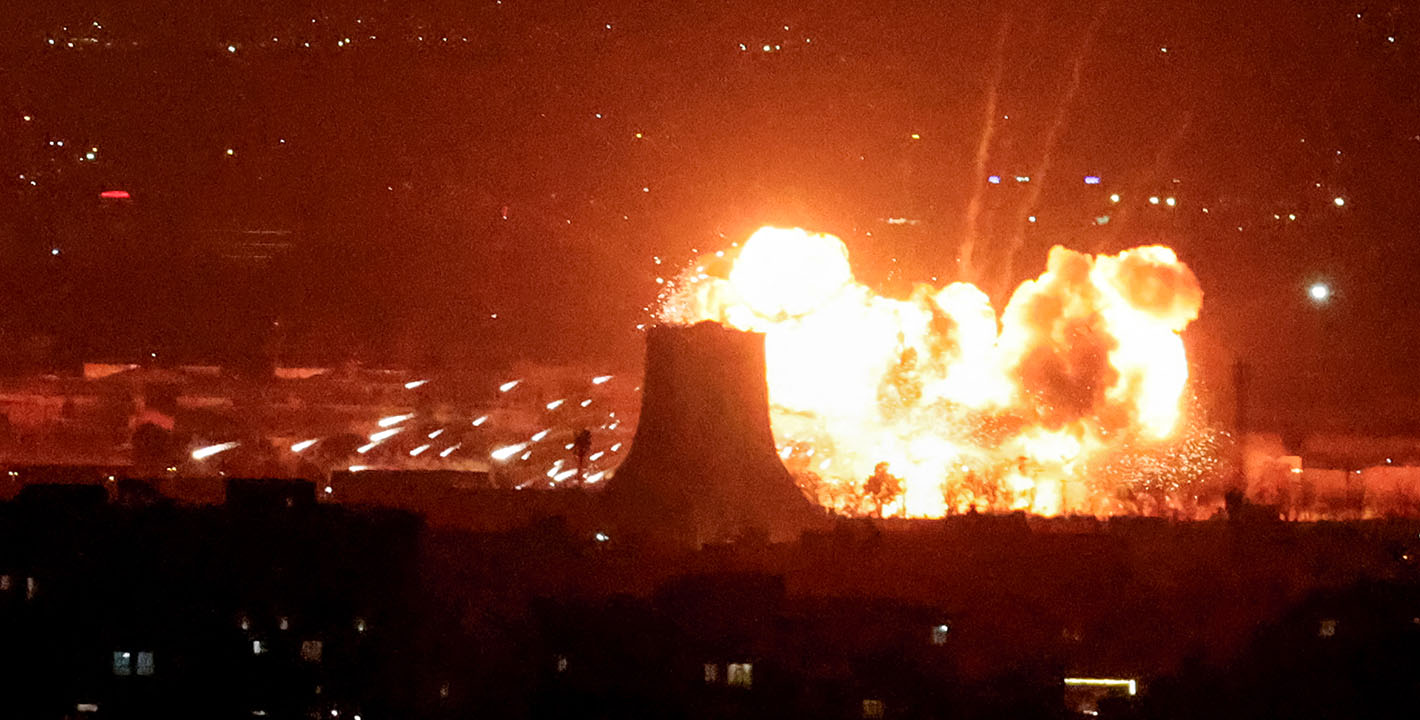
In an interview, Marc Lynch discusses his new book decrying the post-1990 U.S.-dominated order in the Middle East.

Michael Young
Unless the European Union-led energy transition provides economic development to Algeria, Morocco, and Tunisia, the process may be perceived as a new form of extraction.

Yasmine Zarhloule
As Washington reduces its presence in the country, the success of its withdrawal and continued containment of the Islamic State will hinge on adopting an approach of flexible oversight built around three priorities, as well as balancing Turkish and Israeli red lines.


Kheder Khaddour, Issam Kayssi
Damascus is increasingly adopting a system of rule that combines centralized and localized forms of administration and security maintenance, an approach that seems suited to the needs of a country fractured by civil war.
Gregory Waters
Egyptian President Abdel-Fattah el-Sisi is building a new republic defined by a social ethos of “nothing for free,” a new form of state capitalism, and hyperpresidential powers set within a military guardianship that secures his regime but leaves it unable to resolve political, economic, and social challenges.

Yezid Sayigh