

Commentary
Latvia and Lithuania have been considering whether they could temporarily host NATO nuclear weapons in the event of war or a similar crisis.
Sergejs Potapkins
{
  "authors": [
    "Ivan Filippov",
    "Ksenia Luchenko"
  ],
  "type": "commentary",
  "blog": "Carnegie Politika",
  "centerAffiliationAll": "",
  "centers": [
    "Carnegie Endowment for International Peace",
    "Carnegie Russia Eurasia Center"
  ],
  "englishNewsletterAll": "",
  "nonEnglishNewsletterAll": "",
  "primaryCenter": "Carnegie Russia Eurasia Center",
  "programAffiliation": "",
  "regions": [
    "Russia",
    "Europe",
    "Western Balkans"
  ],
  "topics": [
    "EU Foreign Policy",
    "Security",
    "Global Governance"
  ]
}
Source: Getty
Mikhail Zvinchuk’s detention could have dealt a serious blow to Russia’s propaganda infrastructure in the Balkans. Instead, the incident has made something else eminently clear: Moscow values and protects its propagandists, while Europe still hasn’t figured out what to do with them.
Montenegro has been rocked recently by several ostensibly unrelated but odd criminal incidents involving Russian citizens. The most high-profile and mysterious case was the detention and deportation of prominent Kremlin propagandist Mikhail Zvinchuk, the creator of Rybar (“Fisherman”)—one of Russia’s largest pro-war media projects. On the morning of October 9, the Montenegrin authorities detained Zvinchuk along with his wife and camera crew. By that evening, they had been deported to Russia.
How did Mikhail Zvinchuk, who is subject to Western sanctions, manage to travel to Montenegro—a NATO member state—and why was he able to return to Russia just a few hours after being detained? It is possible that he was counting on assistance from local pro-Serbian political and religious groups, which are closely tied to Russia’s network of influence in the Balkans. Whoever guaranteed his safety, the incident reveals that Europe still has not decided how to counter Russian influence networks operating on its territory. Moscow will certainly take advantage of that weakness.
Montenegro is a small country with a population of just over 600,000 people. However, it is the site of an intense political struggle, including one around EU integration, a path backed by the current government as well as most Montenegrins. Russian influence is a destabilizing factor, and, generally, the same political forces that support unity with Serbia and consider the West an enemy and moral threat also harbor sympathy for Vladimir Putin.
Zvinchuk’s Rybar network claims that he had gone to Montenegro to shoot a film about the country’s prospects for EU integration—or rather, about the economic and cultural difficulties that would surely follow the introduction of a visa regime with Russia on November 1.
Montenegro was the final stop on the Russian propagandist’s Balkan tour after Serbia and Bosnia-Herzegovina. The speed with which Zvinchuk was deported and the circumstances of his stay in Montenegro have once again shown that Montenegro can signal loyalty to the EU while at the same time being unwilling or afraid to touch Russia’s local influence networks and their enablers.
In terms of size and significance, Rybar is one of the largest pro-war Telegram channels. This pro-war media ecosystem emerged as a classic grassroots movement of military volunteers, soldiers and officers (including those who had fought or were fighting in Ukraine), and veterans eager to tell their compatriots the truth about the war.
Zvinchuk himself is an alumnus of the Russian Ministry of Defense (MoD) press service. Compared with the typical pro-war channels, Zvinchuk’s operation, with its sophisticated graphics, video segments, and 1.5 million subscribers, is a professional propaganda project. The Rybar network now consists of about 200 channels operating in twenty-eight different languages.
Hostility to official propaganda was baked into the pro-war channels from the get-go: The TV lies, they said, but we speak the truth. In this respect, Rybar is no different. In early September, for example, Rybar was among the first to report that the Russian army was experiencing serious problems during its push for the Ukrainian city of Lyman—a fact the MoD refuses to admit to this day. That is far from the only time Rybar has covered topics that are sensitive for the MoD or contradict official narratives.
Nevertheless, such criticism is entirely compatible with supporting the war. Rybar’s ultimate argument is that false reports, reckless “meatgrinder” assaults, and poor leadership hinder victory. For a pro-war reader, that makes Rybar more trustworthy than official reports.
That said, there’s no doubt about Zvinchuk’s Kremlin connections. Zvinchuk joined the working group on mobilization established by President Vladimir Putin in December 2022. The British Foreign Office asserts that Rybar is partially coordinated by the Russian presidential administration, receives funding from the state defense conglomerate Rostec, and works with Russian intelligence agencies.
This is not the first time Rybar and other pro-war propagandists have tried to start trouble in Europe. In September, journalists from the Czech outlet Seznam revealed that Vitaly Chashchukhin, a Russian national living in Germany, had arrived in Czechia with cameraman Igor Dolmatov to film content for Rybar. After the investigation was published, the Czech police detained the film crew and ordered them to leave the country.
Another prominent pro-war propagandist, Yury Podolyaka, launched a network called InfoDefense. In October, InfoDefense France circulated the dates and locations of upcoming protests in the country. Researchers at European Kremlin Watch monitored Russian media outlets incorporating protests that had already been announced by local organizers into a narrative about European governments sacrificing their own populations for the sake of a confrontation with Russia.
After returning to Moscow, Zvinchuk said the reason for his detention had been his request to film at a monastery in Cetinje, the residence of the Montenegrin metropolitans. “As soon as we started examining such a sensitive issue as a schism within the church, and from a cultural point of view at that, we became a threat to national security.” That explanation was somewhat unexpected. Rybar has never been part of the Orthodox pro-war community, nor is it publicly affiliated with the Russian Orthodox Church.
Tellingly, back in January, a press release by Russia’s foreign intelligence agency, the SVR, raised the issue of Montenegro, claiming that Patriarch Bartholomew I of Constantinople (to whom the SVR referred as the “Antichrist in a cassock”) “intends to grant autocephaly to the unrecognized ‘Montenegrin Orthodox Church’” to deal a blow to the Serbian Orthodox Church, which remains loyal to Moscow.
In reality, the Patriarch of Constantinople has never taken any action in support of the so-called “Montenegrin Church,” a marginal and insignificant group within Montenegro itself. Yet in a video posted on October 19, Zvinchuk repeated the SVR’s claims almost verbatim, even though his own knowledge of church affairs is obviously shaky.
The Church truly plays a significant role in Montenegro, and it is precisely the forces within the Church that might back up Russian propagandists in the fight against EU integration. Montenegro never achieved religious independence after the breakup of Yugoslavia, so the Metropolitanate of Montenegro and the Littoral remains part of the Serbian Orthodox Church, which is Moscow’s main ally in the Orthodox world and one of the most influential pro-Russian forces in the Balkans. The Serbian Patriarch Porfirije is the only Orthodox leader to have visited Russia and met with Putin since Russia’s full-scale invasion of Ukraine.
Both the Cetinje Monastery and the Metropolitanate of Montenegro and the Littoral deny that Zvinchuk had any special arrangements with them, claiming that his request went through the usual channels. It is hard to say for certain that the Serbian Orthodox Church or its political allies in Montenegro specifically promised Zvinchuk immunity once he arrived in a country that should have been off-limits for him, but it is safe to assume that he went there on assignment from Russian intelligence, diplomats, or an Orthodox oligarch. Given how quickly Zvinchuk and his entourage were expelled, his shadowy backers in a sense kept their word: Possible Church protection worked, though not completely.
Zvinchuk has been sanctioned by Brussels, London, and Washington, and in 2024, the U.S. State Department offered a reward of up to $10 million for information about the team behind Rybar, which was suspected of having interfered in the presidential election. With a rap sheet like that, Zvinchuk took a serious risk traveling to a NATO country. He even openly posted taunting messages about it: “Even if you’re under sanctions and subject to a travel ban, even if you’re going to a country that’s obligated to enforce that travel ban, THERE’S A WAY OUT.”
Getting into Montenegro from Bosnia with a Russian passport was quite easy until November 1, when the visa regime entered into force. But, as Zvinchuk’s detention has shown, remaining in the country without the National Security Agency’s knowledge was more difficult.
Even in Moscow, many were certain that Zvinchuk faced extradition to Ukraine or a similar fate. Instead, the Montenegrin authorities let him return to Russia scot-free. The next day, the office of Montenegrin President Jakov Milatović demanded an explanation as to how a person subject to EU sanctions was able to enter the country, and what information the security services had.
Under Montenegrin law, the only crime Zvinchuk is guilty of is illegal entry, which is punishable solely by deportation. There are no legal mechanisms for arresting him or extraditing him to a third country without a request. Furthermore, in the United States, he is wanted on suspicion of election interference: not exactly a convenient topic for the Trump administration.
Still, Zvinchuk’s detention could have served as the first major blow to Russia’s propaganda infrastructure in the Balkans. Instead, the incident has made something else eminently clear: Moscow values and protects its propagandists, while Europe still hasn’t figured out what to do with them. The worst the Kremlin’s itinerant ideologues have to worry about is a few hours in police custody.
Writer, researcher of Russia's military influencer community
Senior research fellow at the NEST Centre
Carnegie does not take institutional positions on public policy issues; the views represented herein are those of the author(s) and do not necessarily reflect the views of Carnegie, its staff, or its trustees.
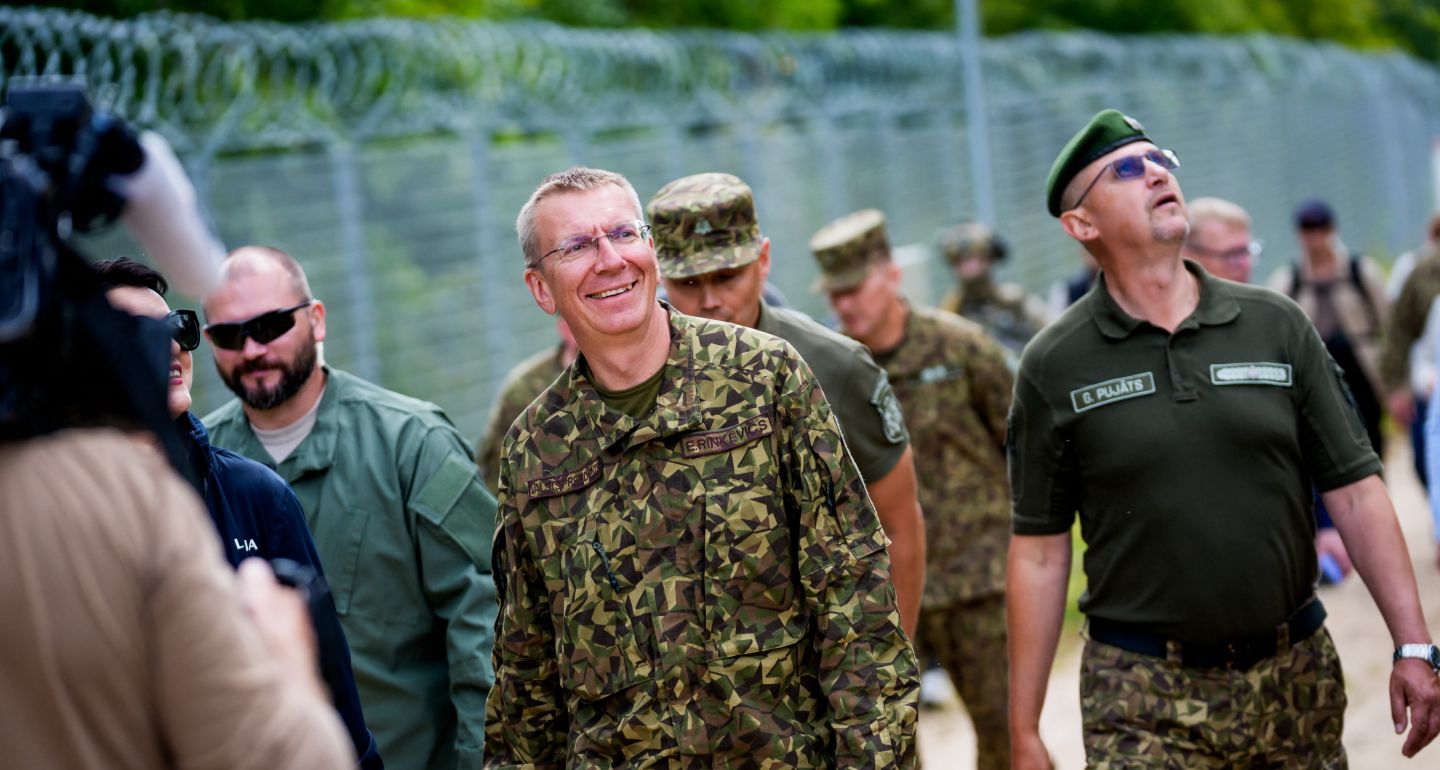
Latvia and Lithuania have been considering whether they could temporarily host NATO nuclear weapons in the event of war or a similar crisis.
Sergejs Potapkins
Russia does not have to treat Western companies as equal partners. A centralized regime built on a foundation of oil and gas income was never going to relinquish what it saw as sovereign control.
Edward C. Chow
The new Serbian leadership may have promised to keep on cooperating with Russia, but soon they will have to make a choice between fighting corruption and sealing lucrative deals with Moscow. The two are mutually exclusive, even if the new leaders in Belgrade haven’t yet realized it.
Maksim Samorukov
Serbia’s electoral earthquake is an extremely rare example of an entire political system being defeated by street protesters who played by the rules.
Alexander Baunov
The pressures of war are gradually warping Russia’s system of governance, making it more vulnerable to a future crisis.

Tatiana Stanovaya