

In The Media
Michele Dunne, Robert Kagan
{
  "authors": [
    "Robert Kagan"
  ],
  "type": "legacyinthemedia",
  "centerAffiliationAll": "",
  "centers": [
    "Carnegie Endowment for International Peace"
  ],
  "collections": [],
  "englishNewsletterAll": "",
  "nonEnglishNewsletterAll": "",
  "primaryCenter": "Carnegie Endowment for International Peace",
  "programAffiliation": "",
  "programs": [],
  "projects": [],
  "regions": [
    "China"
  ],
  "topics": [
    "Foreign Policy",
    "Nuclear Policy"
  ]
}
REQUIRED IMAGE
Source: Carnegie
Reprinted from the Weekly Standard, March 22, 1999
Bill Clinton is great at apologizing to foreign governments for the policies of his predecessors. A year ago, on a trip to Africa, he apologized for past American support for some African dictatorships. Last week in Central America, he apologized for U.S. support of the Guatemalan military during the Cold War.
Clinton is not the first American president to engage in this embarrassing and unwarranted self-flagellation. In 1979, after the Sandinistas came to power in Nicaragua, Jimmy Carter beseeched the Communist revolutionaries not to hold him responsible for the sins of his predecessors. With Clinton, whose foreign policy looks more and more like a sleazier version of Carter's, the gesture has become habitual -- indulging in moral preening in a foreign land at the expense of the (better) men who have gone before him.
What makes last week's "apology" in Guatemala all the more striking, though, is that when it comes to Clinton's own failed policies -- say, with regard to China -- this president never apologizes.
Actually that's not quite right. Clinton does apologize -- to the Chinese government, and for the Chinese government. His secretary of state virtually asked forgiveness from Beijing for our even contemplating helping Taiwan (and Japan) defend themselves against Chinese missiles. And Clinton's aides routinely (on background) make excuses for China's repression at home and troublemaking abroad. But basically the Clinton administration's policy of engagement-no-matter-what means never having to say you're sorry for what you've done yourself.
Did the Chinese government steal secrets allowing it to build smaller, more efficient nuclear warheads that can be aimed at U.S. cities? Did they obtain technological know-how from U.S. satellite companies to improve the reliability of their intercontinental ballistic missiles? Did they fuel a nuclear weapons race between Indian and Pakistan by supplying Pakistan with nuclear technology and materials? Did they share their own improved ballistic-missile designs with the North Koreans, giving Pyongyang the ability to strike targets across the Pacific? Have they engaged in a harsh crackdown on democracy activists for the last year?
Yes, yes, yes, yes, and yes. But in the face of the manifest failure of their policy, Clinton administration officials just keep chirping merrily along about the success of their "strategic partnership" with China. Clinton insisted last week his policy "has paid dividends." The relationship with China is "open, candid, honest." And just look at the "dividends" we've received. Okay, maybe they stole our nuclear secrets and helped North Korea build better ICBMs. But, hey, they signed the Chemical Weapons Treaty and the Test Ban Treaty. Maybe they are cracking down on dissent, but at least they signed a human rights convention. To be sure, as the evidence piles up against the administration, officials strain to find ever more imaginative justifications for its policy.
We have to engage the Chinese, says Secretary of State Madeleine Albright, because they have a lot of people and a "huge landmass." Presumably, if we don't engage this landmass, it will fall on us.
The failure of Clinton's policy means this: China should and will emerge as a central issue in American politics over the next 18 months, and especially in the 2000 presidential campaign. Republicans will all cheerfully take shots at the obvious failures and ludicrous justifications of the Clinton administration, and that's fine with us. But the essential challenge is to confront the failure of the policy at its core, to repudiate the premises of a policy of blind engagement, and to articulate a serious alternative political and strategic vision for East Asia. Such an alternative would emphasize relations with our true strategic partners -- Japan, South Korea, and Taiwan -- and would provide them with the wherewithal to defend themselves against an increasingly dangerous China. This means pushing forward theater missile defenses for Taiwan, Japan, and South Korea. It means placing trade at its appropriate level of priority -- subordinate to our fundamental strategic and moral interests. This won't be easy for a Republican party that sometimes seems to love commerce more than it loathes Chinese communism.
This also means confronting Republican complicity, both in Congress in recent years and during the Bush administration, in the current failed China policy. We're not encouraged by speaker of the House Dennis Hastert, who said last week, "The more we're involved with China, the better off we are -- for us and for China and the Pacific area." How nice. Clinton himself couldn't have said it better. How simple. Too bad it isn't true.
Obviously, the issue isn't more or less "involvement." It's the nature of our involvement. Fortunately, other Republicans, including Hastert's Senate counterpart, Trent Lott, seem willing to think more seriously about China policy. Will Lott and his colleagues lay the groundwork for making China policy an election issue in 2000? Will the presidential candidates be willing to challenge not only Clinton's policy but the knee-jerk accommodationist instincts of some pro-China Republican business constituencies? Doing so would be good for the GOP. It would also be good for the country.

Former Senior Associate
Kagan, author of the recent book, The Return of History and the End of Dreams (Knopf 2008), writes a monthly column on world affairs for the Washington Post and is a contributing editor at both the Weekly Standard and the New Republic.
Recent Work

Michele Dunne, Robert Kagan
Robert Kagan, Michele Dunne
Carnegie does not take institutional positions on public policy issues; the views represented herein are those of the author(s) and do not necessarily reflect the views of Carnegie, its staff, or its trustees.
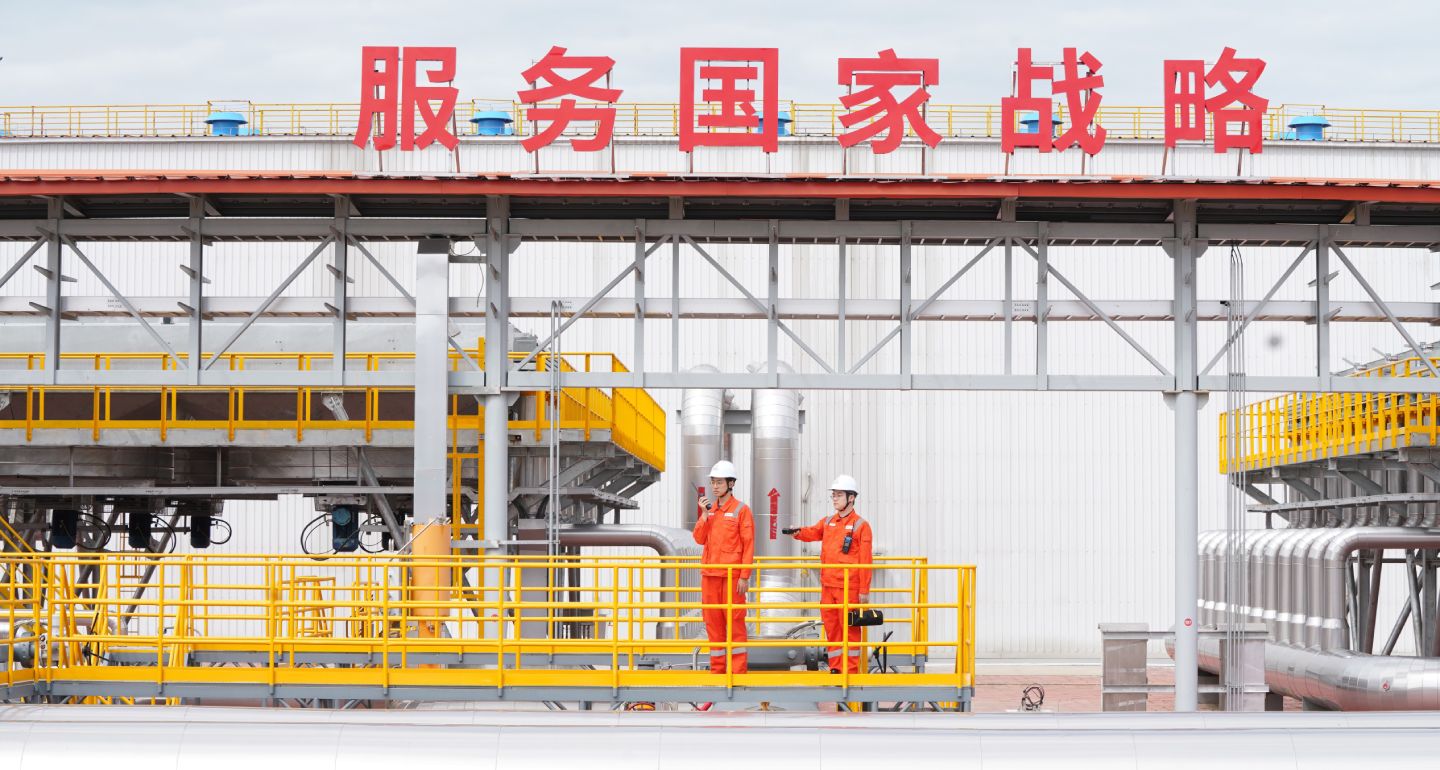
A leak of Russian gas price data helps establish that China is paying Russia far less than Central Asian countries and Gazprom’s former European customers.

Sergey Vakulenko

Japan’s long-term security policy is driven by concerns about China, and there is little appetite for (or interest in) pursuing a confrontation with Moscow.

James D.J. Brown

Without a ceasefire with Ukraine on attacking each other’s energy infrastructure—to which the Kremlin is unlikely to agree—the diesel agreement between Putin and Trump is largely for show, rather than representing a genuine increase in the volumes of Russian diesel on the global market.
Sergey Vakulenko

Despite a new textbook, an influx of Russian teachers and managers, and an end to the teaching of Ukrainian, the Kremlin is unlikely to have “reprogrammed” locals.

Konstantin Skorkin

Cargo traffic through Russia’s Northern Sea Route has increased because of the disruption caused by the conflict in the Middle East, the Ukraine war, and U.S.-China tensions.

Mikhail Korostikov