

In The Media
Minxin Pei
{
  "authors": [
    "Minxin Pei"
  ],
  "type": "legacyinthemedia",
  "centerAffiliationAll": "dc",
  "centers": [
    "Carnegie Endowment for International Peace"
  ],
  "collections": [],
  "englishNewsletterAll": "asia",
  "nonEnglishNewsletterAll": "",
  "primaryCenter": "Carnegie Endowment for International Peace",
  "programAffiliation": "AP",
  "programs": [
    "Asia",
    "Democracy, Conflict, and Governance"
  ],
  "projects": [],
  "regions": [
    "United States",
    "China"
  ],
  "topics": [
    "Military",
    "Foreign Policy"
  ]
}
REQUIRED IMAGE
Source: Carnegie
Reprinted from the Christian Science Monitor, April 9, 2001
China's handling of the collision between a US reconnaissance plane and a Chinese fighter jet has puzzled, frustrated, and pained Americans who have worked hard to build a strong bilateral relationship. Many find Beijing's strident rhetoric and insistence on a full US apology both disturbing and incomprehensible.
As this dispute drags on, at time of writing, the risks of severely damaging US-China relations could rise - especially when Americans view China's action through prisms formed by American cultural values and evaluate it against expectations that overlook Chinese sentiments and political reality.
To avoid deepening mutual distrust and animosity, one must look at the three factors that have shaped Beijing's decisionmaking process:
? First, the initial American reaction to the accident, especially the apparent death of a Chinese pilot, was perceived to be insensitive. In addition, this perceived casualness toward the loss of a Chinese life was coupled with a direct demand from President George W. Bush for the immediate return of the American crew and plane. For Chinese leaders, this was reminiscent of the initial American response to the errant bombing of the Chinese Embassy in Belgrade in May 1999. After that tragedy occurred, then-President Clinton was shown in a T-shirt on a golf course, offering an apology in a manner viewed in China as too casual.
Perception affected policy. It probably strengthened the case for the more hard-line elements inside the government while undermining the positions of those preferring a softer approach. Thus, the overall guidelines set by Chinese leaders on resolving this incident (such as the demand for an official apology and responsibility) lacked flexibility.
? Second, as in other countries, China's national experience and collective memory constitute a powerful force in foreign-policy decisionmaking.
In the Chinese case, the national psyche is dominated by two sets of memories - the country's long and splendid civilization on the one hand and its humiliation at the hands of Western powers since the mid-19th century on the other. At times, this can be a particularly combustible mix because such national psyche makes both Chinese leaders and public react to incidents involving foreign countries with extreme sensitivity. Current events are analogized to past instances of national humiliation. Even though the manifestation of such reaction may be viewed abroad as shrill, within China it is regarded as justified.
Since the early 1990s, the incessant American criticisms of China over human rights, trade, Taiwan, and other issues have placed new stress on this fragile psyche and set into motion a vicious cycle that is poorly understood in the West.
As China's image has deteriorated among the Americans, the caricature of China as an emerging evil empire has also embittered ordinary Chinese people who, through expanding access to information, have become better-informed of how the West views China. Many of them regard the anti-China rhetoric by the American media and politicians as evidence of America's unwillingness to accept China's rise. Regrettably, such spontaneous popular antipathy to the United States has frequently been dismissed as a product of manipulation by the Chinese government. It may seem inconceivable that the Chinese public, repressed by their government, could resent American criticisms of the same government.
This new political reality - a Chinese public that reacts quickly and strongly to what is perceived as foreign bullying - ties the hands of Chinese leaders. More important, it prompts Beijing to adopt measures that would elicit more American criticisms, thus completing the vicious cycle.
? Finally, as a result of China's internal political change and socioeconomic transformation, decisionmakers in Beijing face new constraints, forcing them to seek compromised solutions that appear to foreign leaders as indecisive and unsatisfactory.
The current collective leadership, established after the passing of Deng Xiaoping, makes key decisions typically through time-consuming consensus-building. The rising nationalist sentiments among ordinary citizens also make Chinese leaders heed the force of public opinion. The ruling party's real basis of legitimacy is not communism, but nationalism. Every Chinese can recite the late leader Mao Zedong's proclamation upon the founding of the People's Republic: "The Chinese people have stood up!"
The worst nightmare for Chinese leaders today is not a Jeffersonian democrat, but a Maoist nationalist who accuses them of kowtowing to the West. (The most shocking slogan posted in Beijing after the bombing of the Chinese Embassy in 1999 was: "Down with the treasonous government!")
The Chinese public, of course, has long been aware of this soft spot. Indeed, criticizing their government's foreign policy is one of the few political activities they can openly engage in with immunity.
Thus, China's uncompromising stance on the spy plane incident must not be attributed merely to the hardliners in the government, but should be understood in a broad political and psychological context.

Former Adjunct Senior Associate, Asia Program
Pei is Tom and Margot Pritzker ‘72 Professor of Government and the director of the Keck Center for International and Strategic Studies at Claremont McKenna College.
Recent Work
Minxin Pei
Minxin Pei
Carnegie does not take institutional positions on public policy issues; the views represented herein are those of the author(s) and do not necessarily reflect the views of Carnegie, its staff, or its trustees.

When faced with fuel shortages in the past, Central Asian governments could always count on additional supplies from Moscow. That safety net no longer exists.

Galiya Ibragimova

Despite unhappiness on the ground, Moscow is determined to use both carrot and stick to ensure there is record support for United Russia in occupied Ukraine.

Konstantin Skorkin

The recent damage inflicted by Ukrainian drones and missiles on Russia has made Belarus aware of its own vulnerabilities—and surprisingly amenable to Kyiv’s demands.

Artyom Shraibman
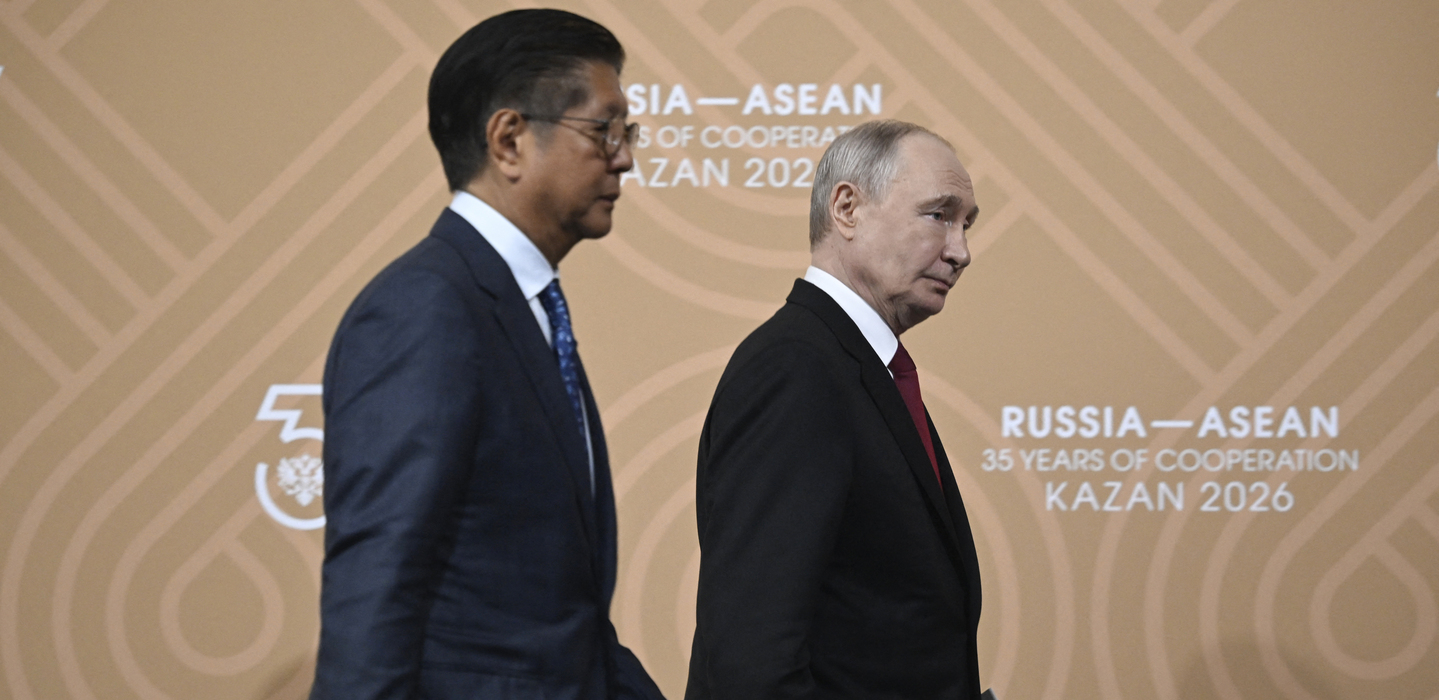
Russia looks set to reap economic benefits from closer ties with Southeast Asian countries that are keen to find reliable energy suppliers and diversify trade ties.

Alexander Gabuev
Ongoing uncertainty in the Middle East allows Moscow to both increase its influence in Tehran and continue to enjoy the financial windfall of higher oil prices.

Nikita Smagin