

Commentary
Russia’s AI-driven propaganda campaigns operate in a fragmented, chaotic, and often illogical manner. That’s not necessarily a problem for the Kremlin, though: It’s much easier to mimic genuine public debate that way.
Ilya Klishin
{
  "authors": [
    "Matthew Rojansky",
    "Nikolas Gvosdev"
  ],
  "type": "legacyinthemedia",
  "centerAffiliationAll": "dc",
  "centers": [
    "Carnegie Endowment for International Peace"
  ],
  "collections": [],
  "englishNewsletterAll": "ctw",
  "nonEnglishNewsletterAll": "",
  "primaryCenter": "Carnegie Endowment for International Peace",
  "programAffiliation": "russia",
  "programs": [
    "Russia and Eurasia"
  ],
  "projects": [
    "U.S.-Russia Bilateral Presidential Commission"
  ],
  "regions": [
    "North America",
    "United States",
    "Caucasus",
    "Russia"
  ],
  "topics": [
    "Political Reform",
    "Foreign Policy"
  ]
}
Source: Getty
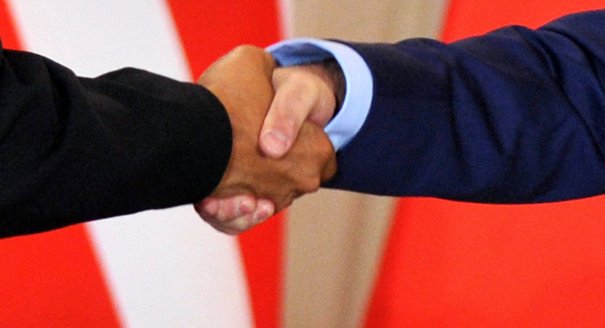
Excessive U.S. criticism of Russian domestic politics reinforces mutual suspicions between Moscow and Washington and threatens to undo the “reset” initiated in 2009 by presidents Obama and Medvedev.
Source: International Herald Tribune

Thus, when Secretary of State Hillary Rodham Clinton branded Russia’s recent State Duma elections as unfree and unfair — both preempting and exceeding the assessment of the O.S.C.E. observer mission in which the United States participated — she in effect denied the legitimacy of the Russian government that is ostensibly our partner in the U.S.-Russia “reset.”
Prime Minister Vladimir Putin’s sharp response — and President Dmitri Medvedev’s threat to target U.S. missile-defense installations in Europe with nuclear weapons — has raised concerns that U.S.-Russia relations could again deteriorate to pre-reset levels, or worse.
Certainly, change is in the air: Tens of thousands on the streets of Moscow and other Russian cities are demanding a recount of the Dec. 4 election and an end to the authorities’ monopoly on power. But what has not changed is the centrality of U.S.-Russia cooperation to addressing urgent U.S. national interests, including advancing nuclear arms control and nonproliferation, combating terrorism and drug trafficking, and managing the drawdown of NATO forces while maintaining security in Afghanistan and Central Asia.
Unfortunately, the romance of change has swept many in Washington off their feet, and some have forgotten what it takes to keep the underlying U.S.-Russia relationship strong and stable.
Mutual respect and mutual legitimacy are key to productive relations. Taken by itself, Clinton’s frank assessment of the Duma elections was not wrong. The problem is the sensitivities it provoked on the Russian side.
It should be no surprise that Russians, including not just Putin but many of those protesters calling for his ouster, reject the notion that Americans should sit in judgment of Russian domestic politics. They feel this way whatever the issue de jure of American outrage: Electoral transparency, rule of law and human rights are the usual suspects.
The problem is not that Americans have these concerns. Whether Russians like it or not, U.S. representations about human rights and democracy are part and parcel of the bilateral relationship. But it is the way in which such concerns are raised and responded to that poses a danger to preserving, sustaining and even extending cooperation on issues that matter to both sides. A Russian government that feels that its U.S. counterpart is secretly rooting for its overthrow is not going to offer sustained cooperation in the security and economic dimensions of the relationship.
In turn, the Russian side needs to understand how its statements and actions — both in terms of its domestic policy as well as its relationships with its neighbors — can make it difficult for Americans who support closer engagement with Moscow to mount a full-throated defense of the reset.
The Obama and Medvedev administrations have taken steps to formalize the basis for the relationship, notably via the Bilateral Presidential Commission, which links U.S. departments and Russian ministries in work groups ranging from clean energy cooperation to counterterrorism. But it is essential to turn this commission from an Obama-Medvedev initiative that may die once one or both of its principals leaves office into a permanent intergovernmental body that can continue its work as presidents come and go.
The potential of domestic political debates to precipitate crises for the relationship must also be checked. In Washington, the reset is identified with Obama, which has meant that most Republicans — and even many Democrats — refuse to take responsibility for its success. In Moscow, anti-Western nationalists, who gained seats in the Duma in the elections, continue to see reset as a fig leaf for continued U.S. bullying.
We should now broaden the dialogue so that people on both sides, even those who are the most skeptical — and usually also the most ignorant — of the other have the ability to meet and engage.
This process could be helped along by a more deliberate public relations strategy for the reset. Right now, the public narrative is one of disappointed expectations and mutual suspicion. Instead, the focus should be on getting the publics in both countries to understand the benefits of cooperation for both sides.
Russia’s latest post-election upheaval combined with America’s pre-election politicking threaten to amplify normal differences of opinion to crisis levels. The danger if this destroys the reset is that the damage may be irreparable.
Instead of permitting this slow motion disaster to occur, Moscow and Washington must now make a concerted effort to consolidate the gains of the past three years and build fuller ties between citizens, political parties and bureaucracies. Old habits may die hard, but with less fear and more trust in the air they will soon breathe their last.
This article originally appeared in the International Herald Tribune.

Former Deputy Director, Russia and Eurasia Program
Rojansky, formerly executive director of the Partnership for a Secure America, is an expert on U.S. and Russian national security and nuclear-weapon policies.
Nikolas Gvosdev
Carnegie does not take institutional positions on public policy issues; the views represented herein are those of the author(s) and do not necessarily reflect the views of Carnegie, its staff, or its trustees.

Russia’s AI-driven propaganda campaigns operate in a fragmented, chaotic, and often illogical manner. That’s not necessarily a problem for the Kremlin, though: It’s much easier to mimic genuine public debate that way.

Ilya Klishin

Without a ceasefire with Ukraine on attacking each other’s energy infrastructure—to which the Kremlin is unlikely to agree—the diesel agreement between Putin and Trump is largely for show, rather than representing a genuine increase in the volumes of Russian diesel on the global market.

Sergey Vakulenko

Russian strikes are weakening the economy sustaining Ukraine’s war effort. Closing the growing funding gap will require more European support and politically contentious reforms in Kyiv.

Balázs Jarábik

Ex-president Gurbanguly Berdimuhamedov remains interested in politics, but his son Serdar, Turkmenistan’s current president, is becoming increasingly independent and willing to break with his father’s legacy. If their covert rivalry goes too far, both risk losing power.

Galiya Ibragimova

Despite a new textbook, an influx of Russian teachers and managers, and an end to the teaching of Ukrainian, the Kremlin is unlikely to have “reprogrammed” locals.

Konstantin Skorkin