

{
  "authors": [
    "Lilia Shevtsova",
    "David J. Kramer"
  ],
  "type": "legacyinthemedia",
  "centerAffiliationAll": "",
  "centers": [
    "Carnegie Endowment for International Peace",
    "Carnegie Russia Eurasia Center"
  ],
  "collections": [],
  "englishNewsletterAll": "",
  "nonEnglishNewsletterAll": "",
  "primaryCenter": "Carnegie Russia Eurasia Center",
  "programAffiliation": "",
  "programs": [],
  "projects": [],
  "regions": [],
  "topics": []
}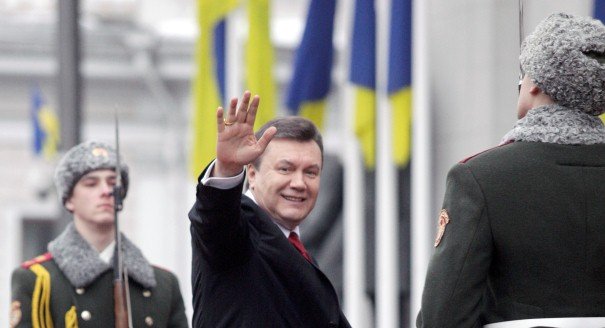
Source: Getty
Ukraine, Russia, and Two Horses
Ukraine is the most important test of the Kremlin’s neo-imperialistic longings and also a test of the West’s interest in expanding its normative principles eastward—however, Ukraine itself should demonstrate a desire for deeper integration based on a democratic path.
Source: American Interest

This incident demonstrated not only the personal animosity between the two leaders but also the mutual suspicion and distrust that plagues the relationship between the two states. Russia’s leaders never hesitate to remind Ukraine who the big boy on the block is—a strange way, to say the least, to win over friends and allies. Indeed, one should not underestimate Moscow’s ability to alienate potential partners through its arrogant, aggressive approach to foreign policy, especially when its immediate neighbors are involved.
Of all the states in Eurasia, Ukraine is the most important test of the Kremlin’s neo-imperialistic longings and of Russia’s readiness (or not) to be a modern state. It is also is a test of the West’s interest in expanding its normative principles eastward, which can best be advanced if Ukraine itself demonstrates a desire for deeper integration based on a democratic path. ...
About the Authors

Former Senior Associate, Russian Domestic Politics and Political Institutions Program, Moscow Center
Shevtsova chaired the Russian Domestic Politics and Political Institutions Program at the Carnegie Moscow Center, dividing her time between Carnegie’s offices in Washington, DC, and Moscow. She had been with Carnegie since 1995.
David J. Kramer
David J. Kramer served as assistant aecretary of state for democracy, human rights and labor in the George W. Bush administration and is director of European & Eurasian Studies at Florida International University’s Steven J. Green School of International and Public Affairs.
Carnegie does not take institutional positions on public policy issues; the views represented herein are those of the author(s) and do not necessarily reflect the views of Carnegie, its staff, or its trustees.