

In The Media
John Judis
{
  "authors": [
    "John Judis"
  ],
  "type": "legacyinthemedia",
  "centerAffiliationAll": "",
  "centers": [
    "Carnegie Endowment for International Peace"
  ],
  "collections": [],
  "englishNewsletterAll": "",
  "nonEnglishNewsletterAll": "",
  "primaryCenter": "Carnegie Endowment for International Peace",
  "programAffiliation": "",
  "programs": [],
  "projects": [],
  "regions": [
    "North America",
    "United States"
  ],
  "topics": [
    "Political Reform"
  ]
}
Source: Getty
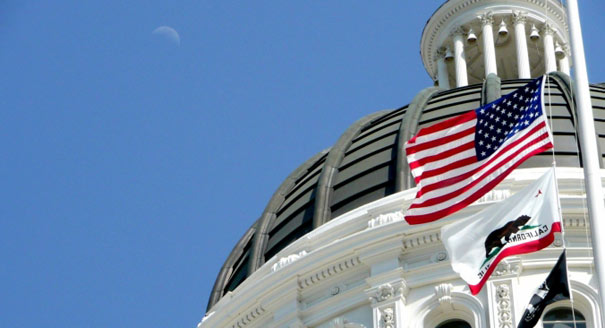
Not too long ago, California was in calamitous shape. But over the last few years, the state has experienced a remarkable turnaround.
Source: New Republic
Not too long ago, California was in calamitous shape—if the unresolvable budget battles and furloughing of hundreds of thousands of workers weren’t depressing enough, there was also the decrepit condition of the school system. But over the last few years, California has experienced a remarkable turnaround. Unemployment is down, and the state’s bond rating is up. The budget, to everyone’s amazement, is in surplus. Equally surprising is the state’s political transformation.California Democrats, an historically ineffectual bunch, are finally learning how to wield their majority power. They’ve been so successful that Barack Obama and the other Democrats in Washington who seem bedeviled by an intransigent opposition party should study their moves well.
For years, California’s political experts had insisted that what the state suffered from was party polarization—the Democrats had moved too far left, the Republicans too far right—and what the state needed was a post-partisan politics. Arnold Schwarzenegger, who became governor in 2003, embodied that dream; and his utter failure, ending in the 2009 budget debacle where the state had to issue IOUs to its workers, proved it to be unrealizable.Many of Schwarzenegger’s attempts to reach a magical consensus kept running afoul of his own party’s leaders, and pretty soon, voters understood that the main reason for the state’s gridlock was the Republicans’ turn toward extremism. In his first two years in office, Jerry Brown, Schwarzenegger’s successor, cleverly reinforced this impression. He made significant concessions in his own budgets, angering his fellow Democrats, but he did it in large part because he knew the Republicans were never going to cooperate. He showed voters that, if they went along with Republican opposition to revenue increases, they would have to accept massive cuts in services they value, like, say, educating their children. That helped Democrats win two-thirds of the seats in the state Assembly and Senate last year, giving them a filibuster-proof majority. Voters also passed Proposition 30, which raises taxes on the wealthy to improve schools.
In Washington, Obama and the Democrats have a mixed record of exposing Republican obstructionism. When they have avoided a big fight, as they did with the budget in 2010, they have gotten blamed for stalling the economy; when they have risked the unpleasantness of a showdown, while appearing reasonable, even conciliatory, the public has rallied to them. That happened after the fiscal-cliff showdown last December. Democrats aren’t going to win two-thirds of either chamber of Congress any time soon, but as their counterparts in California showed, over time, enough people will eventually tire of the Republicans’ shenanigans (see what happened with the recent farm bill) and expand the Democrats’ hold over the electorate—which is a precondition for keeping the presidency, winning back the House, and being able to get their bills passed and nominees confirmed.
Another key to the California Democrats’ success was exposing—and then changing—the rotting substructure of state politics. Even though Democrats have held a majority in the state Assembly and Senate for 41 of the last 43 years, they had, until recently, been hamstrung by rules requiring a two-thirds vote on passing any budgets or initiating any tax increases. But in 2010, with Schwarzenegger’s failures still fresh in the public’s mind, Democrats won a popular vote that allowed them to pass budgets with a majority rather than a supermajority of the legislature. That allowed Brown to create the stark choice between cuts and taxes that led to the passage of Proposition 30.
Similarly, Democrats in Washington need to eradicate, once and for all, the deeply undemocratic filibuster, which requires 60 votes to do much of anything in the Senate. Democrats haven’t gotten rid of it yet because they fear that, if the Republicans were to win back the Senate, they wouldn’t be able to block their measures. This is defeatist logic: Being able to pass bills in the Senate will put the onus of obstruction on the Republican House and make it more likely that the Democrats will retain the Senate. And if Democrats can win back the House, it will allow them to address issues like climate change that are difficult to broach in the current Congress.
California’s turnaround can also be attributed to a shift in election rules. The state’s Democrats wouldn’t admit it, but they suffered from political redistricting, which allowed them to preserve their majority but also gave Republicans their share of safe seats. In 2008, at the urging of Schwarzenegger and good-government types, voters backed the creation of a nonpartisan redistricting commission. By eliminating some safe Democratic and Republican seats, the reform actually created a better match between the state’s districts and the Democrats’ rising majority. Partly as a result, the Democrats gained seven state legislative as well as four congressional seats in 2012.
Washington Democrats suffer redistricting woes as well. In House elections, the Democrats won more votes than Republicans in 2012 but failed to win back the chamber, because the Republicans, after their statehouse victories in 2010, were able to gerry-mander the districts in such a way that Democrats now need about 55 percent of the popular vote to reclaim a majority. Democrats should obviously try to win back statehouses in 2020, but using that newfound power to rejigger the districts is not the right strategy.
When Democrats have controlled states, they have often been content to protect their incumbents and to guarantee minority districts at the expense of improving their overall margins in the House. Like California’s Democrats, they would be better off under nonpartisan redistricting, even if incumbents, including African American candidates in the South, would have to work harder for reelection. It’s a risk—like getting rid of the filibuster or staging pitched battles over the budget—but as the California experience shows, the rewards can be great.
Former Visiting Scholar
As a visiting scholar at Carnegie, Judis wrote The Folly of Empire: What George W. Bush Could Learn from Theodore Roosevelt and Woodrow Wilson.
Recent Work
John Judis
John Judis
Carnegie does not take institutional positions on public policy issues; the views represented herein are those of the author(s) and do not necessarily reflect the views of Carnegie, its staff, or its trustees.
Ongoing uncertainty in the Middle East allows Moscow to both increase its influence in Tehran and continue to enjoy the financial windfall of higher oil prices.

Nikita Smagin

The ruling elites in contemporary Russia are not a political class, but a community of managers who are not subject to competition or public accountability. The state is becoming an operating apparatus without any internal autonomy.

Alexandra Prokopenko

Pashinyan’s pro-European party has been re-elected with a decisive victory. But the pro-Russian opposition could still slow Armenia’s progress toward peace with Azerbaijan and rapprochement with Europe.
Mikayel Zolyan

How did Putin co-opt Russia’s political and economic elites, ensuring no more than fitful resistance to the regime’s war on Ukraine?
Alexandra Prokopenko
For all the menacing rhetoric, the Armenian prime minister remains a leader with whom Putin is prepared to interact: not as an ally, but as a partner, albeit a problematic one.

Alexander Atasuntsev