

In The Media
Vikram Nehru
{
  "authors": [
    "Vikram Nehru"
  ],
  "type": "other",
  "centerAffiliationAll": "dc",
  "centers": [
    "Carnegie Endowment for International Peace"
  ],
  "collections": [],
  "englishNewsletterAll": "asia",
  "nonEnglishNewsletterAll": "",
  "primaryCenter": "Carnegie Endowment for International Peace",
  "programAffiliation": "AP",
  "programs": [
    "Asia"
  ],
  "projects": [],
  "regions": [
    "Southeast Asia",
    "Indonesia"
  ],
  "topics": []
}
Source: Getty
While the book's logic is compelling, with solid analysis and prescriptions, its recommendations for fundamental reforms fail to take into account the political-economy constraints embedded in post-Suharto Indonesia's complex and evolving political system.
Source: Bulletin of Indonesian Economic Studies
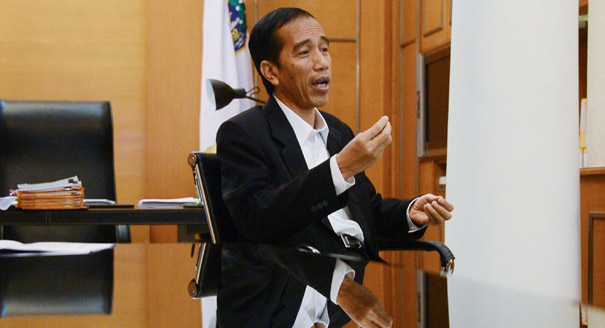
The Economic Choices Facing the Next President was published in October 2014 to coincide with the start of Joko (Jokowi) Widodo’s time in office. The book was written by three well-known, highly respected economists with a keen understanding of Indonesian economics, history, and politics. The authors urge the new president to launch a vigorous export-oriented, labour-intensive manufacturing strategy that ‘would transform the lives of millions of its citizens’. Indonesia, they argue, has a ‘once-in-a-century opportunity’ of capturing the labour-intensive manufactured goods market that China is vacating. Business-as-usual policies over this presidential five-year term would forego this opportunity, in which case the country could look forward to a modest annual average GDP growth rate of 5%, an additional 6 million ‘good’ jobs (fewer than the 10 million new entrants into the labour market), and greater income inequality. The authors suggest instead to strike out in a new direction and adopt transformative policy reforms that would double the growth rate, generate more than 21 million good jobs, and reduce income inequality.
Almost two years have passed since Economic Choices was published and Jokowi assumed the presidency. It is an opportune time to examine the book’s analysis and policy recommendations with the benefit of hindsight. Of one thing we can be sure: Indonesia has not been launched on a growth trajectory of 10% a year—or, at least, not yet. Growth has, if anything, been below trend (4.8% in 2015, down from around 5.0% in 2014), and the consensus forecast suggests only marginal improvement in 2016 and 2017.
Yet this book, like others with similar messages, has had little influence on Indonesian policies. In Indonesia, there is remarkable consensus among economists on ‘what’ reforms are needed to accelerate growth, but there is much less appreciation of ‘how’ to navigate the political economy of the reform process—from convincing policymakers of the necessity of such reforms to implementing policy change in the teeth of opposition from vested interests. The authors note, for example, that the policies they recommend were included in the reforms that propelled Indonesia’s dramatic twentyfold expansion in manufactured exports during 1985–97, and argue that if Indonesia did it in the past it could do so again.
But therein lies the rub. The Indonesia of 2016 bears no resemblance to that of 1985. In 1985, the technocrats had to convince just one person of the need for reform—President Soeharto—and his support gave them the political muscle to overcome vested interests. In 2016, political power is dispersed. Post-1998 political reforms redistributed power from the executive to the legislature, and from the central to the subnational governments.1 New freedoms spawned more political parties to contest elections; with no single party able to command a clear majority, Indonesian politics since 1999 has been characterised by coalition governments, divided parliaments, and policy stasis.
When President Jokowi came to power, his political situation was precarious. Not only was his party in a minority coalition, but his own political mentor—Megawati Sukarnoputri, leader of PDI–P (the Indonesian Democratic Party of Struggle) and an ex-president of Indonesia—was not supportive of the new president’s agenda. Reflecting these fissiparous forces, Jokowi’s first cabinet was largely ineffective. The president himself was distracted by a protracted battle to protect the KPK (Corruption Eradication Commission), Indonesia’s most trusted institution, against efforts to weaken it by the police and political parties, considered among Indonesia’s most corrupt institutions.
But, thanks to recent actions, Jokowi’s political fortunes are ascendant. He reshuffled his cabinet in August 2015 and brought in a new economic team that accelerated investment in public infrastructure and, in the short space of eight months, introduced 12 reform packages. These reforms, aimed at liberalising and streamlining investment regulations, are mainly within the ambit of existing laws. Most have been in the right direction and some have been significant (such as introducing a new negative investment list); more important, they have given his government forward momentum and increased his political capital. Golkar’s opportunistic defection from the opposition to the governing coalition has further added wind to Jokowi’s political sails.
If Jokowi’s economic reforms stopped here, however, their effects would hardly be transformative. Economic Choices recommends reforms that would be far more profound than his administration’s current efforts, laudable as they may be. Even if Jokowi is inclined to go much further, it may still take him a year or two to gather the necessary political strength. Yet he has started along this road and, provided he gets a second term, he could still become the transformative president the electorate was hoping for. In economics—as in politics—timing is everything. Perhaps an updated Economic Choices issued in 2019 could register the impact the 2014 version failed to achieve.
1. Decentralisation laws (Laws 22/1999 and 25/1999) transferred political and fiscal powers
to districts and not provinces, because districts were considered less likely to secede.
Former Nonresident Senior Fellow, Asia Program
Nehru was a nonresident senior fellow in the Carnegie Asia Program. An expert on development economics, growth, poverty reduction, debt sustainability, governance, and the performance and prospects of East Asia, his research focuses on the economic, political, and strategic issues confronting Asia, particularly Southeast Asia.
Recent Work
Vikram Nehru
Vikram Nehru
Carnegie does not take institutional positions on public policy issues; the views represented herein are those of the author(s) and do not necessarily reflect the views of Carnegie, its staff, or its trustees.
Russia looks set to reap economic benefits from closer ties with Southeast Asian countries that are keen to find reliable energy suppliers and diversify trade ties.

Alexander Gabuev

Russia’s attempts to drag its partners in the Global South into its battles in order to spread the responsibility for its own political madness are backfiring.

Alexander Baunov

The new administration should think carefully before moving forward with recent proposals about China and the U.S. role in Asia.

Michael D. Swaine
The Donald Trump administration is beginning to take shape, but still has a long way to go in identifying personnel and defining policy goals, particularly in Asia.

Douglas H. Paal

Despite increasingly strident rhetoric, new developments offer a potential opening for more constructive engagement between China and the Philippines.
Douglas H. Paal