

{
  "authors": [],
  "type": "event",
  "centerAffiliationAll": "dc",
  "centers": [
    "Carnegie Endowment for International Peace"
  ],
  "collections": [],
  "englishNewsletterAll": "",
  "nonEnglishNewsletterAll": "",
  "primaryCenter": "Carnegie Endowment for International Peace",
  "programAffiliation": "russia",
  "programs": [
    "Russia and Eurasia"
  ],
  "projects": [
    "U.S.-Russia Bilateral Presidential Commission"
  ],
  "regions": [
    "North America",
    "United States",
    "Caucasus",
    "Russia"
  ],
  "topics": [
    "Foreign Policy"
  ]
}
The Future of U.S.-Russia Relations: Beyond 2012
Wed, November 28th, 2012
Washington, D.C.
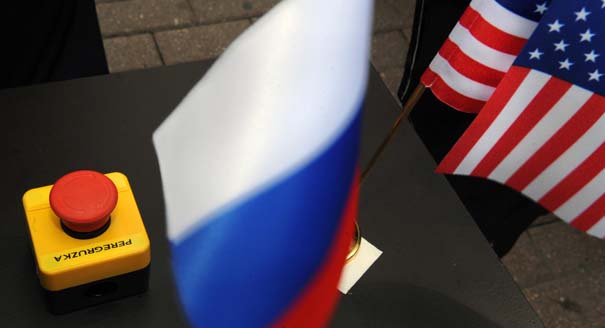
IMGXYZ4096IMGZYXWith President Obama going to serve a second term in office, new questions are emerging about the future of U.S.-Russia relations. The bilateral relationship is facing some of its greatest challenges since the end of the Cold War. How can Obama deepen and sustain the foundations for U.S.-Russia cooperation? Can the new administration overcome political rhetoric and bridge the so-called values gap?
Carnegie hosted a two-panel conference at which a group of experts discussed prospects for U.S. engagement with Vladimir Putin and the Russian Federation over the next four years.
Agenda:
8:30–9:00 a.m. Registration and Breakfast
9:00–10:00 a.m. Opening Remarks and Keynote Address
- Opening Remarks: Jessica Tuchman Mathews, Carnegie Endowment
- Keynote Address: Senator Jeanne Shaheen, U.S. Senate
- Keynote Address: Ambassador Sergey I. Kislyak, Embassy of Russia
10:00–11:10 a.m. Panel One–Personalities, Institutions, and Foundations
- Thomas Graham, Kissinger Associates, Inc.
- Andrew Weiss, RAND Corporation
- Matthew Rojansky, Carnegie Endowment
- Moderator: Ambassador James F. Collins, Carnegie Endowment
11:10–11:20 a.m. Coffee Break
11:00 a.m.–12:30 p.m. Panel Two–Interests and Values
- Dmitri Trenin, Carnegie Moscow Center
- Nikolas Gvosdev, U.S. Naval War College
- Robert E. Berls, Jr., Nuclear Threat Initiative
- Moderator: Thomas de Waal, Carnegie Endowment
Carnegie does not take institutional positions on public policy issues; the views represented herein are those of the author(s) and do not necessarily reflect the views of Carnegie, its staff, or its trustees.