

Article
China has showcased its engineering prowess with small modular reactor demonstration projects. But turning these technological achievements into commercial success will be a greater challenge.
Tong Zhao
{
  "authors": [],
  "type": "legacyinthemedia",
  "centerAffiliationAll": "dc",
  "centers": [
    "Carnegie Endowment for International Peace"
  ],
  "collections": [],
  "englishNewsletterAll": "ctw",
  "nonEnglishNewsletterAll": "",
  "primaryCenter": "Carnegie Endowment for International Peace",
  "programAffiliation": "NPP",
  "programs": [
    "Nuclear Policy"
  ],
  "projects": [],
  "regions": [],
  "topics": [
    "Military",
    "Foreign Policy",
    "Nuclear Policy"
  ]
}
REQUIRED IMAGE
Source: Carnegie
Defense News, November 15, 1999
Pakistan’s recent coup highlights the unique dangers of nuclear proliferation in politically unstable states. Eighteen months after India and Pakistan declared their nuclear capabilities in a series of test explosions, U.S. government sources now report that they have taken the step of weaponizing their nuclear devices by placing them atop ballistic missiles.
Pakistan’s coup was bloodless, but its decision to build an arsenal raises the prospect that future revolts could involve nuclear arms. In a country where civilian control of the military is weak, political chaos could result in a catastrophic nuclear accident.
During the Cold War, the United States and Soviet Union took a number of steps to ensure stringent control over their nuclear arsenals. The "two-man rule" was developed to prevent unauthorized launches, requiring simultaneous action by two military officers to launch a nuclear-armed missile. Electronic locks were installed, with only the president and a few select military officers holding the codes. Technical safeguards were developed to prevent warheads from detonating accidentally.
Unfortunately, the U.S. has failed to apply this prudence to emerging nuclear powers. Fearing that nuclear safety assistance would undermine the Nuclear Non-Proliferation Treaty's (NPT) credibility, Washington has shared its safety technology secrets with only its closest European allies.
U.S. policy has achieved near-perfect success in constraining proliferation, but it may aggravate dangers in the few cases where nuclear weapons have spread. New proliferants, including India and Pakistan, have proved unwilling or unable to develop nuclear safety devices.
In a book published by India’s quasi-governmental Institute for Defence Studies and Analysis, Nuclear India, author Kapil Kak argued that "there is no necessity to replicate the elaborate command and control structures of the West, which we can ill afford."
This precarious situation requires new thinking. The NPT prohibits assistance in weapon production, but legal scholars point out that it does not expressly forbid aid to safeguard existing weapons. A nuclear war triggered by an inadvertent missile launch would arguably harm non-proliferation efforts more than a program of minimal safety assistance.
The United States should evaluate whether its strong commitment to the NPT can be balanced with weapon safety programs. In particular, the U.S. should consider declassifying early versions of nuclear safety mechanisms for employment by India and Pakistan.
The uniform military support witnessed in Pakistan’s coup rarely characterizes military upheavals. In a domestic power struggle, nuclear weapons would be important symbols of domestic authority.
Rival factions likely would clash over control of the arsenal, and the rush to seize warheads could result in a devastating nuclear accident. Fragile command and control also raises the prospect of theft by terrorists. Safety mechanisms similar to those employed on U.S. nuclear weapons could help mitigate these risks.
American assistance could also have helped established strong civilian control over Pakistan’s nuclear arsenal. An Islamabad newspaper, The News, reported April 10 that final launching authority rested with the Prime Minister. But without encoded locks to prevent unauthorized nuclear use, this authority is merely symbolic.
Apprehension about Pakistani nuclear safety has exacerbated anxiety in an already tense region. As news of the coup unfolded, India placed its military forces on high alert, and Indian Prime Minister A. B. Vajpayee called an emergency Cabinet session. Such measures only heighten tensions and risk military miscalculation by both sides.
Non-proliferation will always be an indispensable component of international security, but perhaps an intelligent compromise can be reached with India and Pakistan to reconcile pragmatic efforts to safeguard nuclear arsenals with the NPT.
Safety assistance could complement, not replace, policy tools that are effective in slowing the spread of nuclear weapons, such as technology export controls and security guarantees.
Tempering the destabilizing effects of proliferation would not constitute a tacit acceptance of nuclear weapons. Rather, it could be a sophisticated response to the nuclear rivalry in South Asia.
Todd Sechser researches South Asian nuclear issues for the Non-Proliferation Project at the Carnegie Endowment for International Peace.
Carnegie does not take institutional positions on public policy issues; the views represented herein are those of the author(s) and do not necessarily reflect the views of Carnegie, its staff, or its trustees.
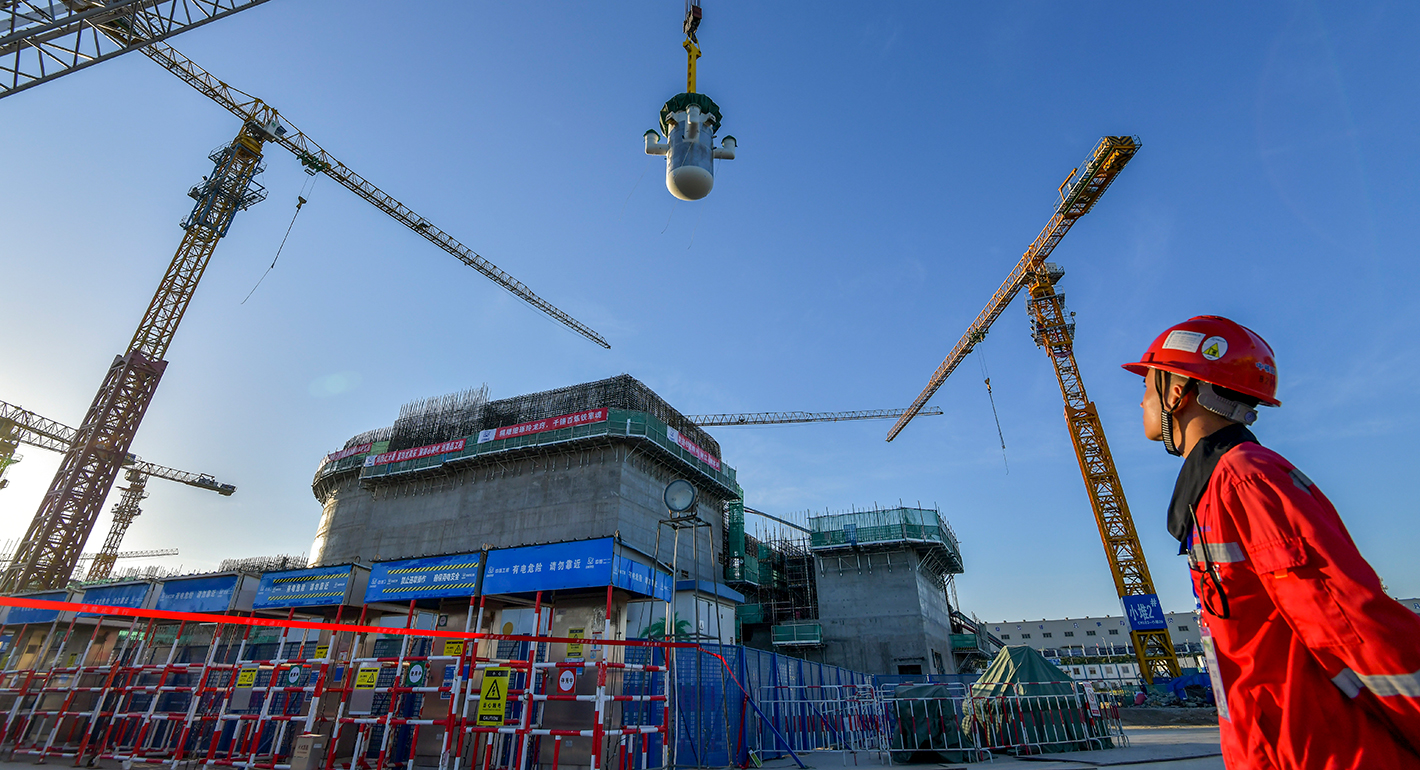
China has showcased its engineering prowess with small modular reactor demonstration projects. But turning these technological achievements into commercial success will be a greater challenge.

Tong Zhao

The nuclear relationship between China and the United States is increasingly shaped by widening perception gaps rather than deliberate strategic design.
Tong Zhao

But their "principal to principal" model will only be as effective as the political strength of each leader back home.

Damien Ma

U.S. unpredictability has allowed China to capitalize on its positioning as the “responsible great power”. Paradoxically, the more China wins the perception game, the more likely expectations will rise for Beijing to deliver not just words but to demonstrate with its deeds.

Chong Ja Ian

Hanoi and Beijing have long treated each other as distant cousins rather than comrades in arms. That might be changing as both sides draw closer to hedge against uncertainty and America’s erratic behavior.

Nguyễn Khắc Giang