

In The Media
Michele Dunne, Robert Kagan
{
  "authors": [
    "Robert Kagan"
  ],
  "type": "legacyinthemedia",
  "centerAffiliationAll": "",
  "centers": [
    "Carnegie Endowment for International Peace"
  ],
  "collections": [],
  "englishNewsletterAll": "",
  "nonEnglishNewsletterAll": "",
  "primaryCenter": "Carnegie Endowment for International Peace",
  "programAffiliation": "",
  "programs": [],
  "projects": [],
  "regions": [],
  "topics": [
    "Foreign Policy"
  ]
}
REQUIRED IMAGE
Source: Carnegie
Reprinted from the Washington Post, May 21, 2000
America's decision to build, or not to build, a national missile defense system could transform the world order for the rest of this century. But to listen to many advocates of missile defense, including the Clinton administration, you'd think it was basically a public health issue. The federal government protects Americans from disease, toxic waste and floods. Shouldn't it protect them from that mother of all health hazards: a nuke fired by some third-world crazy or, as Hollywood loves to imagine, some rogue Russian general? For a public purportedly indifferent to international affairs, missile defense sold as a domestic safety issue has some "resonance," as political strategists like to say. Even neo-isolationists love missile defense precisely because they see it as the antithesis of a foreign policy. Once we put up the shield, they figure, Americans can mind their own business and the rest of the world can go to hell.
Of course the government ought to protect Americans from "rogue" warheads; it probably ought to protect them from comets and asteroids, too. But even the crazies are unlikely to fire a warhead at the United States out of the clear blue sky. The reason the United States needs a robust missile defense system less to do with the actual launching of a strike against us than with how the mere threat of a missile attack will affect a future president's thinking during a crisis. Or even before a crisis.
What matters most is deterrence. Not our ability to deter others, but their ability to deter us. For the past decade, American strategy has rested on our ability to project overwhelming conventional force into vital regions around the world. The Persian Gulf War proved--if any proof was necessary--that the United States could not be deterred from launching a conventional attack against a weaker power that had only conventional means of responding.
But imagine that a future Saddam Hussein had an arsenal of missiles capable of striking Europe and the United States. Would an American president be as quick as George Bush was in 1991 to order an offensive to force him out? Would Congress vote to approve an invasion, knowing the price might be an American or European city? Would the Europeans join forces with us if Paris and Munich were vulnerable?
The answer might be yes. But it is easy to see how adding just one new factor to the old equation--Saddam's long-range missiles--could produce a radically different outcome from the international coalition's smashing victory in Desert Storm.
It's also easy to see how the new calculus might reshape day-to-day American diplomacy, well before any crisis had erupted. Knowing that a confrontation with a missile-equipped adversary was suddenly a much dicier proposition, a future American administration might try to avoid "unnecessary" confrontations and provocations. It might try to accommodate a nation now demanding greater respect commensurate with its greater military capabilities. A future Saddam Hussein could reap the benefits of his missiles without firing, or even threatening to fire, a single one.
This is not just speculation. A dynamic of this kind already shapes American relations with North Korea. Today the brutal totalitarian government in Pyongyang receives more aid from the United States than any other country in East Asia. It's not because we're fond of that regime. North Korea's ability to strike Japan--and within a few years Alaska and Hawaii--simply makes bribery more attractive than confrontation.
The rest of the world understands the strategic implications of missile defense better than most Americans. While China's leaders enjoy protesting that an American missile defense system will threaten China's small nuclear deterrent force, it's not an American first-strike that worries Beijing. What China wants to "deter" is American support for Taiwan. Beijing officials now routinely warn that American military intervention to defend Taiwan against Chinese attack could lead to a missile strike on, say, Los Angeles. Whether or not that threat is credible, the Chinese understand that a worried, vulnerable America is more likely to be pliant in negotiations over Taiwan's future than a confident America. A national missile defense system would negate China's entire strategy.
In a world of five or 10 potentially hostile nations armed with long-range missiles--which is to say, the world we are about to enter--the cumulative effect on an unprotected America would be enormous.
The United States could find itself less and less willing to undertake the risks that come with global leadership. Adversaries would be emboldened by American timidity, and friends would begin to look elsewhere for their security. The ties that bind America to its allies would loosen. In time, the fabric of the international order, now dependent on American military power and on American will to use it, would unravel altogether.
In other words, the neo-isolationists have it exactly backwards. Nothing is more likely to push the United States toward an isolationist foreign policy than our increasing vulnerability to missile attack.
And that means liberal internationalists need to do some hard thinking too. For years they fought against missile defense on the grounds that abrogating the ABM Treaty would undermine international arms control. But the day is fast approaching when they will have to choose between their faith in arms control treaties and their belief in America's role as the world's "indispensable nation."

Former Senior Associate
Kagan, author of the recent book, The Return of History and the End of Dreams (Knopf 2008), writes a monthly column on world affairs for the Washington Post and is a contributing editor at both the Weekly Standard and the New Republic.
Recent Work

Michele Dunne, Robert Kagan
Robert Kagan, Michele Dunne
Carnegie does not take institutional positions on public policy issues; the views represented herein are those of the author(s) and do not necessarily reflect the views of Carnegie, its staff, or its trustees.

Malaysia’s chairmanship sought to fend off short-term challenges while laying the groundwork for minimizing ASEAN’s longer-term exposure to external stresses.

Elina Noor

For Malaysia, the conjunction that works is “and” not “or” when it comes to the United States and China.
Elina Noor
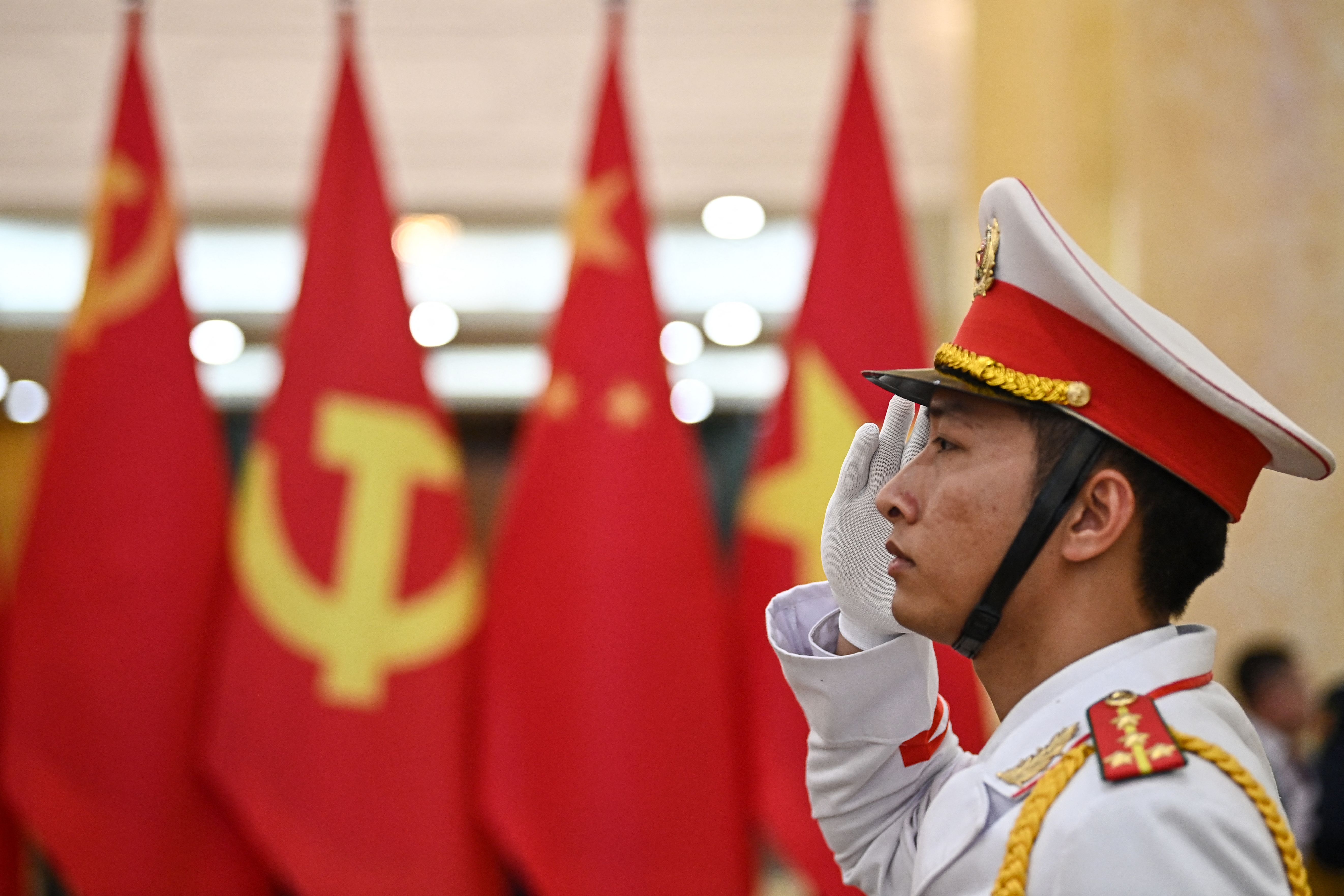
In July 2025, Vietnam and China held their first joint army drill, a modest but symbolic move reflecting Hanoi’s strategic hedging amid U.S.–China rivalry.

Nguyễn Khắc Giang

The Thai-Cambodian conflict highlights the limits to China's peacemaker ambition and the significance of this role on Southeast Asia’s balance of power.

Pongphisoot (Paul) Busbarat

Beijing believes that Washington is overestimating its own leverage and its ability to handle the trade war’s impacts.


Rick Waters, Sheena Chestnut Greitens