


Commentary
Regulation, not embargo, allows Beijing to shape how other countries and firms adapt to its terms.
Alvin Camba
{
  "authors": [],
  "type": "other",
  "centerAffiliationAll": "",
  "centers": [
    "Carnegie Endowment for International Peace"
  ],
  "collections": [],
  "englishNewsletterAll": "",
  "nonEnglishNewsletterAll": "",
  "primaryCenter": "Carnegie Endowment for International Peace",
  "programAffiliation": "",
  "programs": [],
  "projects": [],
  "regions": [
    "North America"
  ],
  "topics": [
    "Trade"
  ]
}
REQUIRED IMAGE
Source: Carnegie
Growth with Equity InitiativeThe Dialogue has joined the Carnegie Endowment for International Peace in organizing a commission to identify and formulate policies to spur economic growth with equity in Latin America. The initiative ? co-chaired by Nancy Birdsall of Carnegie Endowment for International Peace and Augusto de la Torre of the World Bank? was launched in response to the region's mediocre growth and limited progress in reducing income inequality over the past decade. As a result of this initiative, a draft report has been prepared by Nancy Birdsall and Augusto de la Torre that suggests a new policy toolkit ? ten sets of equity tools or ideas on how governments could modify their policies and programs so as to give increased weight to poverty reduction and greater equity, without materially sacrificing economic efficiency and growth objectives. As the report argues, there is a greater consensus today than a decade ago on the logic of direct policy attacks on non-growth objectives like improved quality of life, reduced poverty, higher life expectancy and educational opportunities. This is not only because they are important ends in themselves but also because ? particularly in unequal Latin America ? they may be key to raising growth rates. To confront non-growth objectives, the authors propose action in the following areas: fiscal discipline, volatility, safety nets, tax systems, competition, education, labor markets, discrimination, land markets, and service delivery.
|
Carnegie Senior Associate Nancy Birdsall |
Commission members include Shahid Javed Burki of EMP Financial Advisors; Moisés Naím of Foreign Policy; Guillermo Perry and Eliana Cardoso of the World Bank; Carol Graham of the Brookings Institution; Ricardo Hausmann, Nora Lustig and Christian Gómez of the Inter-American Development Bank; Colin Bradford of American University; Roberto Dañino of Wilmer, Cutler & Pickering; Staci Warden of Carnegie; John Williamson of the Institute for International Economics; Kurt Weyland of the Woodrow Wilson Center; Peter Hakim and Jeffrey Puryear of the Dialogue. The report was first presented to Dialogue members at the Sol Linowitz Forum in June, and subsequently will be distributed to government officials and private sector leaders throughout the Americas. |
--------------------------------------------------------------------------------
Carnegie does not take institutional positions on public policy issues; the views represented herein are those of the author(s) and do not necessarily reflect the views of Carnegie, its staff, or its trustees.

Regulation, not embargo, allows Beijing to shape how other countries and firms adapt to its terms.
Alvin Camba

Beijing believes that Washington is overestimating its own leverage and its ability to handle the trade war’s impacts.


Rick Waters, Sheena Chestnut Greitens
Tapping our network of China experts in the region, Carnegie China offers this latest “China Through a Southeast Asian Lens” report to offer preliminary assessments of whether the U.S. effort to reshape the global trading order will lead countries in the region to tilt toward Beijing.


Selina Ho, Khin Khin Kyaw Kyee, Joseph Ching Velasco, …
In order to keep production growing, China must either increase investment, and with it its debt burden, or increase its trade surplus.

Michael Pettis
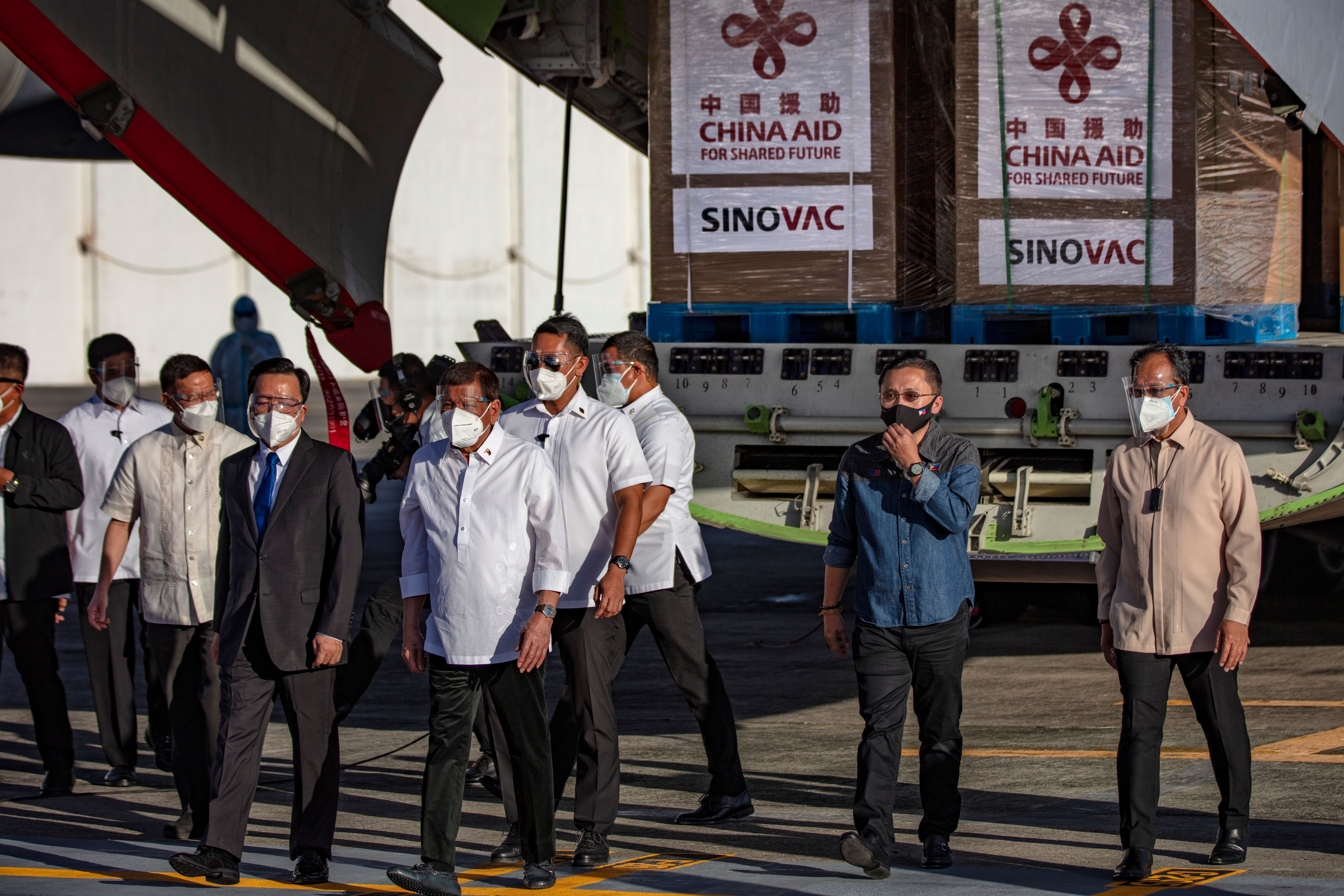
As tech competition moves into the biotech sector, China is increasingly shifting its focus to nearby regions to alleviate U.S.-induced supply chain pressures. As part of this transition, Southeast Asia has emerged as a favored destination.

Xue Gong