

Other
Mr. Shlomo Avineri
{
  "authors": [
    "Shlomo Avineri"
  ],
  "type": "legacyinthemedia",
  "centerAffiliationAll": "dc",
  "centers": [
    "Carnegie Endowment for International Peace"
  ],
  "collections": [],
  "englishNewsletterAll": "menaTransitions",
  "nonEnglishNewsletterAll": "",
  "primaryCenter": "Carnegie Endowment for International Peace",
  "programAffiliation": "MEP",
  "programs": [
    "Middle East"
  ],
  "projects": [],
  "regions": [
    "Middle East",
    "Israel",
    "Palestine"
  ],
  "topics": []
}
REQUIRED IMAGE
In light of the failed Oslo Peace Accords and other events that have transpired since, Edward Said's support for an Israeli unilateral withdrawal from Palestinian territories, rather than reaching a Israeli-Palestinian rapprochement, was not only pragmatic, but it was right.
Source: The Jerusalem Post
For those of us in Israel who thought that an eventual Israeli-Palestinian rapprochement would never wholly satisfy either side, but nevertheless give each a place in the sun, Oslo was the ray of hope. It has now been extinguished.
Back in l970, I published (in Commentary, then still a liberal journal) a plea for an Israeli approach to the PLO, and called for Israel to negotiate a two-state solution with the Palestinians.
Many Israeli moderates, still committed to what was then called the "Jordanian option," thought this ill-advised; still others considered a Palestinian state in the West Bank and Gaza a mortal danger to Israel. And for its part, the PLO was steadfast in its position of total rejection of Israel and of compromise.
Over the years positions have softened: because of our realization of the limits of our country's power; because of the intifada; because of the Palestinian leadership's opting for half a loaf, over hopeless moral absolutism, Oslo became possible. We imagined it the breakthrough to an historical compromise.
We have endured many vicissitudes since Oslo: the assassination of prime minister Yitzhak Rabin; the massive bomb attacks in Jerusalem and Tel Aviv; the election of prime minister Binyamin Netanyahu; and the stalemate in the peace process - you know all this.
But those of us who believed, not only in the possibility, but also in the moral justice of an historical compromise, never lost hope that the process, for all its flaws and ambiguities, would continue - and that reason and moderation would persevere.
You, on the other hand, joined the Rejection Front. For you, anything short of a total Palestinian nationalist victory - i.e. the elimination of Israel - was unacceptable.
Many of us thought that you were being obtuse, morally irresponsible, and just out of touch with the newly emerging reality of reconciliation. We also thought - and hoped - that your views, harking back to the '60s and '70s, would end up in the dustbin of history. We thought that when fighters like Palestinian Authority Chairman Yasser Arafat and Rabin reach out to each other, intellectual absolutists like you become redundant. Or so we hoped.
But we were wrong. Last summer at Camp David, Arafat rejected the most generous offer ever made to a Palestinian leader by an Israeli statesman. As you know, Barak wagered his political future on these concessions, and lost his parliamentary majority in the process. Of course, what Barak offered was less than the Palestinian Authority's demands.
Arafat rejected them, and it appeared the Palestinian leadership behaved once more as it had in l947, when it first passed up an opportunity to have a Palestinian state, albeit only in part of historical Palestine. We all know how difficult compromises are: but they are the test of a statesman.
Likud leader Ariel Sharon's visit to the Temple Mount should never have taken place, and it was conceived in bad faith, in order to undermine the agreement. But then both you and Sharon believe that coexistence is impossible, that it is a zero-sum game, that a win-win
situation is impossible.
And when Arafat did not restrain the Palestinian population - and one can understand their anger and frustration - it suddenly dawned on us that we do not have a partner: only an enemy, who cannot even find a humane word when our people are lynched.
Israelis understand your pain; and the sight of Palestinian stone-throwing teenagers being shot at by Israeli soldiers causes anguish and soul-searching in Israel.
No such soul-searching occurred on the Palestinian side. What came out - on the streets, among the Palestinian elite on CNN - was sheer hatred, and a fundamental rejection of Israel.
You were right, Edward: The compromise did not work. It was tried - despite your voice, despite the voice of Ariel Sharon. Yet it has now failed.
But now we know: there is no such thing as a Palestinian leadership with whom an agreement can be reached. We are at war - and you have been its clarion voice. You, at least, are honest.
Somehow, we shall have to pick up the pieces. Israel will have to decide how to withdraw unilaterally from most of the Palestinian territories, because we should not and cannot hold on to them. Your people will then have an oppotunity to have state of their own - it should have been achieved through an agreement, but if an agreement is impossible - better a unilateral action that leads to Palestinian statehood, than the continuation of the illusion of historical compromise.
And your voice, Edward, will always haunt us from the heart of the darkness which you so eloquently recognize and describe. Thanks again for your honesty.
The writer, a professor of political science at the Hebrew University of Jerusalem, is currently a visiting scholar at the Carnegie Endowment for International Peace in Washington, DC. Said, a professor of English and literature at Columbia University, is a leading spokesman for the Palestinian cause.
Former Visiting Scholar
Recent Work
Mr. Shlomo Avineri
Mr. Shlomo Avineri
Carnegie does not take institutional positions on public policy issues; the views represented herein are those of the author(s) and do not necessarily reflect the views of Carnegie, its staff, or its trustees.
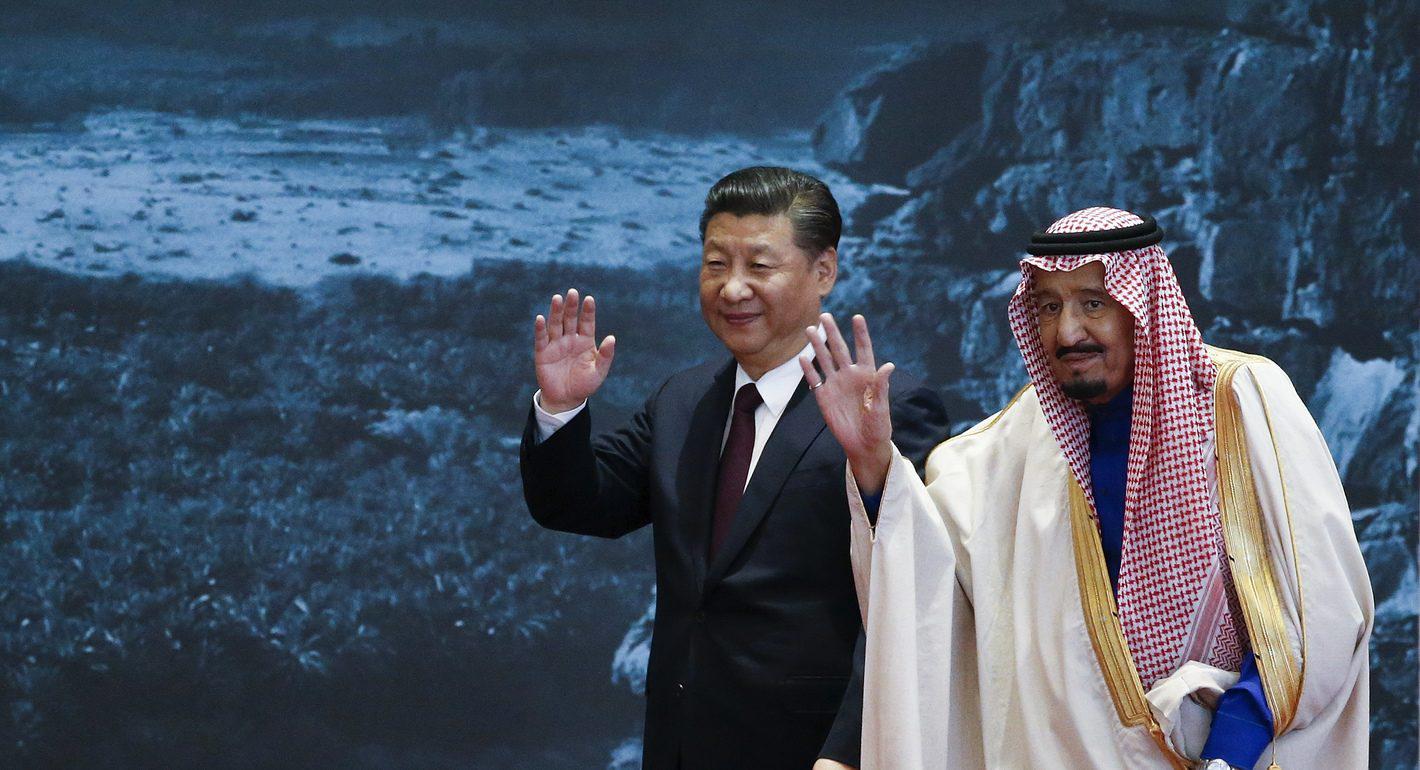
The advantage that China has over other global powers, especially America, is that its foreign policy is closely aligned with those of many of the Middle Eastern countries.



Jin Liangxiang, Maha Yahya, Hesham Alghannam

It’s about managing oil prices, bread prices, and strategic partnerships.



Amr Hamzawy, Karim Sadjadpour, Aaron David Miller, …
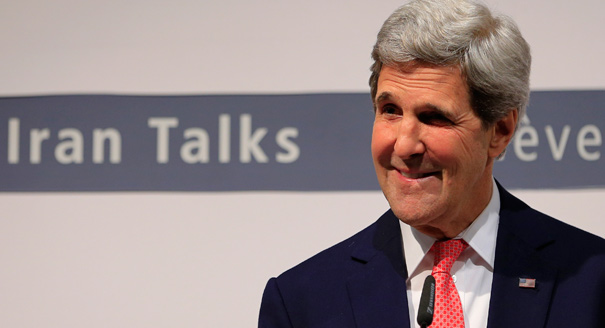
Fundamentally, it seems irrational to leave an agreement that’s working today out of a fixation on potential growth of Iran’s nuclear program more than a decade from now, when such growth could happen tomorrow if we unravel the agreement.
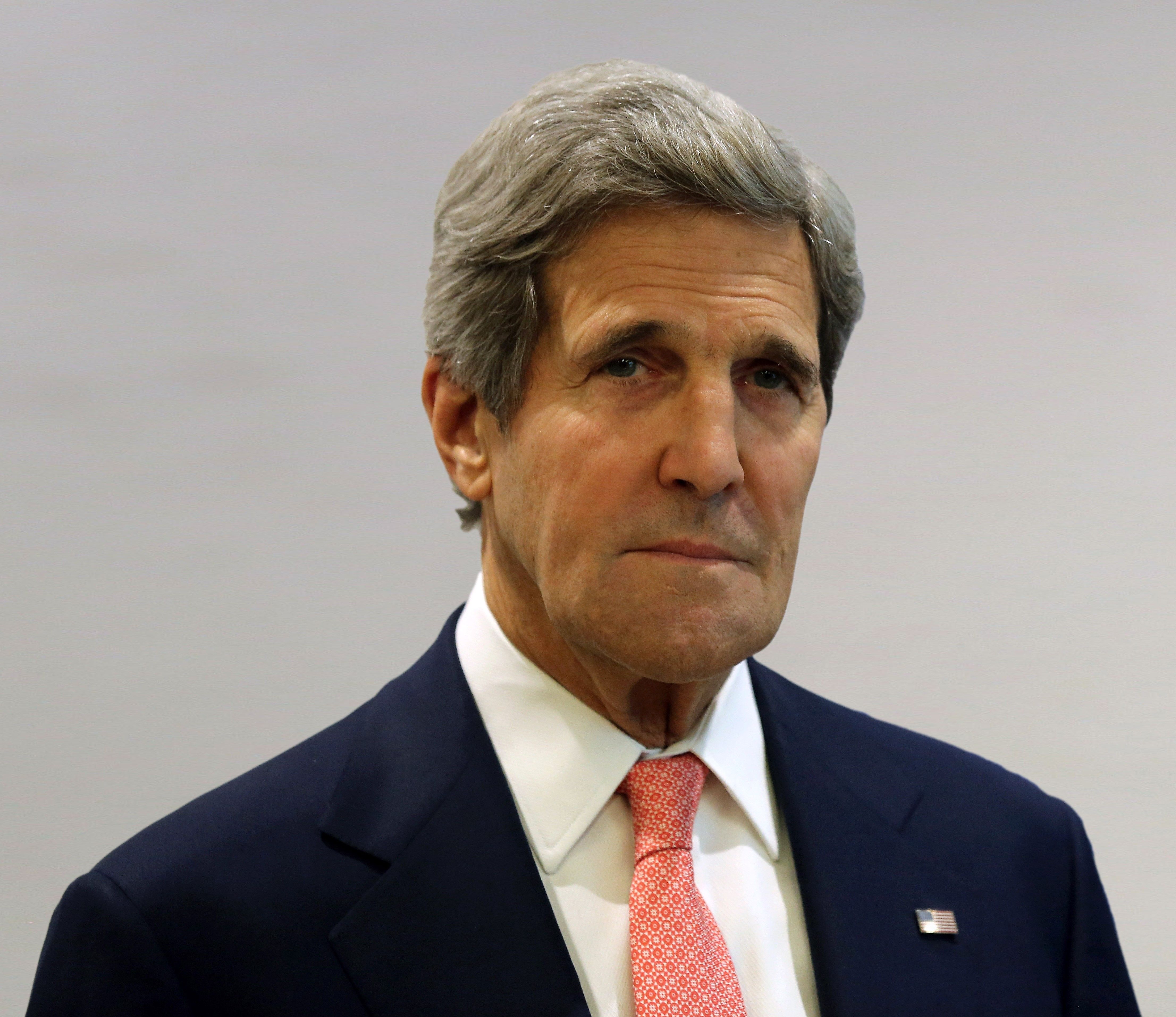
John Kerry
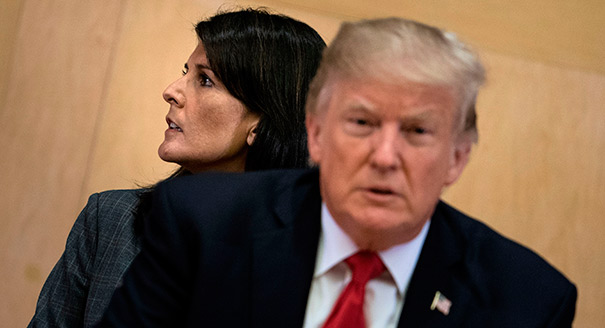
The smart way to get tough on Iran would be to commit to the nuclear deal, enforce it to the hilt, and work with global partners on a long-term strategy to deal with Iran’s challenge.
William J. Burns, Jake Sullivan
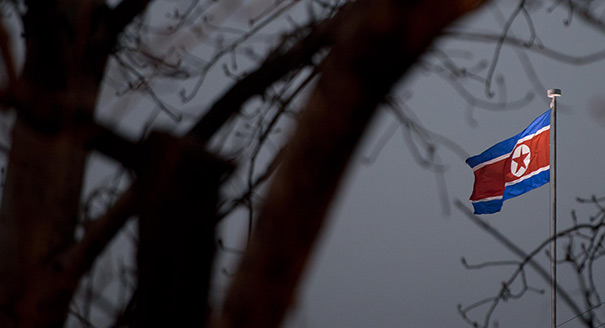
Increased tensions between the United States and Iran over the last couple days, along with U.S. President Donald Trump’s calls to end the Iran Nuclear Deal, could put Iran on the same path as North Korea as an imminent threat potentially needing military consideration.
Jake Sullivan