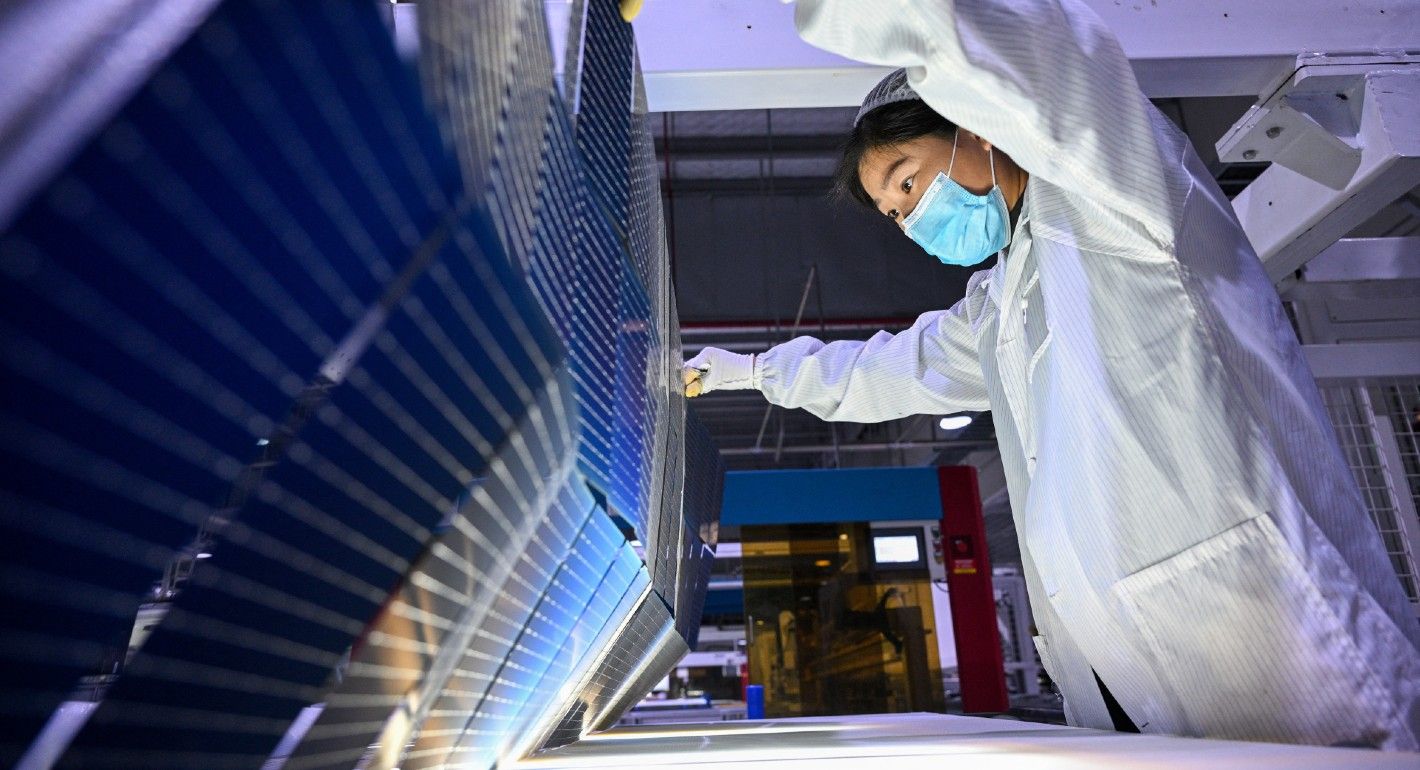
Regulation, not embargo, allows Beijing to shape how other countries and firms adapt to its terms.
Alvin Camba
{
"authors": [
"Ann M. Florini",
"John Audley"
],
"type": "other",
"centerAffiliationAll": "",
"centers": [
"Carnegie Endowment for International Peace"
],
"collections": [],
"englishNewsletterAll": "",
"nonEnglishNewsletterAll": "",
"primaryCenter": "Carnegie Endowment for International Peace",
"programAffiliation": "",
"programs": [],
"projects": [],
"regions": [],
"topics": [
"Economy",
"Trade"
]
}REQUIRED IMAGE
Source: Carnegie
The world's trade ministers, who will meet at a WTO ministerial in November 2001 in Doha, Qatar, are wrong to think that only a new round of negotiations will save the much-maligned international trade system. Carnegie senior associates John Audley and Ann M. Florini argue that they should, instead, simultaneously tackle internal and external reform of the WTO to make it a truly equitable institution. Internally, industrial countries must start treating developing countries as equal partners in making the rules that govern global trade, and where necessary provide technical assistance to make that equality possible. Externally, to satisfy legitimate public demands, members should improve the transparency of WTO proceedings and permit public participation in keeping with international norms. These changes, however, will occur only when national leaders link internal and external reform objectives—a step that will require leadership from key countries as well as the WTO Secretariat.
Click on the links above for full text of this Policy Brief in English and Spanish.
About the Author
John Audley is senior associate at the Carnegie Endowment and director of its new Trade, Environment, and Development Project. He is author of A Greener Fast Track: Putting Environmental Protection on the Trade Agenda. Ann M. Florini is senior associate at the Carnegie Endowment, where she directs the Project on Transparency and Transnational Civil Society. Her publications include The Third Force: The Rise of Transnational Civil Society and Secrets for Sale: How Commercial Satellite Imagery Will Change the World.
Former Senior Associate
Regulation, not embargo, allows Beijing to shape how other countries and firms adapt to its terms.
Alvin Camba
Rather than climate ambitions, compatibility with investment and exports is why China supports both green and high-emission technologies.
Mathias Larsen
“Involution” is a new word for an old problem, and without a very different set of policies to rein it in, it is a problem that is likely to persist.
Michael Pettis
While China's investment story seems contradictory from the outside, the real answers to Beijing's high-quality growth ambitions are hiding in plain sight across the nation's cities.
Yuhan Zhang
China's stimulus addiction cannot go on forever. Beijing still has policy space to clean up the country's massive debt issue, but time is running short.
Michael Pettis