

Other
Ms. Doris Meissner
{
  "authors": [
    "Doris Meissner"
  ],
  "type": "legacyinthemedia",
  "centerAffiliationAll": "",
  "centers": [
    "Carnegie Endowment for International Peace"
  ],
  "collections": [],
  "englishNewsletterAll": "",
  "nonEnglishNewsletterAll": "",
  "primaryCenter": "Carnegie Endowment for International Peace",
  "programAffiliation": "",
  "programs": [],
  "projects": [],
  "regions": [
    "South America"
  ],
  "topics": []
}
REQUIRED IMAGE
Source: Carnegie
Originally published March 28,2002 in the Washington Post
Yes, mailing terrorists' visa approval notices was an inexcusable blunder. But if the political hurricane that followed fails to summon administration muscle and congressional approval for restructuring the Immigration and Naturalization Service (INS), another chance will have been squandered to place this overworked agency on the organizational footing required to do its job properly.
Restructuring INS will not eliminate all its performance problems, but it is a critical element in implementing solutions. President Bush called for it during his campaign, and in November the administration sent its plan to Congress for approval. Four years ago, the Clinton administration submitted the same proposal to Congress. Partisan wrangling strangled it. Today the opposition is similarly vehement, but this time the antagonists are members of the president's own party.
The disagreement is about whether INS should be replaced by two new agencies -- one for immigration law enforcement, the other to handle immigration services -- or, as the administration proposes, remain one agency, whose management of enforcement and services is separated internally.
Given the standoff, some say anything is better than the status quo. That is not so. How the government is organized to do the nation's immigration business matters in significant ways, especially in a security-conscious age.
Proponents of two separate agencies argue that the INS's enforcement and services missions are contradictory and must be split. Superficially, this sounds sensible, but it misreads the true nature of our immigration system. In practice, INS's dual missions are complementary and belong in one agency.
The terrorist visas illustrate the point. Changing or extending visas belongs to the services side of the immigration business. It involves adjudicating millions of applications annually for naturalization, "green card" eligibility, employment authorization, student visa changes and a host of other technical requirements governing both temporary and permanent immigration. The expertise, training, customer orientation and management strategies needed to do it well are different from those needed to enforce immigration law, so it should stand on its own operationally.
But the impact of decisions made on the services side is every bit as important to the integrity of the immigration system and to national security as the law enforcement work of patrolling the border in Texas or inspecting travelers at New York's Kennedy Airport. Enabling the wrong person to come or remain here is as apt to happen on the services side as on the enforcement side of the house. In fact, as immigration enforcement steadily improves, legal immigration pathways -- the services side -- are increasingly under pressure of fraud and misuse and more and more likely to be the route sought by those seeking to exploit America's openness to the world.
That vulnerability first came to light in the 1993 World Trade Center bombing when terrorists manipulated a broken political asylum system. Since then, the asylum system has been fixed and works effectively to provide protection to legitimate refugees but screen out malefactors. How? By organizing it as a distinct entity within INS staffed by qualified, trained professionals who work exclusively with the asylum caseload but have access to all of INS's law enforcement information and intelligence resources in their decision-making. The asylum model is what the one-agency proposals envision for all of the INS's adjudicative work. It is the best way to deliver good customer service and incorporate effective enforcement protections.
Creating two agencies runs counter to the call for greater consolidation of homeland security functions, streamlined information-sharing and command accountability.
During the 1990s more than 10 million newcomers arrived in this country and hundreds of millions more came for temporary stays, making it the decade of the highest immigration in our history in overall numbers. One in nine Americans today is foreign-born. New immigrant communities are widely disbursed throughout the nation.
Each of those individuals represents a decision -- sometimes several -- that INS made. So it should not be surprising that the agency sometimes buckles under its workload or that reforms, which have been substantial and widespread, have often been outpaced by unmet demands. With the globalization of the economy, an aging population and projected labor market needs, the trend toward large-scale permanent and temporary immigration is unlikely to abate. Against this backdrop, the nation needs greater immigration policy coherence, not less, and strengthened structures of accountability, not the fragmented authority two agencies would create.
Congress needs to act on restructuring quickly. It's become a national security imperative.
Former Senior Associate
Recent Work
Ms. Doris Meissner
Carnegie does not take institutional positions on public policy issues; the views represented herein are those of the author(s) and do not necessarily reflect the views of Carnegie, its staff, or its trustees.

Beijing has long been concerned about its exposure to Venezuela’s slow-motion descent into crisis. There’s also a broader story about China’s efforts to promote itself as a leader of international development and South-South ties.

Matt Ferchen
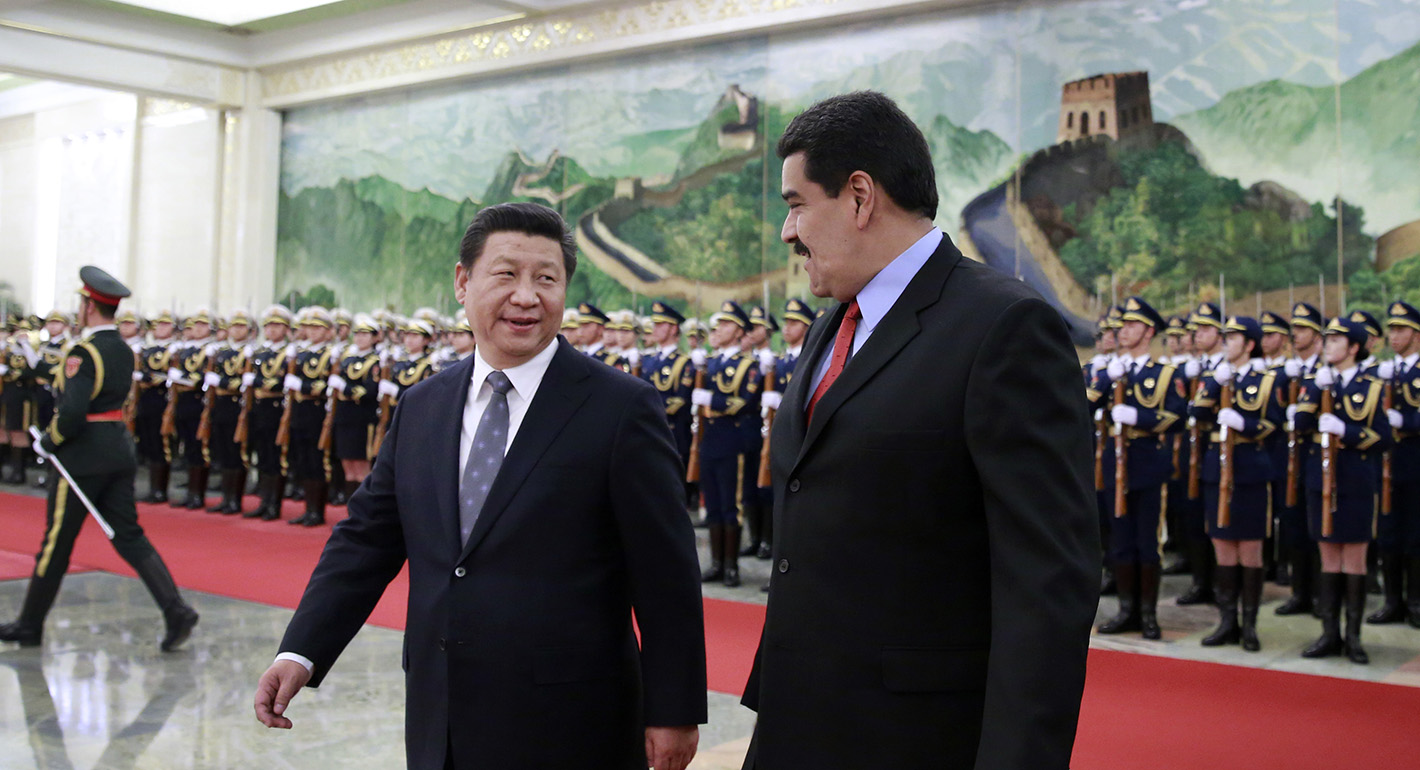
How China should understand and manage political risk in Venezuela has become one of the most important, if too often ignored, questions not just in China’s relationship with Latin America, but in its broader efforts to be seen as an agent and leader of development on the world stage.
Matt Ferchen

China and its keenest Latin American borrowers are left with the challenge of managing the legacy of past deals, including those that have gone awry.
Matt Ferchen
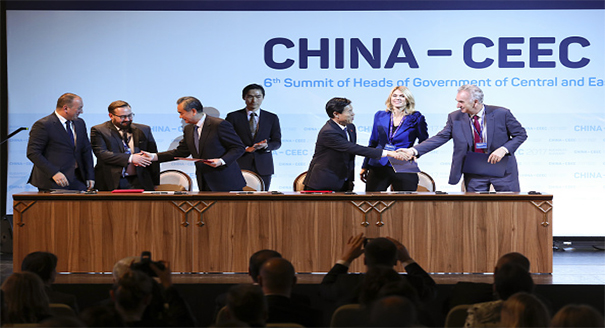
It is Trump administration policies and attitudes that have provided China a rhetorical opening in Latin America at a time when China’s economic and political relations with the region face serious challenges.
Matt Ferchen

For all its bellicose talk and new sanctions against Nicolás Maduro’s government, the Trump administration has been oddly silent about Russia’s role, perhaps preferring not to draw attention to the fact that Moscow is now the bankrupt nation’s lender of last resort.


Moisés Naím, Andrew S. Weiss