

In The Media
Minxin Pei
{
  "authors": [
    "Minxin Pei"
  ],
  "type": "legacyinthemedia",
  "centerAffiliationAll": "dc",
  "centers": [
    "Carnegie Endowment for International Peace"
  ],
  "collections": [],
  "englishNewsletterAll": "asia",
  "nonEnglishNewsletterAll": "",
  "primaryCenter": "Carnegie Endowment for International Peace",
  "programAffiliation": "AP",
  "programs": [
    "Asia"
  ],
  "projects": [],
  "regions": [
    "China"
  ],
  "topics": [
    "Political Reform",
    "Democracy"
  ]
}
REQUIRED IMAGE
Source: Carnegie
Originally published in the Financial
Times, January 27, 2003.
Recent reports about plans for bold administrative reforms in Shenzhen, China's
first special economic zone, have fuelled speculation that the country's new
leaders may start opening up the political system.
Shenzhen is the latest of several signs of tentative change. In the past few
months, competitive elections for neighbourhood committees - civic groups responsible
for minor local administrative matters - have been held in several urban districts,
apparently as an experiment in extending village elections to the cities. A
newly implemented regulation issued by the Communist party has forced village
party secretaries to compete for the elected post of the village committee chairmanship
as a condition of retaining their party positions. Hu Jintao, the new general
secretary of the Communist party, recently gave a speech on the supremacy of
the Chinese constitution. He also invited China's leading constitutional scholars
to give a seminar at a special politburo meeting.
Three powerful forces are placing pressure on China's rulers to restructure the country's political system. The biggest of these is the economy, which has become more market-oriented and more closely linked to the world. In spite of adopting policy changes that have propelled market reforms, Chinese leaders have not made state institutions market-friendly. As a result, the state has maintained its command-and-control orientation and interferes excessively in the marketplace.
That is evident in the size of the Chinese bureaucracy. Even though the share of state-owned enterprises in the economy has fallen 60 per cent since 1979, the number of officials has tripled. A bloated bureaucracy and unchecked power breed corruption. At the very least, political reform would require a painful downsizing of the bureaucracy. The proposed measures in Shenzhen suggest that administrative streamlining is likely to be the dominant theme of reforms.
The second force comes from China's changing society. Increasing affluence, economic independence, access to information and physical mobility have rendered the government's traditional means of social control obsolete. Luckily for the Communist party, the emerging middle class has not displayed much zeal for democracy. But it would be foolhardy to take its political apathy for granted. The party needs to court these elites and to incorporate them in the political process.
More important, continued political disenfranchisement is radicalising China's two biggest social groups: peasants and workers in moribund state-owned enterprises, who are relative losers in economic reform. Unable to protect their interests, these groups are increasingly turning to riots and street demonstrations to press their demands. Opening up the political process could help to defuse rising social tensions.
The third force comes from the party itself and many officials have begun to call for change. The results of a recent poll of mid-level officials at the Central Communist Party School in Beijing show that, since 2000, political reform has become the most important issue for them. Li Rui, a former personal secretary of Mao Zedong and deputy chief of the party's organisation department, published an essay recently that openly called on the party to institute democratic reforms.
But the need for such reforms does not necessarily mean that the regime will undertake them. Experience of democratic transition elsewhere suggests that few authoritarian regimes initiate, of their own accord, reforms that could threaten their hold on power. In most cases, political and economic crises have forced them to accept the inevitable.
However, it is likely that Chinese leaders will undertake some limited reforms out of enlightened self-interest. In all probability, they may sanction administrative reforms to cut bureaucracy and combat corruption. But the real test of Chinese leaders' seriousness about democratic reforms is their willingness to limit the power of the Communist party. This would include giving the national and local legislatures more autonomy in supervising the government's budgets and confirming important executive appointments; making the judiciary more independent; and subjecting the party to the rule of law.
Unfortunately, despite a few, faint signs of new thinking in Beijing, there is no indication that Chinese leaders are ready to take the plunge.
The writer is co-director of the China Programme at the Carnegie Endowment
for International Peace
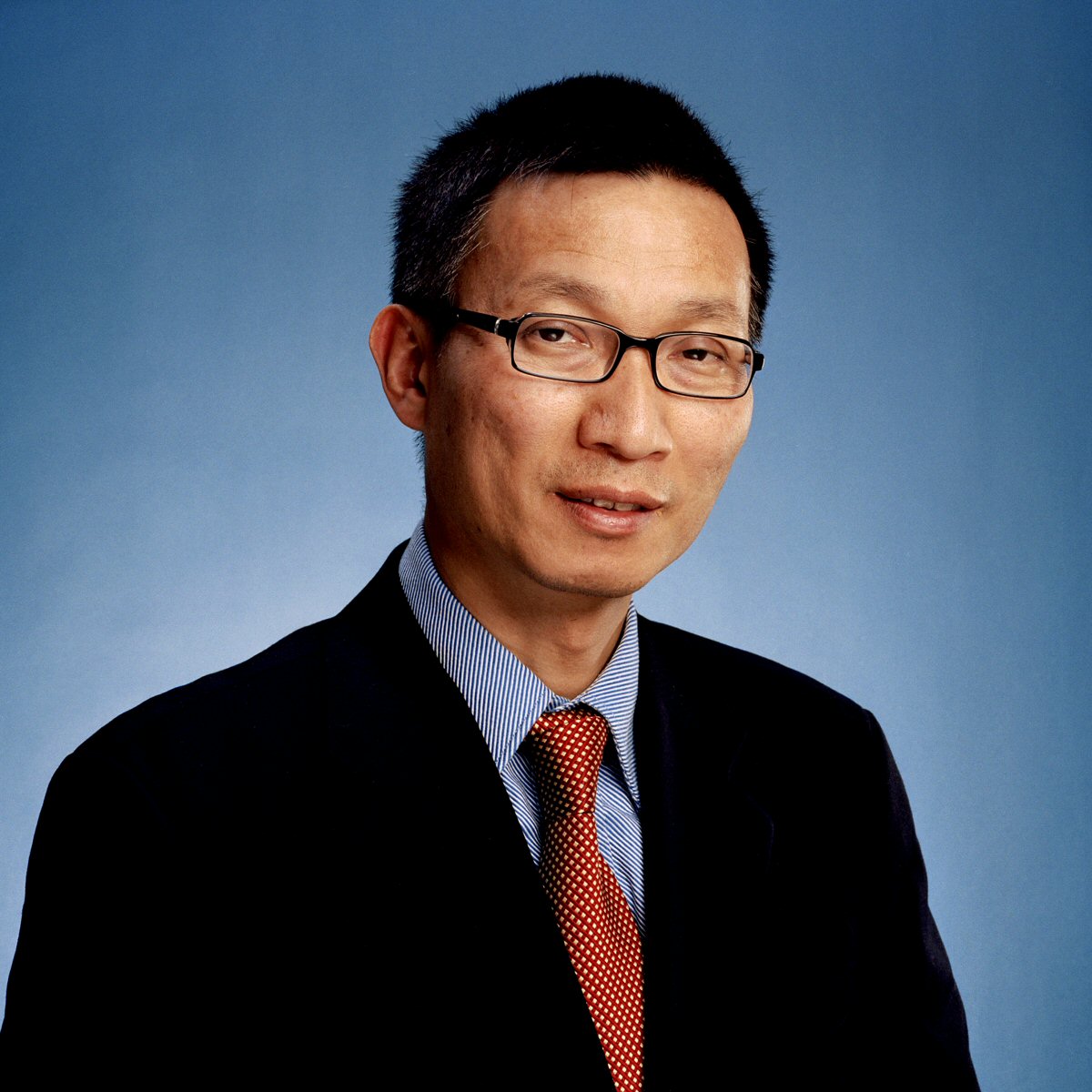
Former Adjunct Senior Associate, Asia Program
Pei is Tom and Margot Pritzker ‘72 Professor of Government and the director of the Keck Center for International and Strategic Studies at Claremont McKenna College.
Recent Work
Minxin Pei
Minxin Pei
Carnegie does not take institutional positions on public policy issues; the views represented herein are those of the author(s) and do not necessarily reflect the views of Carnegie, its staff, or its trustees.

China’s banking crisis in the 2000s was resolved by transferring the costs to households through financial repression—a decision that recapitalized the banks while exacerbating the structural imbalances that continue to shape the Chinese economy today.

Michael Pettis

Chinese biotech companies have been on the receiving end of U.S. economic coercion. Yet their responses have differed significantly because firm and state interests are not uniformly aligned. For Washington, treating all Chinese tech firms the same, irrespective of their actual interests, risks pushing them farther into Beijing’s corner.

Xue Gong

China’s latest energy plan explicitly calls for integrating data centers into the electricity system, particularly connecting them to green energy. It appears Beijing wants to use compute as a source of domestic demand to absorb renewables excess capacity.

Damien Ma

But their "principal to principal" model will only be as effective as the political strength of each leader back home.
Damien Ma

U.S. unpredictability has allowed China to capitalize on its positioning as the “responsible great power”. Paradoxically, the more China wins the perception game, the more likely expectations will rise for Beijing to deliver not just words but to demonstrate with its deeds.

Chong Ja Ian