

Paper
Mei Ying Gechlik (Veron Hung)
{
  "authors": [
    "Mei Ying Gechlik (Veron Hung)"
  ],
  "type": "legacyinthemedia",
  "centerAffiliationAll": "dc",
  "centers": [
    "Carnegie Endowment for International Peace"
  ],
  "collections": [],
  "englishNewsletterAll": "asia",
  "nonEnglishNewsletterAll": "",
  "primaryCenter": "Carnegie Endowment for International Peace",
  "programAffiliation": "AP",
  "programs": [
    "Asia"
  ],
  "projects": [],
  "regions": [
    "China"
  ],
  "topics": []
}
Source: Getty
Source: The Columbia Journal of Asian Law
The U.S. has reiterated that it welcome "the rise of a confident, peaceful, and prosperous China." Implicit in this message is Washington’s concern about the potential threat of China’s rise. To ease such concern prevailing outside China and to respond to criticisms about the Chinese Communist Party’s (CCP) governance spreading across the country, Beijing has vowed to establish a "socialist harmonious society" that features, among other characteristics, the rule of law, fairness, and justice. Unfortunately, courts in China have yet to exemplify the rule of law, fairness, and justice. Understanding that its governance cannot be sustained by a dysfunctional justice system, Beijing has taken a series of actions to reform China’s judiciary.
This study seeks to analyze whether fairness has been achieved in Shanghai and what this means to China as a whole. Based on extensive literary research, a survey, and interviews in China, this study seeks to answer three questions: Are interference, intracourt and intercourt influence, and judicial corruption of a lesser magnitude in Shanghai than in other parts of China? If so, what measures has Shanghai taken to accomplish this? What lessons about judicial reform in China can be learned from Shanghai’s experiences?
This article was originally published in the Columbia Journal of Asian Law, April 2006.

Former Non-Resident Associate
Recent Work
Mei Ying Gechlik (Veron Hung)
Mei Ying Gechlik (Veron Hung)
Carnegie does not take institutional positions on public policy issues; the views represented herein are those of the author(s) and do not necessarily reflect the views of Carnegie, its staff, or its trustees.

For Malaysia, the conjunction that works is “and” not “or” when it comes to the United States and China.

Elina Noor

ASEAN needs to determine how to balance perpetuating the benefits of technology cooperation with China while mitigating the risks of getting caught in the crosshairs of U.S.-China gamesmanship.
Elina Noor
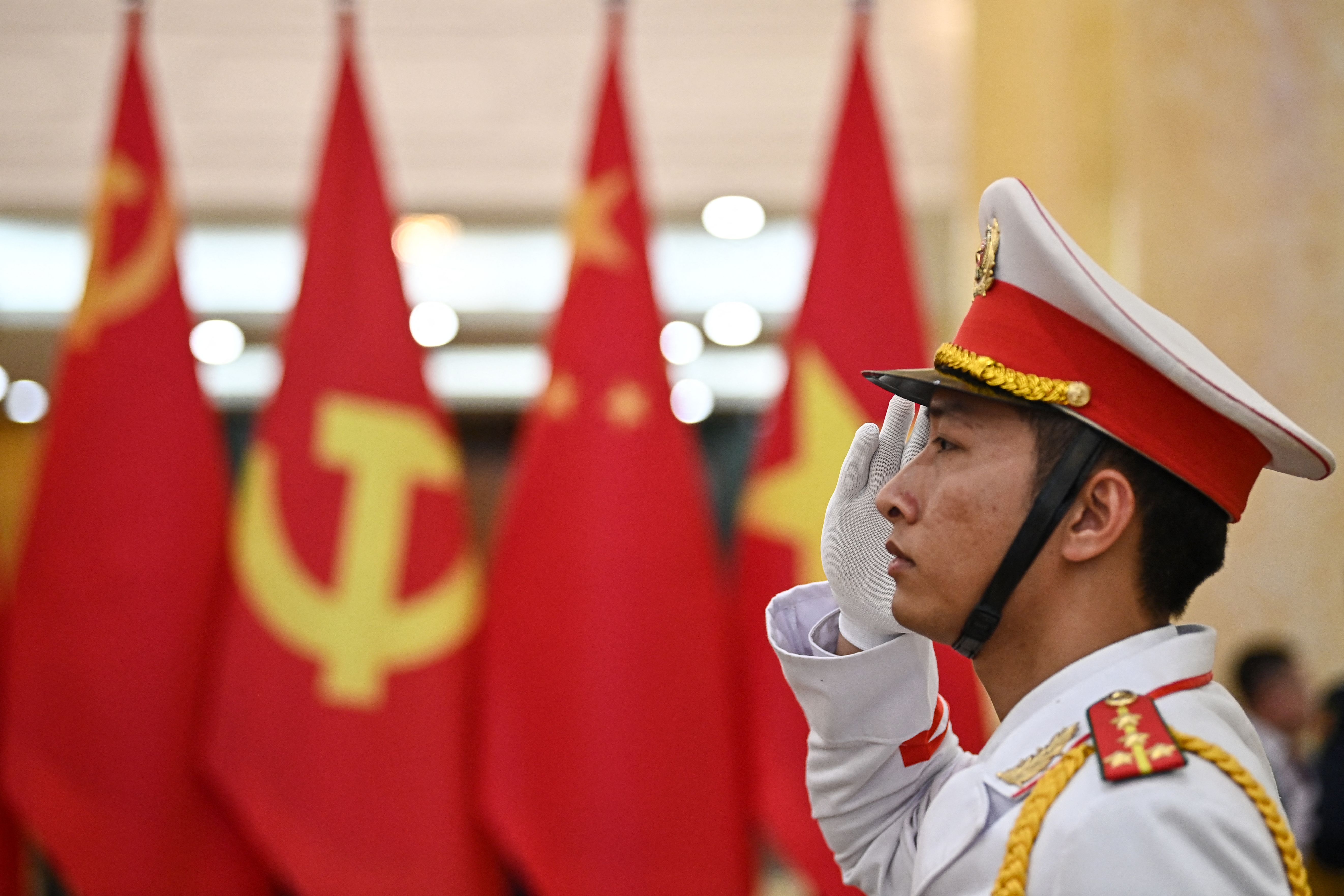
In July 2025, Vietnam and China held their first joint army drill, a modest but symbolic move reflecting Hanoi’s strategic hedging amid U.S.–China rivalry.

Nguyễn Khắc Giang

Regulation, not embargo, allows Beijing to shape how other countries and firms adapt to its terms.

Alvin Camba

Rather than climate ambitions, compatibility with investment and exports is why China supports both green and high-emission technologies.

Mathias Larsen