

Report
- +4
Ms. Sandra Polaski, Joaquim Bento de Souza Ferreir, Janine Berg, …
{
  "authors": [
    "Sandra Polaski"
  ],
  "type": "legacyinthemedia",
  "centerAffiliationAll": "",
  "centers": [
    "Carnegie Endowment for International Peace"
  ],
  "collections": [],
  "englishNewsletterAll": "",
  "nonEnglishNewsletterAll": "",
  "primaryCenter": "Carnegie Endowment for International Peace",
  "programAffiliation": "",
  "programs": [],
  "projects": [],
  "regions": [],
  "topics": [
    "Economy",
    "Trade"
  ]
}
Source: Getty
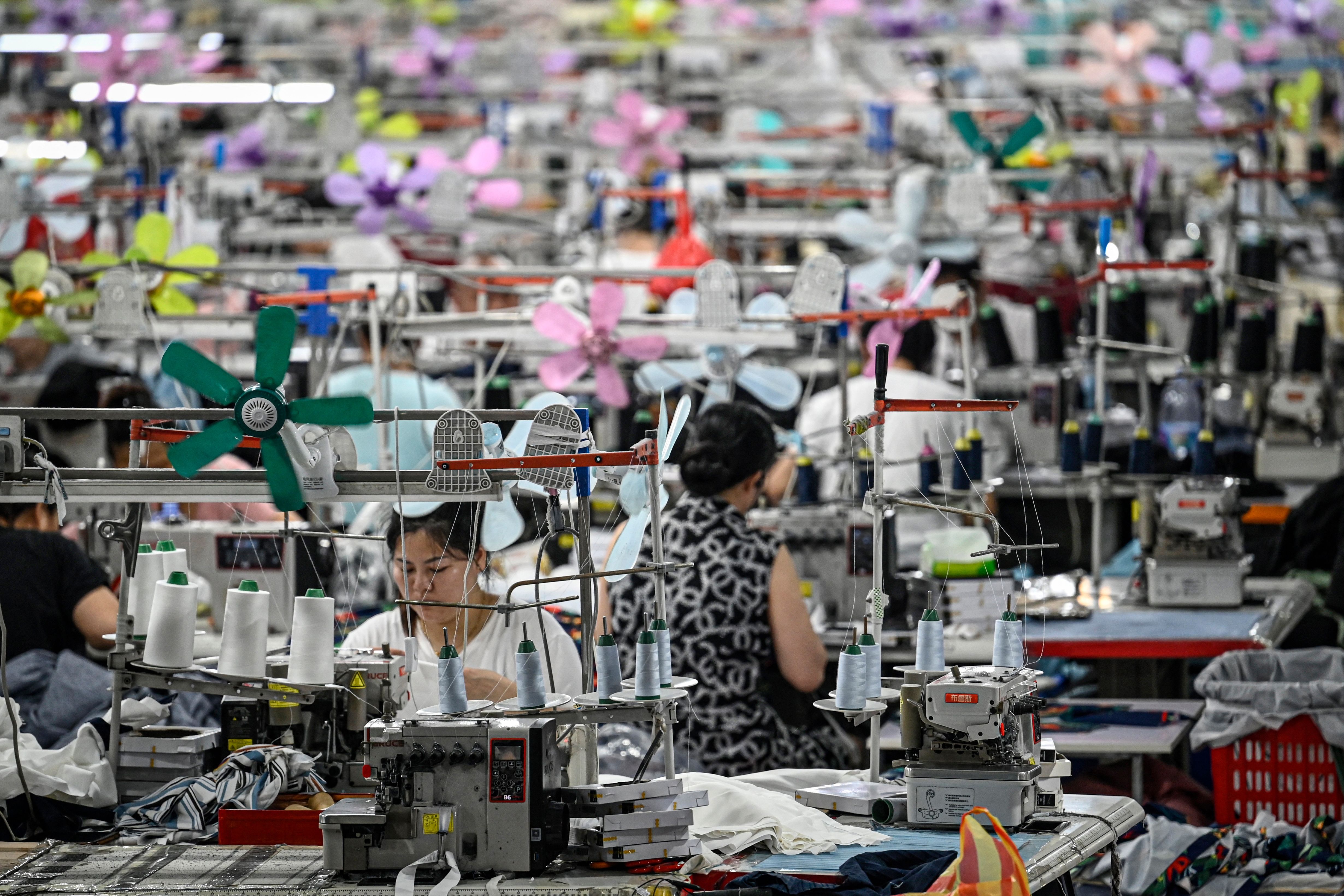
In an article in the leading journal World Development, Carnegie's Sandra Polaski analyzes the success and broader implications of an innovative policy experiment in Cambodia that links economic growth and increased trade with improvement of workers’ rights in the country’s garment factories.
Source: World Development
An innovative policy experiment in Cambodia links improvement of workers’ rights with
increased orders and market access for the products of the country’s garment factories.
In a new article in the leading journal World Development, Sandra Polaski, director of the Carnegie Endowment's Trade, Equity and Development project, analyzes the reasons for the success of the initiative and its broader implications.
Polaski outlines how the policy experiment, which began with a trade agreement awarding Cambodia higher garment export quotas into the lucrative US market in return for improved working conditions and labor regulations, continues to promote both improved labor conditions and more exports and jobs after the end of the quota system. Beyond the export quota bonus, private sector firms that buy Cambodia’s garments also found value in the improved labor practices, as a form of reputation insurance. Policy makers opted to continue this approach even after the expiration of the global garment quota system at the end of 2004. The agreement’s effectiveness has depended on the role of the International Labor Organization, a specialized agency of the United Nations, acting as compliance monitor, bringing unique credibility to this role and generating unprecedented transparency about conditions in factories. Government intervention has been crucial to prevent some apparel producers from free-riding on others’ improvements.
Click here to read the full text of the article.
Sandra Polaski is senior associate and director of the Trade, Equity, and Development Project at the Carnegie Endowment. She served as the U.S. secretary of state's special representative for international labor affairs from 1999 to 2002, playing a leading role in the development of U.S. government policy on international labor and trade issues.

Former Senior Associate, Director, Trade, Equity and Development Program
Until April 2002, Polaski served as the U.S. Secretary of State’s Special Representative for International Labor Affairs, the senior State Department official dealing with such matters.
Recent Work
Ms. Sandra Polaski, Joaquim Bento de Souza Ferreir, Janine Berg, …
Ms. Sandra Polaski

In the latest Five-Year Plan, the Chinese president cements the shift to an innovation-driven economy over a consumption-driven one.

Damien Ma

Regulation, not embargo, allows Beijing to shape how other countries and firms adapt to its terms.

Alvin Camba

Rather than climate ambitions, compatibility with investment and exports is why China supports both green and high-emission technologies.

Mathias Larsen
“Involution” is a new word for an old problem, and without a very different set of policies to rein it in, it is a problem that is likely to persist.

Michael Pettis

While China's investment story seems contradictory from the outside, the real answers to Beijing's high-quality growth ambitions are hiding in plain sight across the nation's cities.

Yuhan Zhang