

In The Media
John Judis
{
  "authors": [
    "John Judis"
  ],
  "type": "legacyinthemedia",
  "centerAffiliationAll": "",
  "centers": [
    "Carnegie Endowment for International Peace"
  ],
  "collections": [],
  "englishNewsletterAll": "",
  "nonEnglishNewsletterAll": "",
  "primaryCenter": "Carnegie Endowment for International Peace",
  "programAffiliation": "",
  "programs": [],
  "projects": [],
  "regions": [
    "North America",
    "United States",
    "China"
  ],
  "topics": [
    "Economy",
    "Foreign Policy"
  ]
}
REQUIRED IMAGE
The Bush administration is concerned that China's "blue-water navy" could encroach upon American prerogatives in the Pacific. Human rights activists demand the release of thousands of Chinese political prisoners. American consumers are up in arms over tainted Chinese pharmaceuticals, toothpaste, and dog food. But what is most worrisome about China is how it has ascended as a world economic power.
Source: The New Republic Online
The Bush administration is concerned that China's "blue-water navy" could encroach upon American prerogatives in the Pacific. According to The Economist's recent study of American power, "China is the country that most worries the Pentagon." Human rights activists demand the release of thousands of Chinese political prisoners. American consumers are up in arms over tainted Chinese pharmaceuticals, toothpaste, and dog food. But what is most worrisome about China is the way it has ascended as a world economic power--evident this month in its record $26.9 billion trade surplus and in a GDP larger than that of Britain or France.
China has pursued a combination of autocratic politics and state capitalism--sustained by investment from American, Japanese, and European banks and corporations. The Chinese example of dictatorship cum development threatens the ideal of democracy in Asia, Africa, and Latin America. And China's beggar-they-neighbor trade strategy may eventually undo the world trading system that the United States and Europe put together after World War II. That system was put in place not only to sustain prosperity, but to prevent the kind of national rivalries that could lead to war.
China's defenders in the United States insist there is nothing to worry about. To defend China against complaints from human rights activists or labor leaders, they trot out what James Mann in The China Fantasy calls the "Soothing Scenario." They claim that China's prosperity will eventually lead to a more democratic and pacific China. But if the last two decades are any indication, the exact opposite is the case.
Those years have seen very rapid economic growth along with the eradication of reform and the consolidation of the Communist Party's power. Sure, there are sporadic strikes and peasant demonstrations in China, but there is nothing resembling the coordinated opposition that spawned the Tiananmen Square protests in 1989. And the last of the reform communists, Zhao Ziyang, recently died in 2005 after languishing in house arrest for 16 years. These two occurrences--the Chinese economic boom and the consolidation of communist power--are not coincidental, but integrally related.
China's prosperity has depended upon the labor policies that the Communist Party has enforced and that foreign investors have happily accepted. These policies have kept wages low and prevented the formation of private (non-government) unions. As a result, China has been able to compete for foreign investment against countries like Taiwan and South Korea where workers, enjoying some degree of political and economic freedom, have been able to drive wages up. Even where wages are comparable, as in India, foreign companies can anticipate that they will not rise as quickly in a dictatorship like China as they might in a democracy. That may have been a reason why, during the decade following the Tiananmen Square massacre, China received 85 times more foreign investment than India.
In a paper delivered in May at a conference on political economy at St. Lawrence University, Kansas State University sociologist Robert Schaeffer explained how China's labor policies contribute not just to the country's prosperity, but to its mercantilist trade surpluses. The key lies in China's two-tier labor force. Its domestic industries rely primarily on migrant labor from the countryside that is exploited and abused--even enslaved, as in the recent case of kiln workers in Shanxi province. According to China Labor Watch, more than 60 percent of the migrant workers in Guangdong Province receive between the equivalent of $63 and $125 a month and work between 10 and 16 hours a day. There is a government minimum wage, but more than 85 percent of the workers that were surveyed were paid less.
Foreign investors, on the other hand, employ urban workers with residency permits. These workers make less than their counterparts in other countries--and their wages are constantly being eroded by inflation in China's scarce housing market--but they make more and enjoy greater job security and benefits than the migrant workers. This difference in wages between the migrant workers employed by domestic industries and the urban workers employed by foreign producers allows China's domestic industries to undersell foreign producers in its own market. If foreign producers want to make money in China, they have to do so by exporting back to their home countries. The old dream of selling toothpaste to the Chinese has proven to be no more than a fantasy.
China's economic strategy aims at increasing China's exports while limiting the growth of its imports. That entails growing inequality at home--China has gone from Maoist egalitarianism to the worst excesses of capitalist maldistribution. Even the socialist safety net has vanished. Chinese workers no longer enjoy universal health insurance. Buttressed by rigid control over the value of the country's currency, China's economic strategy also leads to constant turmoil in the world trading system, as other nations attempt to protect their own trade balance and their industries from Chinese competition. If anything, these conflicts, which contributed to the collapse of the World Trade Organization's (WTO) Doha round of trade talks, promise to get worse in years to come.
China's rise as an economic power has obvious consequences for other emerging market powers like South Korea, Taiwan, Brazil and India. Its message to them--and to less developed countries in Africa--is to put a lid on wages and suppress political and economic rights. "Dictatorship pays" could be China's slogan. Americans might profess indifference to what happens to South Korea's economy, but it's hard to ignore what has happened in Mexico. As Schaeffer notes, Mexico lost nearly half a million manufacturing jobs to China in the in 1990s. From 2000 to 2003, it lost another 287,000 jobs to China. The loss of these jobs has increased the pressure for Mexican workers to emigrate to the United States.
The U.S. trade deficit with China is equivalent in lost jobs, primarily in manufacturing. According to the Economic Policy Institute, the United States lost almost two million manufacturing jobs to China in the last decade. That contradicts claims that the Clinton administration made ten years ago when it campaigned for China's admission into the WTO. China's admission, Secretary of State Madeleine Albright asserted, "would give the United States more access to China's market, boost our exports, reduce our trade deficit, and create new well-paying jobs."
One can argue that the jobs that went to China would have migrated anyway--perhaps to Mexico or Costa Rica rather than China. But, in that case, they would have more likely increased demand for American exports and reduced the turmoil at America's southern border. If anything, competition from China's low-wage dictatorship has helped to spawn an American version of China's two-tier labor system--with well paid professionals and managers at the top and low-wage service workers, many of them recent legal and illegal migrants, at the bottom.
To date, American administrations and multinational corporations have encouraged China's worst impulses. American businesses even tried to weaken China's new labor law--a law that will probably be rarely enforced, but that still sets a standard that American firms don't want even to pretend to adhere to. As Mann shows, the United States has squandered several opportunities--most notably, the negotiations over China's admission to the WTO--to apply the kind of constructive pressure they once applied to South Korea and Taiwan. But they should consider using what remains of their economic leverage to obtain not merely trade concessions, but changes in China's economic and political system. It's certainly too late for the Bush administration to do anything, but the next president should take heed.
John B. Judis is a senior editor at The New Republic and a visiting scholar at the Carnegie Endowment for International Peace.

Former Visiting Scholar
As a visiting scholar at Carnegie, Judis wrote The Folly of Empire: What George W. Bush Could Learn from Theodore Roosevelt and Woodrow Wilson.
Recent Work
John Judis
John Judis
Carnegie does not take institutional positions on public policy issues; the views represented herein are those of the author(s) and do not necessarily reflect the views of Carnegie, its staff, or its trustees.
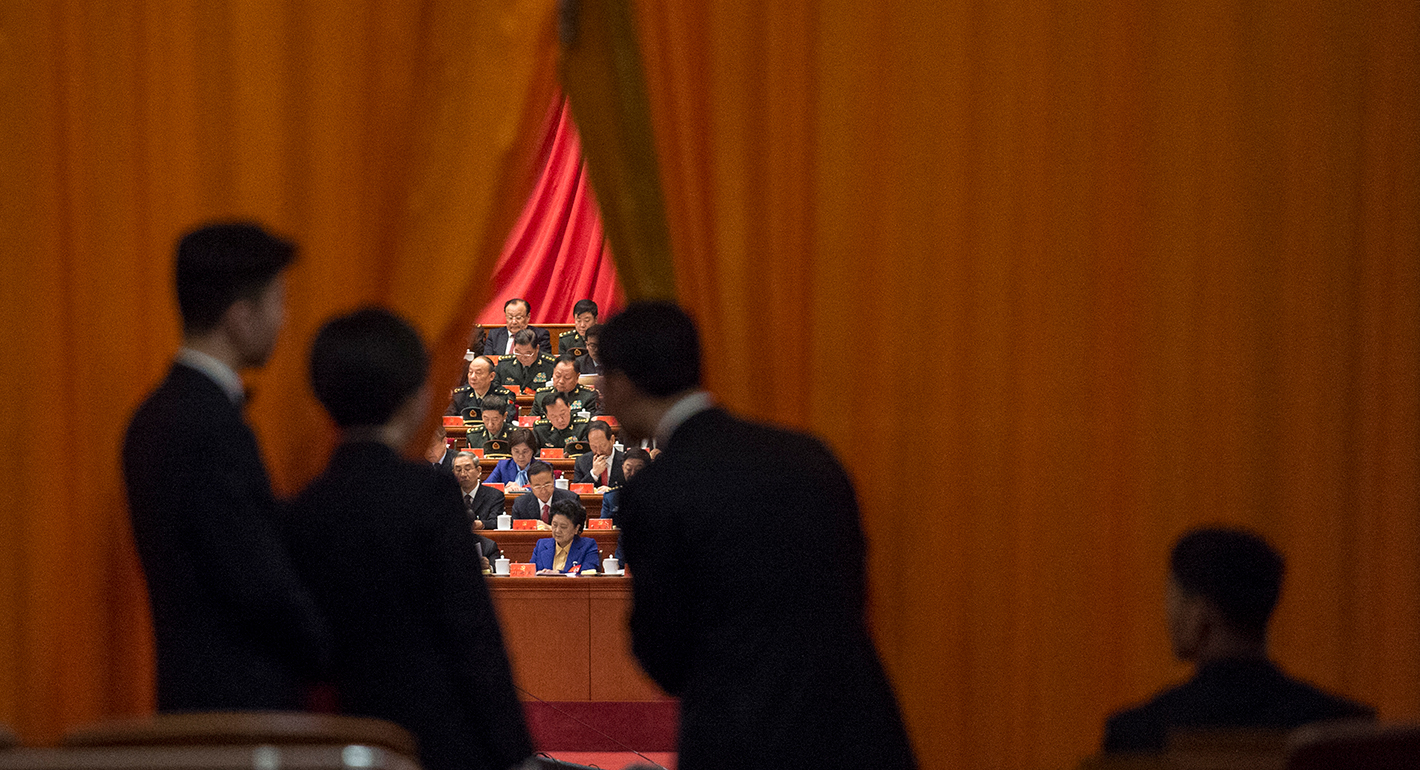
China’s political future will be shaped between now and next October. As the Communist Party enters its intense “campaign season” to prepare for a major political transition in 2027, reading Beijing's actions and responses may become more difficult as domestic politics weigh on its behavior more than usual.

Damien Ma
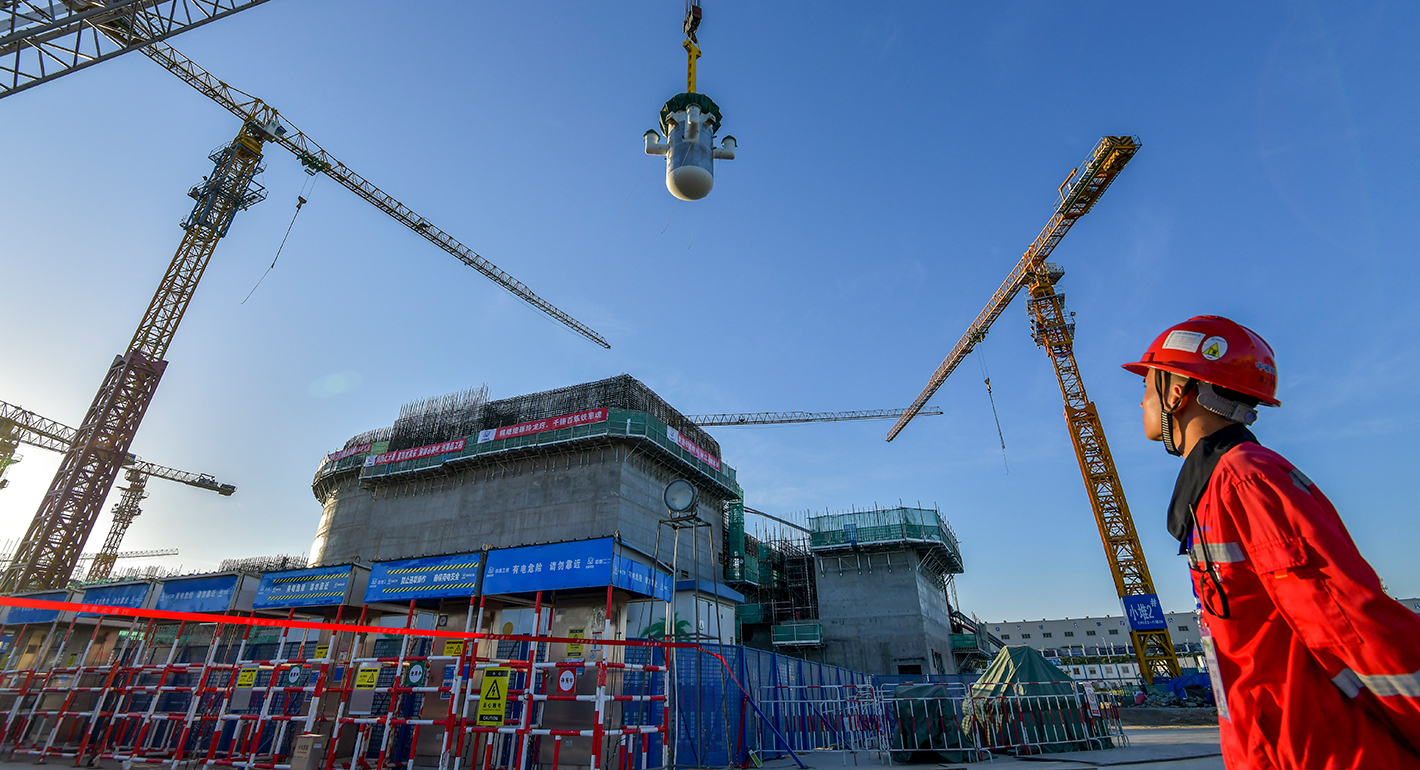
China has showcased its engineering prowess with small modular reactor demonstration projects. But turning these technological achievements into commercial success will be a greater challenge.

Tong Zhao

The Plaza Accord was not an externally imposed punishment of Japan but part of a broader restructuring that Japanese economists and policymakers themselves recognized was necessary. Its effects were undermined, however, when Tokyo responded to the resulting slowdown with policies that exacerbated investment, credit expansion, and the very imbalances the adjustment was intended to resolve.

Michael Pettis
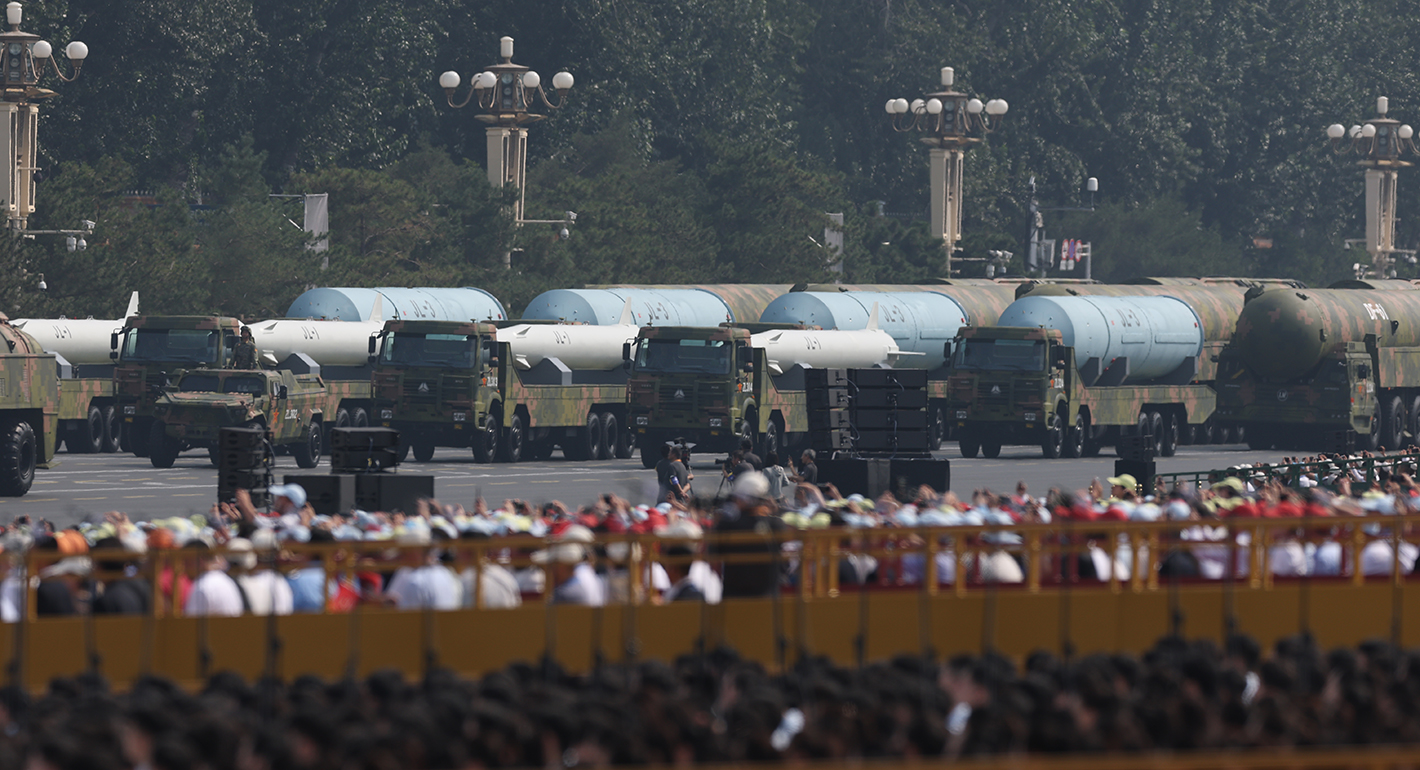
The nuclear relationship between China and the United States is increasingly shaped by widening perception gaps rather than deliberate strategic design.
Tong Zhao
China’s banking crisis in the 2000s was resolved by transferring the costs to households through financial repression—a decision that recapitalized the banks while exacerbating the structural imbalances that continue to shape the Chinese economy today.
Michael Pettis