

In The Media
Josh Kurlantzick
{
  "authors": [
    "Josh Kurlantzick"
  ],
  "type": "legacyinthemedia",
  "centerAffiliationAll": "dc",
  "centers": [
    "Carnegie Endowment for International Peace"
  ],
  "collections": [],
  "englishNewsletterAll": "asia",
  "nonEnglishNewsletterAll": "",
  "primaryCenter": "Carnegie Endowment for International Peace",
  "programAffiliation": "AP",
  "programs": [
    "Asia"
  ],
  "projects": [],
  "regions": [
    "North America",
    "United States",
    "East Asia",
    "China",
    "Taiwan"
  ],
  "topics": [
    "Political Reform",
    "Security",
    "Military",
    "Foreign Policy"
  ]
}
Source: Getty
Bush promised to treat China like a "strategic competitor." However, despite the Department of Defense's continuing concerns about China's military buildup, the White House has backpedaled, leaving its China policy exactly the opposite of what Bush had promised. Nowhere is his retreat more obvious than on human rights, an issue Bush claims is the centerpiece of his presidency.
Source: The New Republic

Well, that hasn't exactly happened. Despite the Department of Defense's continuing concerns about China's military buildup, the White House has backpedaled, leaving its China policy exactly the opposite of what Bush had promised. And nowhere is his retreat more obvious than on human rights, an issue Bush claims is the centerpiece of his presidency.
At first, the White House seemed willing to live up to its promises. It said that it would do "whatever it takes" to defend Taiwan, which China has intimidated for years--whether that meant supporting the beleaguered democracy's right to stockpile missiles across the Taiwan Strait or to join global institutions like the United Nations and the World Health Organization. And on his first visit to China as president, in 2002, Bush gave a speech to Chinese students emphasizing his commitment to political and religious justice. "Freedom of religion is not something to be feared, it's to be welcomed," Bush declared. It was a brave thing to say under the circumstances.
But this strategy changed quickly after 9/11, when the U.S. sought China's help in the war on terror--even though Beijing had little to offer in the way of counterterrorism assistance and contained no pockets of radical Islam. "Administration officials now see smooth U.S.-PRC relations as an important tool in cooperating against terrorism," concluded a 2004 study by the Congressional Research Service. One consequence of this new arrangement was that the White House agreed to Beijing's demands to place an obscure group of Uighurs, who reportedly call themselves the East Turkestan Independence Movement (ETIM), on the State Department's list of terrorist groups in 2002. This, despite no evidence that ETIM posed an international threat or had committed terrorist activities, that some Uighur specialists question whether ETIM exists at all, and that Washington knew well that Beijing harshly represses the Uighurs.
And in recent years, without the U.S. raising an objection, over 4,000 Uighurs have been executed by the Chinese, frequently without due process. "China has opportunistically used the post-September 11 environment to make the outrageous claim that individuals disseminating peaceful religious and cultural messages in Xinjiang [where most Uighurs live] are terrorists who have simply changed tactics," Human Rights Watch found in an extensive 2005 report on the Uighurs. Despite explicit concerns raised by the State Department about the situation, the White House has twice declined to sponsor U.N. resolutions condemning Chinese human rights abuses--an abrupt shift from previous U.S. policy: The Clinton administration had backed similar U.N. resolutions nearly every year in office.
Bush also paid little attention to human rights on his trip to China in 2005; he didn't once mention jailed Chinese activists. Again, this was a departure from the norm: Senior U.S. officials with the Reagan administration made a habit of visiting with Russian dissidents on trips to Moscow, and President Clinton was quite successful in highlighting individual dissidents in China, eventually getting many of them released. As one top former Clinton advisor told me, the president and Madeleine Albright repeatedly pressed then-president Jiang Zemin to loosen restrictions in Tibet and engage in a dialogue with Dalai Lama.
Bush's record has only gotten worse since then. Last year, in an interview with Chinese television, Bush did not mention human rights in China as one of his priorities. And on his most recent meeting with Hu, in 2007, Bush even lavished praise on the Chinese leader just for using the words "democracy" and "rights" in public--even though nearly every human rights organization, from Amnesty International to Human Rights Watch, agrees that repression continues to get worse under Hu.
Then, on a point of huge international concern--and to the delight of Chinese leaders--Bush has promised to attend the 2008 Beijing Olympics just as a "sports fan," though that is essentially impossible for the American president. As it stands now, there will be no speeches about China's behavior in advance of the Games, no meetings with dissidents or any other activists or religious figures--just silence.
Lastly, on Taiwan, Bush has acted even more cravenly. Early on in his administration, the White House allowed Taiwanese president Chen Shui-bian brief but substantial visits to American cities like New York, where Taiwanese-Americans welcomed him like a conquering hero. But in recent years, Chen has only been allowed to stop in remote locations like Alaska, and just long enough for his plane to refuel. Compared to its previous support for Taiwan, State Department officials have issued blunt criticism of Taiwanese leaders over the past three years, including during appearances on Chinese state television. The White House has also reversed its position on Taipei's campaign to join the U.N. According to Dan Blumenthal, a commissioner on the U.S.-China Economic and Security Review Commission, the administration has excluded Taiwan from "the global community of democracies that the Bush administration has touted, [while] including countries like Egypt," a nation that hardly meets the definition of democracy.
Perhaps a new administration, Republican or Democratic, will actually make good on promises to promote human rights in China. House Speaker Nancy Pelosi is a longtime advocate of human rights in China, John McCain has urged a tougher line against Beijing, and after the recent bloodshed in Tibet, Barack Obama and Hillary Clinton have also started to address the behavior of the Chinese government. But following through may be far more difficult. China has become a global economic and political power, and Washington, weakened by years of war, now needs Beijing's help in crises from North Korea to Burma. And compared to 15 years ago, China has become vastly more sophisticated in its Washington lobbying efforts--they now employ some of the biggest firms in town, like Patton Boggs. Whoever occupies the White House next certainly won't have the luxury of a strict containment policy.
But the incoming administration should also remember that there is no evidence that skirting the issue of human rights with China makes it easier to enlist Beijing's help in other areas where we need its assistance. The U.S.'s abandonment of Taiwan, for instance, has not prevented China from continuing its military build-up across the Taiwan Strait. But when the State Department's spokepeople have emphasized in public prominent detained activists, China eventually released them. (Take the case of Uighur leader Rabiya Kadeer.) And when the Bush administration has actually taken a stand on human rights in China, which, to its credit, it did by having Bush meet recently with the Dalai Lama, Beijing protested vehemently in public, summoning the American ambassador to China for a dressing-down. Yet these public protests did not derail any important cooperation efforts, like the Washington-Beijing "strategic dialogue." In fact, China's behavior proves that it's willing to give the United States certain concessions as long as it gets to put on a brave face for its people. Too bad that, over the last eight years, the Bush administration never entirely figured out how to use that opening to its advantage.

Former Visiting Scholar, China Program
A special correspondent for The New Republic, a columnist for Time, and a senior correspondent for The American Prospect, Kurlantzick assesses China’s relationship with the developing world, including Southeast Asia, Africa, and Latin America.
Recent Work
Josh Kurlantzick
Carnegie does not take institutional positions on public policy issues; the views represented herein are those of the author(s) and do not necessarily reflect the views of Carnegie, its staff, or its trustees.

China’s banking crisis in the 2000s was resolved by transferring the costs to households through financial repression—a decision that recapitalized the banks while exacerbating the structural imbalances that continue to shape the Chinese economy today.

Michael Pettis

Chinese biotech companies have been on the receiving end of U.S. economic coercion. Yet their responses have differed significantly because firm and state interests are not uniformly aligned. For Washington, treating all Chinese tech firms the same, irrespective of their actual interests, risks pushing them farther into Beijing’s corner.

Xue Gong
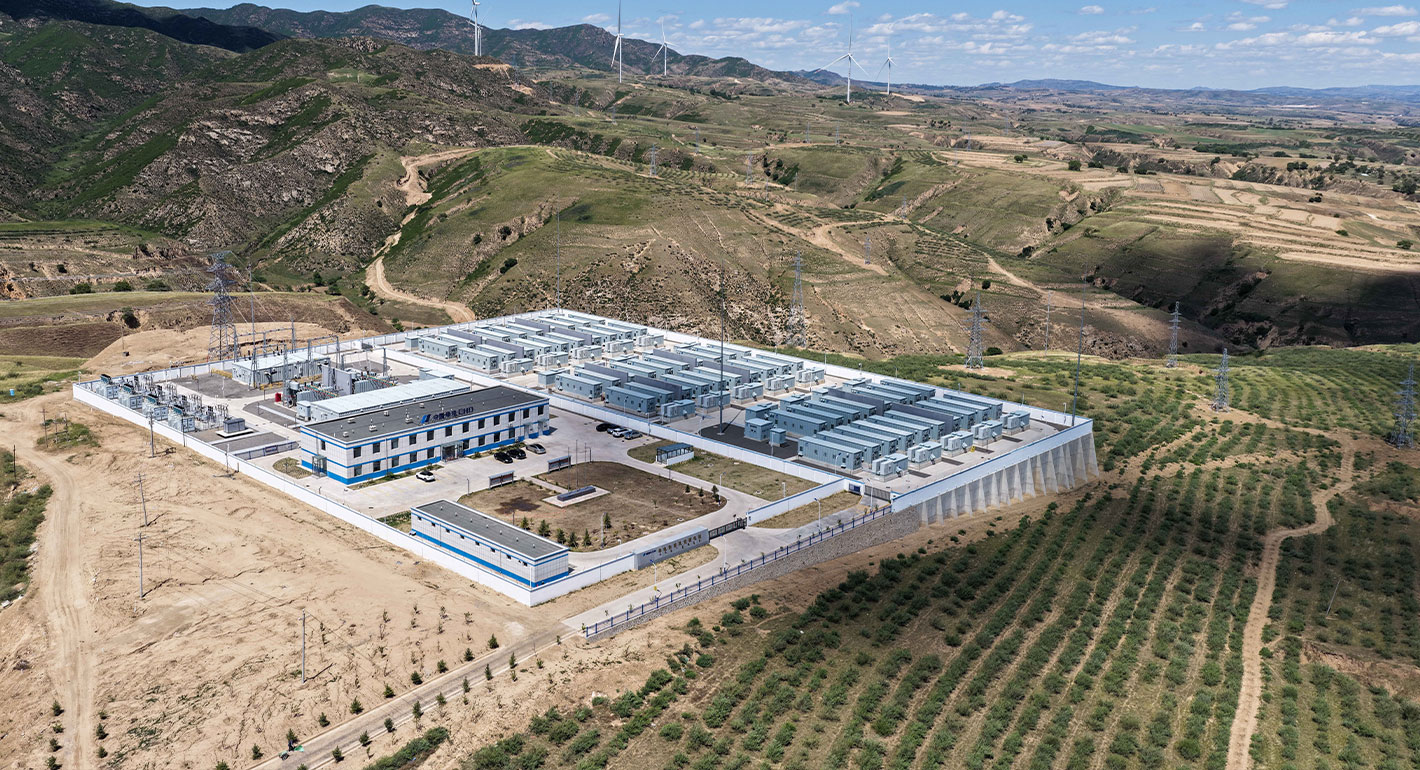
China’s latest energy plan explicitly calls for integrating data centers into the electricity system, particularly connecting them to green energy. It appears Beijing wants to use compute as a source of domestic demand to absorb renewables excess capacity.

Damien Ma

But their "principal to principal" model will only be as effective as the political strength of each leader back home.
Damien Ma

U.S. unpredictability has allowed China to capitalize on its positioning as the “responsible great power”. Paradoxically, the more China wins the perception game, the more likely expectations will rise for Beijing to deliver not just words but to demonstrate with its deeds.

Chong Ja Ian