

Q&A
Christopher Boucek
{
  "authors": [
    "Christopher Boucek"
  ],
  "type": "legacyinthemedia",
  "centerAffiliationAll": "dc",
  "centers": [
    "Carnegie Endowment for International Peace"
  ],
  "collections": [],
  "englishNewsletterAll": "menaTransitions",
  "nonEnglishNewsletterAll": "",
  "primaryCenter": "Carnegie Endowment for International Peace",
  "programAffiliation": "MEP",
  "programs": [
    "Middle East"
  ],
  "projects": [],
  "regions": [
    "Saudi Arabia"
  ],
  "topics": [
    "Political Reform",
    "Economy"
  ]
}
Source: Getty
The prominent role of the internet in propagating and perpetuating violent Islamist ideology is well known. As such, identifying methods to short-circuit internet radicalization has become an urgent goal for numerous governments. Saudi Arabia has quietly supported initiatives to combat internet radicalization. One of the most developed programs is the Sakinah Campaign.
Source: CTC Sentinel

In recent years, Saudi Arabia has quietly supported initiatives to combat internet radicalization. One of the most developed programs is the Sakinah Campaign, which began several years ago to fight online radicalization and recruitment. Named after the Arabic word for religiously inspired tranquility, the Sakinah Campaign operates as an independent, non-governmental organization, supported by the Ministry of Islamic Affairs. Similar to other counter-radicalization and demobilization strategies in the kingdom, the Sakinah Campaign uses Islamic scholars to interact online with individuals looking for religious knowledge, with the aim of steering them away from extremist sources.
This article originally appeared in CTC Sentinel Combating Terrorism Center, West Point

Former Associate, Middle East Program
Boucek was an associate in the Carnegie Middle East Program where his research focused on security challenges in the Arabian Peninsula and Northern Africa.
Recent Work
Christopher Boucek

Christopher Boucek, Karim Sadjadpour
Carnegie does not take institutional positions on public policy issues; the views represented herein are those of the author(s) and do not necessarily reflect the views of Carnegie, its staff, or its trustees.

China’s banking crisis in the 2000s was resolved by transferring the costs to households through financial repression—a decision that recapitalized the banks while exacerbating the structural imbalances that continue to shape the Chinese economy today.

Michael Pettis

In the latest Five-Year Plan, the Chinese president cements the shift to an innovation-driven economy over a consumption-driven one.

Damien Ma

Rather than climate ambitions, compatibility with investment and exports is why China supports both green and high-emission technologies.

Mathias Larsen
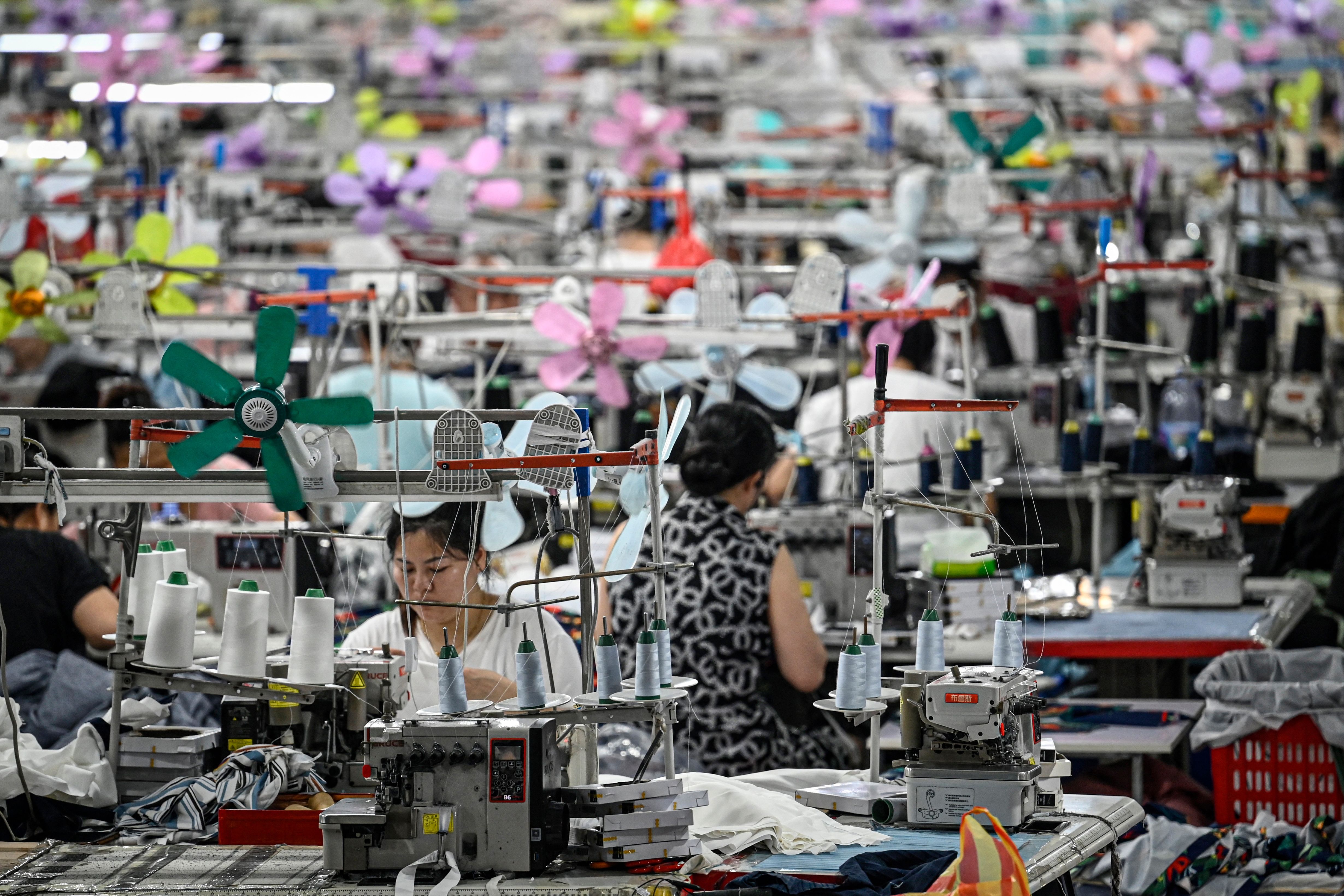
“Involution” is a new word for an old problem, and without a very different set of policies to rein it in, it is a problem that is likely to persist.
Michael Pettis

While China's investment story seems contradictory from the outside, the real answers to Beijing's high-quality growth ambitions are hiding in plain sight across the nation's cities.

Yuhan Zhang