Carnegie to Represent U.S. Research for International Nuclear Weapons Commission
The Carnegie Endowment for International Peace announced today that it has been chosen to serve as the U.S.–based Associated Research Centre for the International Commission on Non-proliferation and Disarmament.
Link Copied
Published on Sep 25, 2008
WASHINGTON, Sept 26—The Carnegie Endowment for International Peace announced today that it has been chosen to serve as the U.S.–based Associated Research Centre for the International Commission on Non-proliferation and Disarmament.
Making the announcement, the Endowment’s President, Jessica T. Mathews, said:
“We are honored to have been chosen to serve as the U.S. research hub of this important Commission. We are also pleased that George Perkovich, Carnegie’s vice president for studies, will be a member of the Commission’s advisory panel and drafting committee, and Alexei Arbatov, from the Carnegie Moscow Center, will serve as a Commissioner. The Carnegie Nonproliferation Program has been a central element of the Endowment’s work and a leading producer of new ideas and cutting edge analysis for decades. Our multinational presence and working relationships with many key governments gives us a unique capacity to engage and collaborate with others from relevant regions. We look forward to helping the International Commission in every way we can.”
The International Commission on Non-proliferation and Disarmament, which will report on ways to rid the world of nuclear weapons, was announced yesterday by Australian Prime Minister Kevin Rudd and Japanese Prime Minister Taro Aso. Headed by a former foreign minister of Australia, Gareth Evans, and a former foreign minister of Japan, Yoriko Kawaguchi, the Commission will discuss the three closely interconnected issues of nuclear disarmament, nonproliferation, and the peaceful uses of nuclear energy, and produce reports to contribute to the debate on these issues in the context of the 2010 NPT Review Conference and beyond.
The Commission itself will be globally representative, comprised of members with high level political experience, and will meet up to six times over a two-year period, with its major report targeted for publication in January 2010.
The seven Associated Centres will be expected to:
produce specially commissioned research;
host meetings of specialist experts—drawing on expertise wider than just in the centre itself; and
host possible regional meetings of sub-groups of Commissioners, Advisory Council members, experts, and civil society and industry representatives.
###
NOTES
George Perkovich, vice president for studies at Carnegie, will represent the Endowment on both the Commission’s advisory panel and drafting committee.
Alexei Arbatov is a scholar-in-residence and chair of the Nonproliferation Program at the Carnegie Moscow Center.
The Carnegie Endowment for International Peace’s Nonproliferation Program seeks to shore up the rule-based nonproliferation system where it is being undermined, and to strengthen it where possible by injecting new ideas into the policy debate. Because ideas coupled with influence matter in the crafting and implementation of U.S. and international security policy, Carnegie is well positioned to take on this challenge. The nonproliferation expertise concentrated at the Endowment is widely acknowledged as an unrivaled source of knowledge and critical thinking in the debate on nuclear weapons and their means of delivery. Carnegie's analysis consistently stays at the forefront of proliferation policy debates.
The Carnegie Moscow Center was established in 1993 and accommodates foreign and Russian researchers collaborating with Carnegie’s global network of scholars on a broad range of contemporary policy issues relevant to Russia—military, political, and economic.
Carnegie’s five locations—headquarters in Washington, D.C., and additional offices in Moscow, Beijing, Beirut, and Brussels—give us unique capacity to develop innovative approaches to policy research that engage scholars from relevant regions of the world in sustained collaboration. The Nonproliferation Program in Washington, D.C., is the hub through which the other offices collaborate on nonproliferation issues. This integrated global network gives Carnegie an increased capacity to influence outcomes. Drawing on our sought-after rigorous analysis and policy recommendations, international reputation, access to the media, varied means of dissemination, extensive network of influence across audiences and borders, and convening capability, we are well situated to chart a new course for efforts to prevent the spread and use of nuclear weapons.
Carnegie continues to act as an adviser to the Norwegian Government as part of the Seven Nation Initiative. Our relations with key governments—Germany, France, the U.K., Australia, Japan, South Korea, Brazil, Norway, and Israel—and their reliance on our analyses and recommendations, continue to grow.
Carnegie produces relevant analyses and recommendations on the key nonproliferation challenges confronting the United States and the world, such as the Iran nuclear challenge, and the prospect of proliferation problems in the Middle East and Northeast Asia. We also catalyzed efforts to generate ideas and prepare the political ground for moving ahead with an agenda to restore and improve the nonproliferation regime—anticipating the 2010 Nuclear Non-Proliferation Treaty Review Conference—through the 2007 Carnegie International Nonproliferation Conference, our advisory role in the Seven Nation Initiative, and our analyses.
The United States cannot meet major proliferation challenges alone, and the world cannot solve these problems without the United States. To strengthen the U.S. role as a leader in international collaboration to counter threats against the global nuclear order, the Nonproliferation Program has continued to provide U.S. policy makers with relevant tools and analysis.
Held every eighteen months, Carnegie’s International Nonproliferation Conferences are widely considered the premiere event in this field. The 2007 Conference, for example, drew over 800 participants representing government officials from 33 countries, top policy and technical experts, NGO and industry leaders, academics and the media. Twenty-one panels, involving 79 speakers, covered the full range of nonproliferation challenges. A moving keynote address by then-British Foreign Secretary Margaret Beckett calling for leadership on nuclear disarmament was termed by former Senator Sam Nunn as a "game changer." The impact of the conference was extended on the web through video and transcripts from all sessions and speakers’ presentations, and also through the publication and global dissemination of a “Top Ten Results” document available in both Chinese and English. “Top Ten Results” is one of the most frequently downloaded documents on the Nonproliferation Program website. The next conference will be held on April 6 & 7, 2009 in Washington, D.C.
Carnegie does not take institutional positions on public policy issues; the views represented herein are those of the author(s) and do not necessarily reflect the views of Carnegie, its staff, or its trustees.
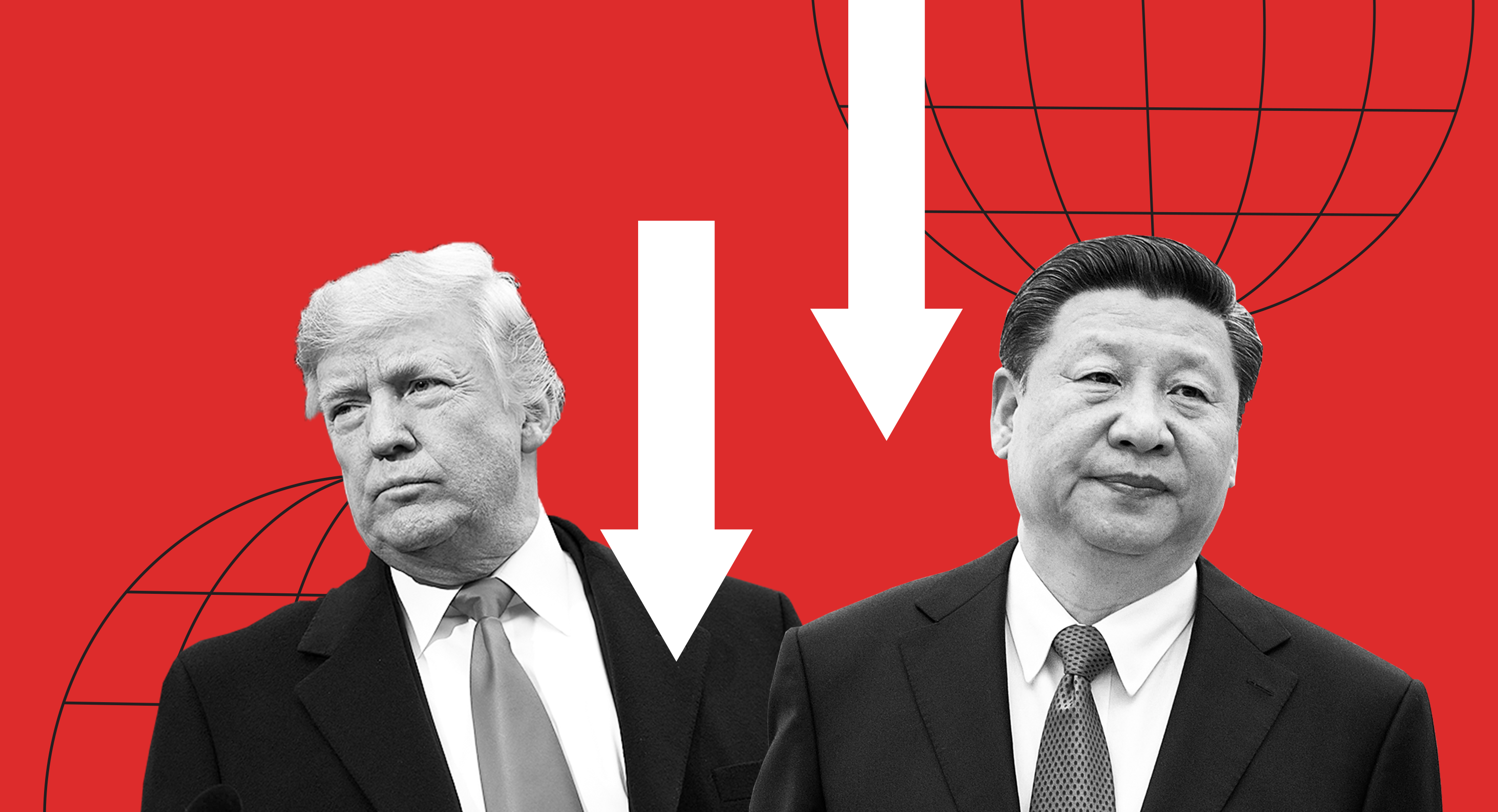
US unpredictability has allowed China to capitalize on its positioning as the “responsible great power”. Paradoxically, the more China wins the perception game, the more likely expectations will rise for Beijing to deliver not just words but to demonstrate with its deeds.
Tapping our network of China experts in the region, Carnegie China offers this latest “China Through a Southeast Asian Lens” report to offer preliminary assessments of whether the U.S. effort to reshape the global trading order will lead countries in the region to tilt toward Beijing.
+6
Selina Ho, Khin Khin Kyaw Kyee, Joseph Ching Velasco, …