

Q&A
Christopher Boucek
{
  "authors": [
    "Christopher Boucek"
  ],
  "type": "legacyinthemedia",
  "centerAffiliationAll": "dc",
  "centers": [
    "Carnegie Endowment for International Peace"
  ],
  "collections": [],
  "englishNewsletterAll": "menaTransitions",
  "nonEnglishNewsletterAll": "",
  "primaryCenter": "Carnegie Endowment for International Peace",
  "programAffiliation": "MEP",
  "programs": [
    "Middle East"
  ],
  "projects": [],
  "regions": [
    "Saudi Arabia"
  ],
  "topics": [
    "Democracy",
    "Security",
    "Foreign Policy"
  ]
}
REQUIRED IMAGE
Senior Saudi officials have announced recently that they will soon begin trying terrorism suspects held in connection with a series of major attacks that began in 2003. The use of the court system to battle extremism was not possible while the government perceived al-Qaeda as an existential threat; clearly it has now been downgraded to an internal security threat.
Source: Arab Reform Bulletin
Senior Saudi officials have announced recently that they will soon begin trying terrorism suspects held in connection with a series of major attacks that began in 2003. Chairman of the Supreme Judicial Council Sheikh Muhammad al-Luhaidan and Justice Minister Dr. Abdullah Aal al-Sheikh in separate interviews with Saudi dailies in July affirmed Riyadh’s plans to establish separate security courts. The move to begin trials signals the government’s belief that it has largely defeated the “Al-Qaeda in the Arabian Peninsula” organization. The use of the court system to battle extremism was not possible while the government perceived al-Qaeda as an existential threat; clearly it has now been downgraded to an internal security threat.
Reports of the creation of specialized security courts have been circulating for several years and there have been seemingly contradictory statements from the Ministries of Interior and Justice on whether or not the courts would be created and when they would begin hearing cases. In October 2006, Deputy Interior Minister Prince Ahmed stated that the Kingdom had begun to try suspected terrorists, but he offered few specifics. Also in 2006, Sheikh Abdul Muhsin al-Obikan, an advisor to the Justice Ministry, told reporters that state security courts would be a permanent addition to the current justice system and not merely a temporary measure.
Saudi officials are at pains to stress that the new security courts will not be military or extraordinary courts such as those in other Arab states. Rather, they are to be part of the Saudi legal system, which itself has recently undergone a major reorganization. Currently, individuals charged with security offenses appear before the Riyadh judiciary among regular civil and criminal cases. No system exists to organize the cases by offense, nor are special security provisions made for the appearance of terrorism-related defendants in a civilian court. One exception has been Saudi returnees from U.S. detention at Guantanamo Bay, who appeared before a judge in a special facility, separate from other defendants, in part to minimize risks associated with their transport.
Deputy Interior Minister for Security Affairs Prince Muhammad bin Nayif has justified the courts’ creation as being necessary to deal with a backlog of terrorism and security related cases in the Kingdom. It is estimated that roughly 3,200 suspects have been detained on security offenses. How many of these detainees are charged and awaiting trial, however, is unclear. Some accounts suggest that the actual number slated to go before the court is much lower. The Saudi press has frequently mentioned that suspects held in connection with a number of attacks will eventually go on trial, including the 2003 al-Olaya compound attack and the 2004 bombing of the traffic police headquarters. It is not clear what will happen to the many detainees who have not been formally charged or convicted of any criminal offense.
A major concern in the creation of security courts arises not so much from what they will be called, but rather how the proceedings will be handled and what protections will be afforded to defendants. There has been some suggestion that security detainees will first appear before a panel to evaluate their charges and to decide who will go to court. This raises a number of questions, for example, about the processes for evaluating evidence and substantiating allegations.
The new security court will only hear security and terrorism cases and will be housed in specially built high security facilities in Riyadh, Jiddah, and Dammam. According to Justice Minister al-Sheikh, locations for the new courts have been decided and plans call for the trials to begin first in Riyadh. The High Court is to select the judges for the new court from the regular pool of judges, and reportedly the Minister of Interior will not be involved in that process. Interior will provide them with special training sessions in understanding extremist ideology, takfir (the doctrine that legitimizes treating certain Muslims as nonbelievers), and terrorist recruitment and radicalization in order to best grasp the security situation in the Kingdom.
The courts are to be comprised of three levels. Initially, a three judge panel will hear a case. A five judge appeal panel will then review each decision. Defendants will be able to file appeals ultimately to a Grievance Court. Some reports have suggested that foreign observers will be permitted at the trials. Defendants are to be represented by lawyers, although some legal observers have questioned how the Saudi government will provide defense counsel to the large number of presumed defendants. There is a shortage of both lawyers and judges in the Kingdom, and finding capable legal representation to represent every individual will no doubt delay the legal process.
Saudi officials stress that in addition to dealing with specific cases, the new courts will also seek to put extremist ideologies on trial. By definition all courts in Saudi Arabia are shari’a courts, and the only sources of law in the Kingdom are the Qur’an, the sunna (actions of the Prophet Muhammad), and the hadith (sayings of the Prophet). According to senior Saudi officials, the new security courts will also draw on the works of notable Islamic scholars such as Ibn Tamiyya in order to use Islamic jurisprudence to refute religious and doctrinal deviations adopted by extremists in the Kingdom, and to assert the primacy of official state-sponsored Islam. As such, the new courts will play an important role in the Kingdom’s multifaceted strategy to defeat domestic violent militancy and win the self-described war of ideas.
There are also plans under discussion to televise the trials. A special channel may possibly be created in Saudi Arabia to carry the broadcasts, similar to the intention to broadcast a live feed from the appointed Consultative Council. It remains to be seen how this would operate in practice, and live broadcasts could be unpredictable and therefore counterproductive. Moreover, it is uncertain how friendly some judges will be to the idea of recording and broadcasting the proceedings in their court.
The intention to begin trials demonstrates the Saudi government’s confidence in its current position vis-à-vis the extremists, and measures to try detained terrorism suspects are to be encouraged. Efforts such as this to confront and delegitimize violent radical Islamist ideology will prove to be critical long-term strategies in the struggle against terrorism in the Kingdom. Still, many questions remain about ultimately how different Saudi security courts will be from those in other Arab countries regarding procedures, and whether they will offer adequate judicial processes and human rights protections.
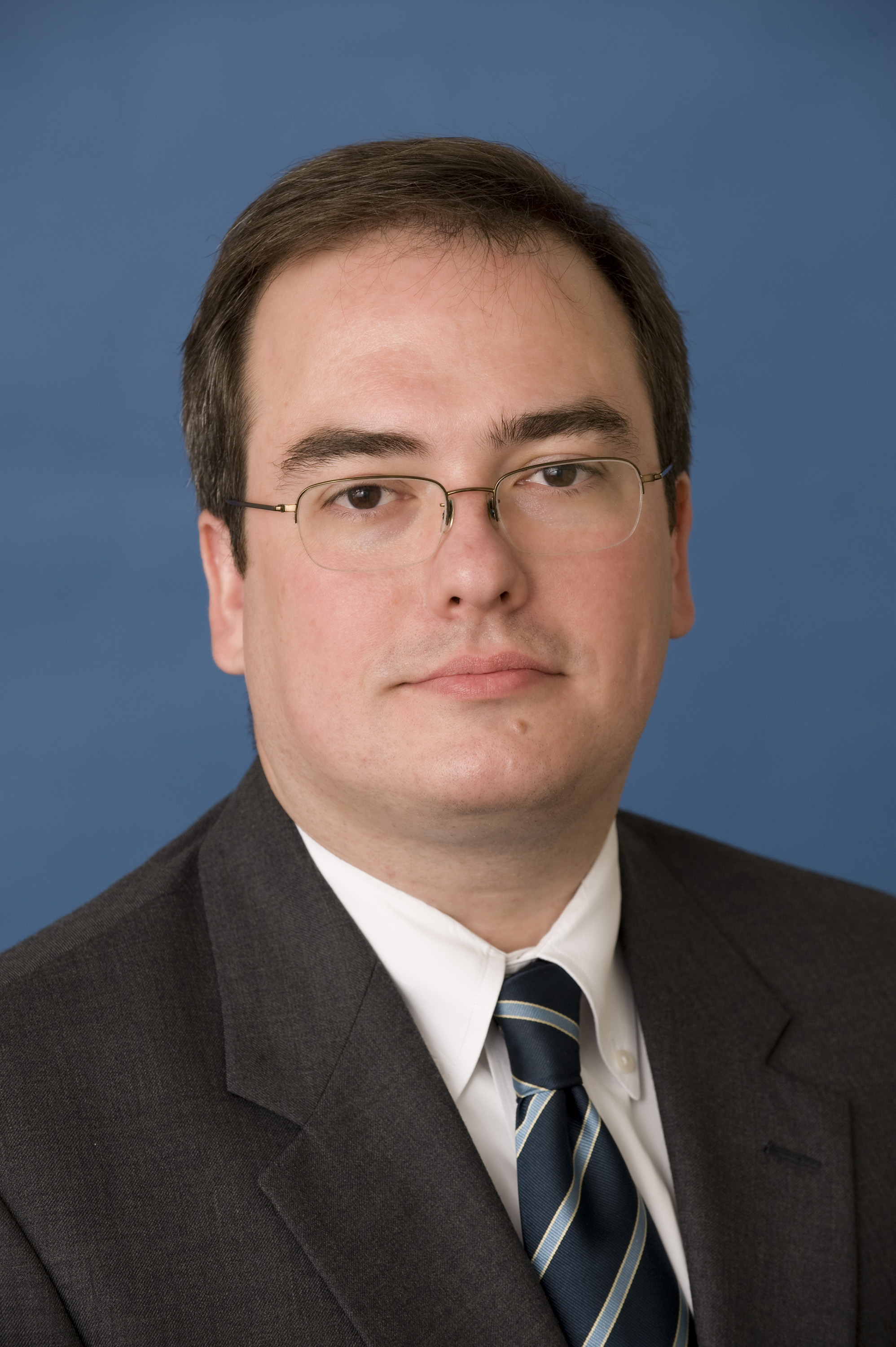
Former Associate, Middle East Program
Boucek was an associate in the Carnegie Middle East Program where his research focused on security challenges in the Arabian Peninsula and Northern Africa.
Recent Work
Christopher Boucek

Christopher Boucek, Karim Sadjadpour
Carnegie does not take institutional positions on public policy issues; the views represented herein are those of the author(s) and do not necessarily reflect the views of Carnegie, its staff, or its trustees.

But their "principal to principal" model will only be as effective as the political strength of each leader back home.

Damien Ma

U.S. unpredictability has allowed China to capitalize on its positioning as the “responsible great power”. Paradoxically, the more China wins the perception game, the more likely expectations will rise for Beijing to deliver not just words but to demonstrate with its deeds.

Chong Ja Ian

Hanoi and Beijing have long treated each other as distant cousins rather than comrades in arms. That might be changing as both sides draw closer to hedge against uncertainty and America’s erratic behavior.

Nguyễn Khắc Giang

Across Asia, China is better positioned to withstand energy shocks from the fallout of the Iran war. Its abundant coal capacity can ensure stability in the near term. Yet at the same time, the country’s energy transition away from coal will make it even less vulnerable during the next shock.
Damien Ma

Malaysia’s chairmanship sought to fend off short-term challenges while laying the groundwork for minimizing ASEAN’s longer-term exposure to external stresses.

Elina Noor