

Paper
The nuclear relationship between China and the United States is increasingly shaped by widening perception gaps rather than deliberate strategic design.
Tong Zhao
{
  "authors": [
    "Stephen I. Schwartz",
    "Deepti Choubey"
  ],
  "type": "legacyinthemedia",
  "centerAffiliationAll": "dc",
  "centers": [
    "Carnegie Endowment for International Peace"
  ],
  "collections": [
    "U.S. Nuclear Policy"
  ],
  "englishNewsletterAll": "ctw",
  "nonEnglishNewsletterAll": "",
  "primaryCenter": "Carnegie Endowment for International Peace",
  "programAffiliation": "NPP",
  "programs": [
    "Nuclear Policy"
  ],
  "projects": [],
  "regions": [
    "North America",
    "United States"
  ],
  "topics": [
    "Political Reform",
    "Security",
    "Military",
    "Nuclear Policy",
    "Nuclear Energy"
  ]
}
Source: Getty
The first public examination of open-source data shows that the U.S. spent at least $52.4 billion on nuclear weapons and programs in 2008; yet despite growing concern about the prospect of a nuclear 9/11 only 10 percent of that went toward proliferation prevention. The U.S. must devote less funding to upgrading its arsenal and more to securing and preventing the spread of nuclear weapons.
Source: Los Angeles Times

When Secretary of State-designate Hillary Rodham Clinton and Secretary of Energy-designate Steven Chu head into their Senate confirmation hearings Tuesday, they'll face difficult questions about how the U.S. is addressing nuclear dangers. Although most lawmakers would rank nuclear threats at the top of their list of national security concerns, they won't have sufficient or comprehensive information to work with. But Congress can fix this.
Our report, the first public examination of open-source data, shows that the U.S. spent at least $52.4 billion on nuclear weapons and programs in fiscal 2008. This budget, which spans many agencies, not just the Defense Department, does not count related costs for air defense, anti-submarine warfare, classified programs or most nuclear weapons-related intelligence programs.
The 2008 nuclear security budget exceeds all anticipated spending on international diplomacy and foreign assistance ($39.5 billion) and natural resources and the environment ($33 billion). It is nearly double the budget for general science, space and technology ($27.4 billion), and it is almost 14 times what the Energy Department allocated for all energy-related research and development.
Although the size of the overall budget is troubling, another concern is that we spend so little on initiatives to minimize the risk of nuclear and radiological attacks. More than 17 years after the end of the Cold War, it may come as a surprise to most Americans that the U.S. still spends relatively large annual sums upgrading and maintaining its nuclear arsenal ($29 billion), developing ballistic missile defenses ($9.2 billion) and addressing the deferred environmental and health costs associated with more than 50 years of unconstrained bomb building and testing ($8.3 billion).
More alarmingly, the government spends relatively little money locking down or eliminating nuclear threats at their source, before they can reach U.S. shores ($5.2 billion), or preparing for the consequences of a nuclear or radiological attack on U.S. soil ($700 million).
As President-elect Barack Obama's team heads into an enormously difficult budget season, it will need to propose expenditures that match policy goals and economic realities. How, one might ask Chu, can a Department of Energy that devotes 67% of its budget to nuclear weapons-related programs meet Obama's plan to develop new and cleaner forms of energy?
Clinton is already on the right track by reportedly seeking to expand the State Department's role and fighting for a larger budget. State is the frontline agency tackling proliferation concerns with Iran and North Korea, shoring up a rocky relationship with Russia and pursuing cooperation with other states to secure nuclear materials and address the growing threat of nuclear terrorism. Clinton is right to insist that her agency receive more than half a percent ($241.8 million) of the total nuclear security budget.
As both proliferation dangers and fiscal concerns grow, taxpayers will want to know that their government is getting the best returns on its nuclear security investments. But effective oversight of government nuclear security programs is impossible without complete and reliable scrutiny of their cost and impact, and such an accounting has never been available to decision makers.
Congress can remedy this by requiring the executive branch to submit, as part of the annual budget request, an unclassified and classified accounting of all nuclear weapons-related spending. A senior White House official, perhaps within the congressionally mandated office to coordinate nuclear proliferation and counter-terrorism efforts, or the National Security Council, should be responsible for overseeing this exercise, in conjunction with key officials of the Office of Management and Budget and senior budget officials of key departments and agencies.
Working outside of government and using publicly available data, we've proved that it is possible to provide a more comprehensive accounting of our nuclear security dollars.
Implementing these recommendations would increase understanding and accountability, which would in turn lead to greater public support for crucial nuclear security programs and a more effective allocation of public resources. When combined with a new focus on nuclear issues, including the Obama administration's forthcoming Nuclear Posture Review, these efforts would help ensure that political and financial priorities are properly aligned.
The nuclear threat is changing, and as long as it grows, the United States needs to be prepared to address it -- even in a time of austerity. That starts with knowing where the dollars go.
Stephen I. Schwartz is the editor of the Nonproliferation Review at the Monterey Institute of International Studies; Deepti Choubey is the deputy director of the nonproliferation program at the Carnegie Endowment for International Peace.
Stephen I. Schwartz

Former Deputy Director, Nuclear Policy Program
Choubey was previously the director of the Peace and Security Initiative for the Ploughshares Fund. She also worked for Ambassador Nancy Soderberg in the New York office of the International Crisis Group.
Carnegie does not take institutional positions on public policy issues; the views represented herein are those of the author(s) and do not necessarily reflect the views of Carnegie, its staff, or its trustees.

The nuclear relationship between China and the United States is increasingly shaped by widening perception gaps rather than deliberate strategic design.

Tong Zhao

But their "principal to principal" model will only be as effective as the political strength of each leader back home.

Damien Ma

U.S. unpredictability has allowed China to capitalize on its positioning as the “responsible great power”. Paradoxically, the more China wins the perception game, the more likely expectations will rise for Beijing to deliver not just words but to demonstrate with its deeds.

Chong Ja Ian

For Malaysia, the conjunction that works is “and” not “or” when it comes to the United States and China.

Elina Noor
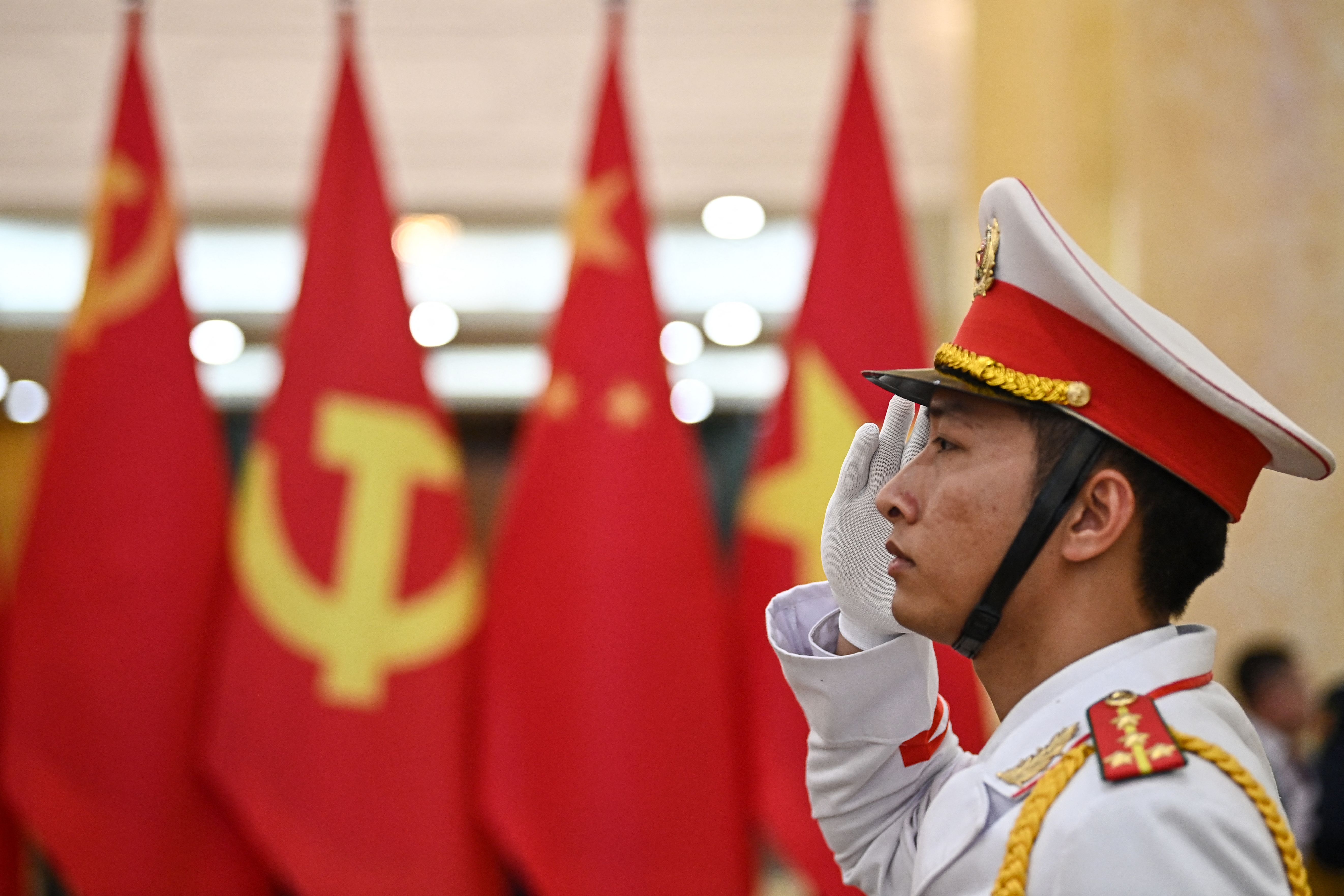
In July 2025, Vietnam and China held their first joint army drill, a modest but symbolic move reflecting Hanoi’s strategic hedging amid U.S.–China rivalry.

Nguyễn Khắc Giang