• Commentary
  • Research
  • Experts
  • Events
Carnegie China logoCarnegie lettermark logo
{
  "authors": [],
  "type": "pressRelease",
  "centerAffiliationAll": "dc",
  "centers": [
    "Carnegie Endowment for International Peace"
  ],
  "collections": [],
  "englishNewsletterAll": "menaTransitions",
  "nonEnglishNewsletterAll": "",
  "primaryCenter": "Carnegie Endowment for International Peace",
  "programAffiliation": "MEP",
  "programs": [
    "Middle East"
  ],
  "projects": [],
  "regions": [
    "Middle East",
    "North Africa"
  ],
  "topics": [
    "Economy"
  ]
}
REQUIRED IMAGE

REQUIRED IMAGE

Press Release

Arab Countries Should Coordinate Response to Economic Crisis

The reaction of Arab countries to the economic crisis has been patchy, uneven, and deficient. An urgent and coordinated response should not compromise important long-term goals like increased transparency and stability.

Link Copied
Published on May 19, 2009

BEIRUT, May 14—The reaction of Arab countries to the economic crisis has been patchy, uneven, and deficient. Cushioning the blow, protecting the hardest hit, and reigniting regional growth will all be best achieved by an urgent and coordinated response that does not compromise important long-term goals like increased transparency and stability, concludes a new commentary from Ibrahim Saif and Farah Choucair.

Saif and Choucair examine the policy responses of Gulf countries, the Maghreb, and Egypt, Lebanon, Syria, Jordan, and Yemen. Faced with declining oil revenues and heavy financial-sector losses, Gulf countries increased spending to sustain growth, but only focused on a few sectors. Other Arab countries, threatened by shrinking exports, remittances, and foreign aid, have adopted ad hoc national policies after an initial period of denial.

Recommendations:

  • Arab states must strengthen and extend their social safety nets. Social unrest could result if the crisis worsens and recovery plans remain opaque and ineffective.
  • Some Gulf governments have reduced the employment of foreign workers, reacting to public anger fueled by rising unemployment. Anti-foreign labor policies hurt North African countries, which depend on remittances from their citizens working in the Gulf.
  • Recovery plans must incorporate input from the private sector and use clear criteria to determine which sectors of the economy are key priorities.
  • Policies must be implemented transparently to restore weakened consumer and investor confidence, and to avoid undermining long-term stability.

Saif and Choucair conclude:

“The policy responses of Arab countries thus far are simply deficient. Characterized by an initial state of denial, the policy measures that followed are highly arbitrary and lack a clear vision. Many governments are not dealing with the crisis with the needed degree of urgency. Since the crisis is global in nature, no single country can face its ramifications alone; a more collective effort should be pursued at both governmental and private sector levels."

###


NOTES

  • Click here to read the commentary in English

  • Click here to read the commentary in Arabic
  • Ibrahim Saif is a resident scholar in economic policy at the Carnegie Middle East Center in Beirut, Lebanon. He specializes in the political economy of the Middle East. He has served as a consultant to international organizations such as the World Bank, the International Monetary Fund, and the International Labour Organization. He is a fellow with the Economic Research Forum and a member of the Global Development Network. Before joining Carnegie, Saif was the director of the Center for Strategic Studies at the University of Jordan.
  • Farah Choucair is a research assistant at the Carnegie Middle East Center. She holds a B.A. in Economics with a minor in Political Science from the American University of Beirut and an M.Sc. in Development Economics from the School of Oriental and African Studies (SOAS).
  • The Carnegie Middle East Center based in Beirut, Lebanon, aims to better inform the process of political change in the Middle East.
  • The Carnegie Middle East Program combines in-depth local knowledge with incisive comparative analysis to examine economic, socio-political, and strategic interests in the Arab world to provide analysis and recommendations in both English and Arabic that are deeply informed by knowledge and views from the region.
  • Carnegie's Arab Reform Bulletin has been transformed into a full-featured website that offers greatly enhanced search functionality, the option for readers to comment on articles, and frequent news updates.
  • Press Contact: Jessica Jennings, 202/939-2265, jjennings@ceip.org
EconomyMiddle EastNorth Africa

Carnegie does not take institutional positions on public policy issues; the views represented herein are those of the author(s) and do not necessarily reflect the views of Carnegie, its staff, or its trustees.

More Work from Carnegie China

  • Xi walking into a room with people standing and applauding around him
    Commentary
    Emissary
    The Xi Doctrine Zeros in on “High-Quality Development” for China’s Economic Future

    In the latest Five-Year Plan, the Chinese president cements the shift to an innovation-driven economy over a consumption-driven one.

      • Damien Ma

      Damien Ma

  • Commentary
    How China’s Growth Model Determines Its Climate Performance

    Rather than climate ambitions, compatibility with investment and exports is why China supports both green and high-emission technologies.

      Mathias Larsen
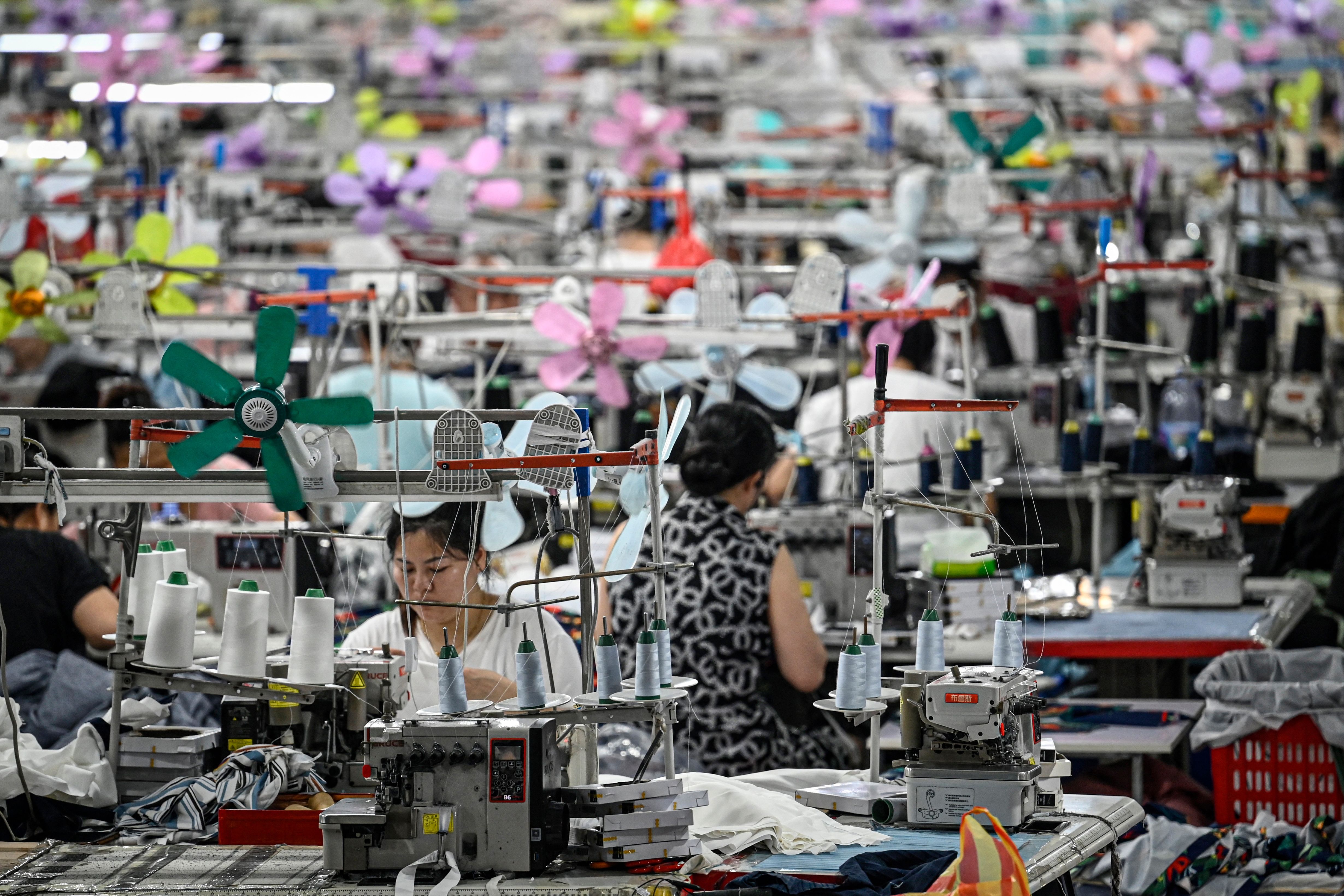
  • Overproduction in China
    Commentary
    What’s New about Involution?

    “Involution” is a new word for an old problem, and without a very different set of policies to rein it in, it is a problem that is likely to persist.

      Michael Pettis

  • Commentary
    The Chinese Investment Riddle: What Cities Reveal

    While China's investment story seems contradictory from the outside, the real answers to Beijing's high-quality growth ambitions are hiding in plain sight across the nation's cities.

      Yuhan Zhang
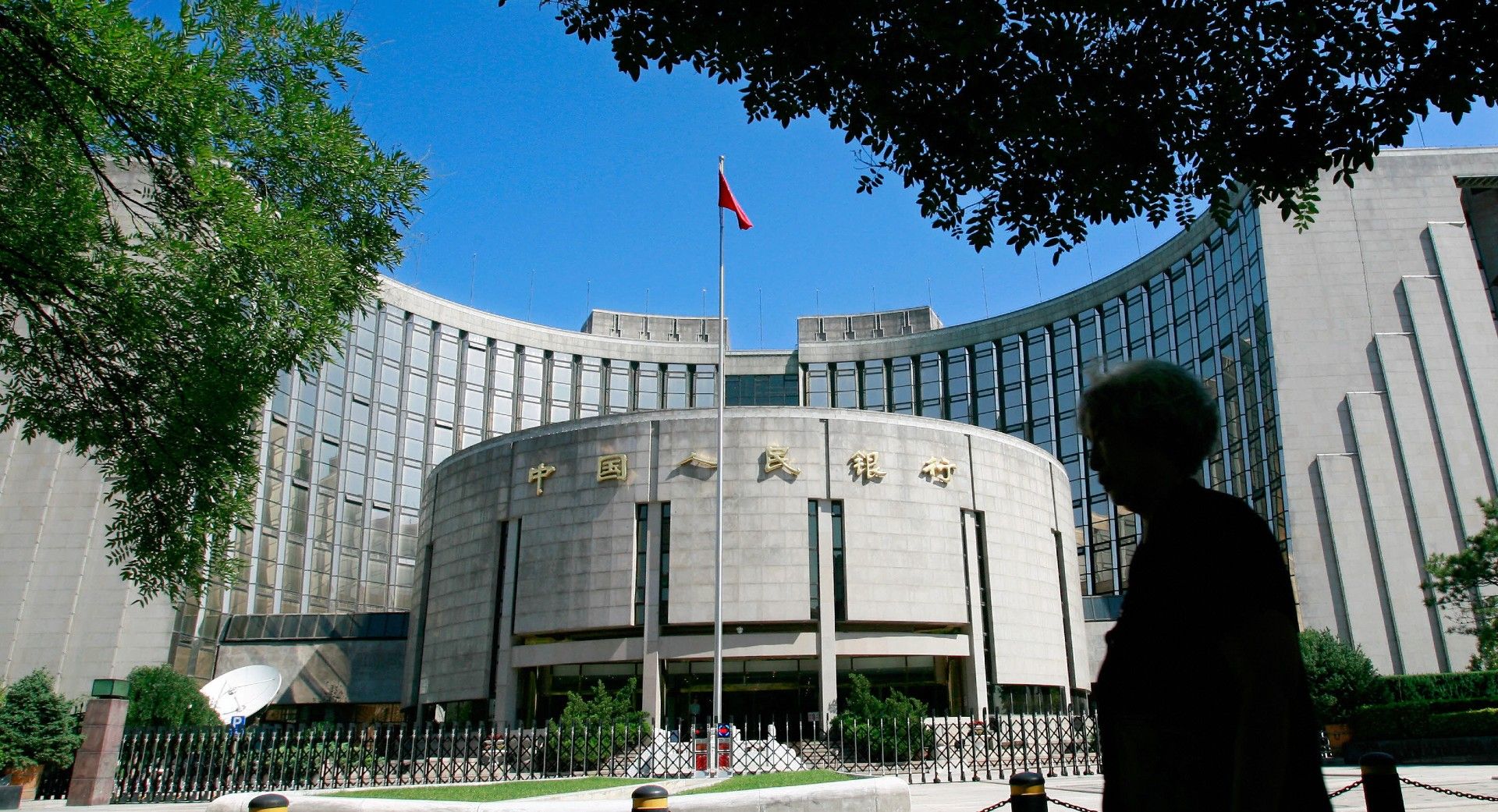
  • Commentary
    Using China’s Central Government Balance Sheet to “Clean up” Local Government Debt Is a Bad Idea

    China's stimulus addiction cannot go on forever. Beijing still has policy space to clean up the country's massive debt issue, but time is running short.

      Michael Pettis

Get more news and analysis from
Carnegie China
Carnegie China logo, white
Keck Seng Tower133 Cecil Street #10-01ASingapore, 069535Phone: +65 9650 7648
  • Research
  • About
  • Experts
  • Events
  • Contact
  • Careers
  • Privacy
  • For Media
Get more news and analysis from
Carnegie China
© 2026 Carnegie Endowment for International Peace. All rights reserved.
