

Research
- +6
Yasmine Farouk, Nathan J. Brown, Maysaa Shuja Al-Deen, …
{
  "authors": [
    "Michele Dunne"
  ],
  "type": "legacyinthemedia",
  "centerAffiliationAll": "dc",
  "centers": [
    "Carnegie Endowment for International Peace"
  ],
  "collections": [],
  "englishNewsletterAll": "menaTransitions",
  "nonEnglishNewsletterAll": "",
  "primaryCenter": "Carnegie Endowment for International Peace",
  "programAffiliation": "MEP",
  "programs": [
    "Middle East"
  ],
  "projects": [],
  "regions": [
    "North America",
    "United States",
    "North Africa",
    "Egypt"
  ],
  "topics": [
    "Political Reform",
    "Democracy",
    "Foreign Policy"
  ]
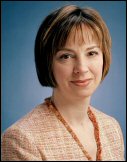
}
Source: Getty
The United States must balance its advocacy for human rights and democracy promotion in Egypt and the broader Arab world with other strategic interests; it would be wrongheaded to completely cut off ties with authoritarian regimes.
Source: Al Jazeera's Riz Khan
Egyptian President Hosni Mubarak’s visit to Washington suggests a renewed cooperation between the two allies after years of strained relations during the Bush administration. This has stoked fear among human rights activists that the Obama administration will turn a blind eye to Egypt’s repressive domestic political situation. Michele Dunne argues, “The U.S. needs to take a stand in favor of democracy and human rights in Egypt. If the U.S. fails to do so it will hurt its own image and present itself as acting in an unprincipled and self-interested way.” Nonetheless, Dunne continues, “the U.S. is a superpower with a multiplicity of interests. The danger is not that human rights and democratization will overtake the agenda, but that they will fall off it.”
Ultimately, the U.S. must balance its advocacy for human rights and democracy promotion with other strategic interests; it would be wrongheaded to completely cut off ties with authoritarian regimes.
While the Arab-Israeli peace process was on the agenda for President Obama and Mubarak, “Mubarak didn’t offer anything new that other Arab leaders had not already said.” In this regard, noted Dunne, “the Obama administration was probably disappointed with the visit.”

Former Nonresident Scholar, Middle East Program
Michele Dunne was a nonresident scholar in Carnegie’s Middle East Program, where her research focuses on political and economic change in Arab countries, particularly Egypt, as well as U.S. policy in the Middle East.
Recent Work


Yasmine Farouk, Nathan J. Brown, Maysaa Shuja Al-Deen, …
Robert Springborg, Emile Hokayem, Becca Wasser, …
Carnegie does not take institutional positions on public policy issues; the views represented herein are those of the author(s) and do not necessarily reflect the views of Carnegie, its staff, or its trustees.

But their "principal to principal" model will only be as effective as the political strength of each leader back home.

Damien Ma

U.S. unpredictability has allowed China to capitalize on its positioning as the “responsible great power”. Paradoxically, the more China wins the perception game, the more likely expectations will rise for Beijing to deliver not just words but to demonstrate with its deeds.

Chong Ja Ian

Hanoi and Beijing have long treated each other as distant cousins rather than comrades in arms. That might be changing as both sides draw closer to hedge against uncertainty and America’s erratic behavior.

Nguyễn Khắc Giang

Across Asia, China is better positioned to withstand energy shocks from the fallout of the Iran war. Its abundant coal capacity can ensure stability in the near term. Yet at the same time, the country’s energy transition away from coal will make it even less vulnerable during the next shock.
Damien Ma

Malaysia’s chairmanship sought to fend off short-term challenges while laying the groundwork for minimizing ASEAN’s longer-term exposure to external stresses.

Elina Noor