

Other
Sharon Squassoni
{
  "authors": [
    "Sharon Squassoni"
  ],
  "type": "legacyinthemedia",
  "centerAffiliationAll": "dc",
  "centers": [
    "Carnegie Endowment for International Peace"
  ],
  "collections": [
    "U.S. Nuclear Policy"
  ],
  "englishNewsletterAll": "ctw",
  "nonEnglishNewsletterAll": "",
  "primaryCenter": "Carnegie Endowment for International Peace",
  "programAffiliation": "NPP",
  "programs": [
    "Nuclear Policy"
  ],
  "projects": [],
  "regions": [
    "North America",
    "United States",
    "Caucasus",
    "Russia"
  ],
  "topics": [
    "Foreign Policy",
    "Nuclear Policy"
  ]
}
Source: Getty
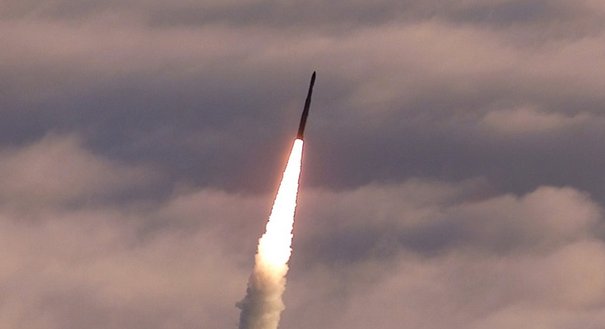
President Obama's decision to scrap the Bush administration's plans for a missile defense system in Poland and the Czech Republic will provide more breathing room for U.S.-Russian strategic arms control negotiations.
Source: New York Times

What are the consequences of President Obama’s decision? Will the alternative — deploying smaller missiles, at first aboard ships and later elsewhere in Europe or in Turkey — work?
Getting Russia Onboard
The most immediate outcome of President Obama’s decision to replace the ground-based interceptors and radars in Poland and the Czech Republic, respectively, with Aegis-based missiles and x-band radars is to provide more breathing room for U.S. -Russian strategic arms control negotiations. The arms control negotiations need to produce agreement before December 2009, when the START treaty expires, and the Russians have continued to complain about George W. Bush’s decision last year to deploy ground-based missile defense systems in Europe.
This link to the arms talks may have been regrettable but unavoidable. Given that the administration was likely to overturn the Bush missile defense deployments anyway, it may be good timing in terms of getting the most mileage from this concession. If it is true that Iranian long-range missile development has been moving more slowly than forecasted — and there is no reason not to believe that, since their capabilities in this area have been overestimated for more than a decade — then deploying a more flexible system against short- and medium-range missiles on an earlier timeframe makes sense.
The issue then remains what options the U.S. and Europe will seek if or when the Iranians actually do deploy a longer range ballistic missile. Will it be a mobile ground-based interceptor, which Boeing floated this summer? Or will relations with Russia in the future prove to be less of an impediment to fixed-missile defense sites? Better yet, will the threat of an Iranian nuclear-tipped missile have faded from view?
One area that absolutely requires Russia’s undivided attention and cooperation is persuading Iran to step back from the nuclear abyss. President Obama knows that. And if a change in missile defense deployments helps that happen, so much the better.

Former Senior Associate, Nuclear Policy Program
Squassoni came to Carnegie from the Congressional Research Service. She also served for nine years in the executive branch. Her last position at the State Department was director of Policy Coordination in the Nonproliferation Bureau.
Recent Work
Sharon Squassoni
Sharon Squassoni
Carnegie does not take institutional positions on public policy issues; the views represented herein are those of the author(s) and do not necessarily reflect the views of Carnegie, its staff, or its trustees.

The nuclear relationship between China and the United States is increasingly shaped by widening perception gaps rather than deliberate strategic design.

Tong Zhao

But their "principal to principal" model will only be as effective as the political strength of each leader back home.

Damien Ma

U.S. unpredictability has allowed China to capitalize on its positioning as the “responsible great power”. Paradoxically, the more China wins the perception game, the more likely expectations will rise for Beijing to deliver not just words but to demonstrate with its deeds.

Chong Ja Ian

Hanoi and Beijing have long treated each other as distant cousins rather than comrades in arms. That might be changing as both sides draw closer to hedge against uncertainty and America’s erratic behavior.

Nguyễn Khắc Giang

Across Asia, China is better positioned to withstand energy shocks from the fallout of the Iran war. Its abundant coal capacity can ensure stability in the near term. Yet at the same time, the country’s energy transition away from coal will make it even less vulnerable during the next shock.
Damien Ma