

Other
Sharon Squassoni
{
  "authors": [
    "Sharon Squassoni"
  ],
  "type": "legacyinthemedia",
  "centerAffiliationAll": "dc",
  "centers": [
    "Carnegie Endowment for International Peace"
  ],
  "collections": [],
  "englishNewsletterAll": "ctw",
  "nonEnglishNewsletterAll": "",
  "primaryCenter": "Carnegie Endowment for International Peace",
  "programAffiliation": "NPP",
  "programs": [
    "Nuclear Policy"
  ],
  "projects": [],
  "regions": [],
  "topics": [
    "Nuclear Policy"
  ]
}
Source: Getty
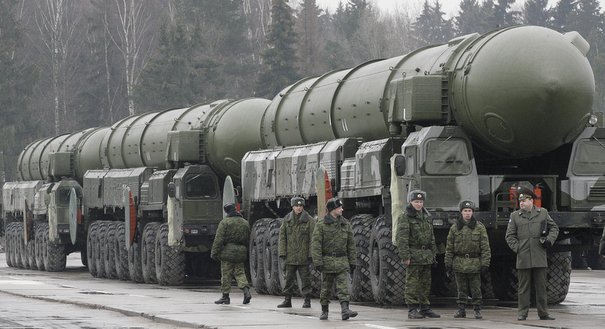
Deeper cuts in U.S. and Russian nuclear weapons, the Comprehensive Test Ban Treaty, and a Fissile Material Cut-Off Treaty are three highly visible and important steps toward global nuclear disarmament. But more far-reaching efforts are needed to facilitate the hard work of disarmament, which will undoubtedly take decades.
Source: America.gov

Her reply:
Sharon Squassoni:
Deeper cuts in U.S. and Russian nuclear weapons, the Comprehensive Test Ban Treaty, and a Fissile Material Cut-Off Treaty are three highly visible and important steps toward global nuclear disarmament. But more far-reaching efforts are needed to facilitate the hard work of disarmament, which will undoubtedly take decades. Three challenges are the development of a common understanding that the risks of possessing nuclear weapons outweigh the benefits; the creation of alternative approaches to meet military and political objectives; and effective international governance, including a new U.N. Security Council structure. Of course, moving to zero nuclear weapons will not happen without confidence in stringent verification, but verification without these other changes would be virtually impossible.
Efforts to develop a common understanding essential to ban nuclear weapons have begun, but much more is needed. The 2008 Wall Street Journal op-ed by four senior U.S. statesmen argued that the risks of nuclear weapons outweighed their benefits. They have been joined by British, Italian, Russian, German and other statesmen, but many more decisionmakers in many more countries need to be convinced of this logic. Nuclear weapon holders (and those aspiring to have nuclear weapons) still attach enormous importance to and faith in the benefits of nuclear weapons possession because of the logic of nuclear deterrence. The four statesmen did not argue against deterrence, but rather that the world had changed and the threat of nuclear terrorism made nuclear weapons more dangerous to have.
Belief in the logic of nuclear deterrence may be the biggest deterrent to nuclear weapons abolition. And extended deterrence spreads belief in and reliance on nuclear weapons. This is why as much effort needs to be devoted to developing alternative approaches to meet military and political objectives as to verification of nuclear weapons dismantlement. Policymakers will have to take a sharp look at whether objectives developed in the context of nuclear arsenals are still valid, feasible and desirable. It is already clear that possessing nuclear weapons doesn’t deter emergence of the biggest threats we now face: nuclear weapons proliferation, nuclear terrorism, and asymmetric warfare. Here is where grass-roots abolition movements should focus their efforts — increasing pressure from below to reject the logic of nuclear deterrence, not because of any moral imperative, but because practical alternatives exist. The logic of nuclear deterrence needs to be deconstructed and demystified.
Finally, international governance mechanisms must be much more effective than they are currently. Debate on what a U.N. Security Council might look like in a nuclear-weapons-free world must begin now. National and international policies need to support a new global political and security architecture that no longer depends on these weapons of mass destruction.
Squassoni is a senior associate at the Carnegie Endowment for International Peace whose research focuses on nuclear energy, nonproliferation and arms control. Her service in government includes the Congressional Research Service, the State Department and the Arms Control and Disarmament Agency.
Former Senior Associate, Nuclear Policy Program
Squassoni came to Carnegie from the Congressional Research Service. She also served for nine years in the executive branch. Her last position at the State Department was director of Policy Coordination in the Nonproliferation Bureau.
Recent Work
Sharon Squassoni
Sharon Squassoni
Carnegie does not take institutional positions on public policy issues; the views represented herein are those of the author(s) and do not necessarily reflect the views of Carnegie, its staff, or its trustees.

The nuclear relationship between China and the United States is increasingly shaped by widening perception gaps rather than deliberate strategic design.

Tong Zhao
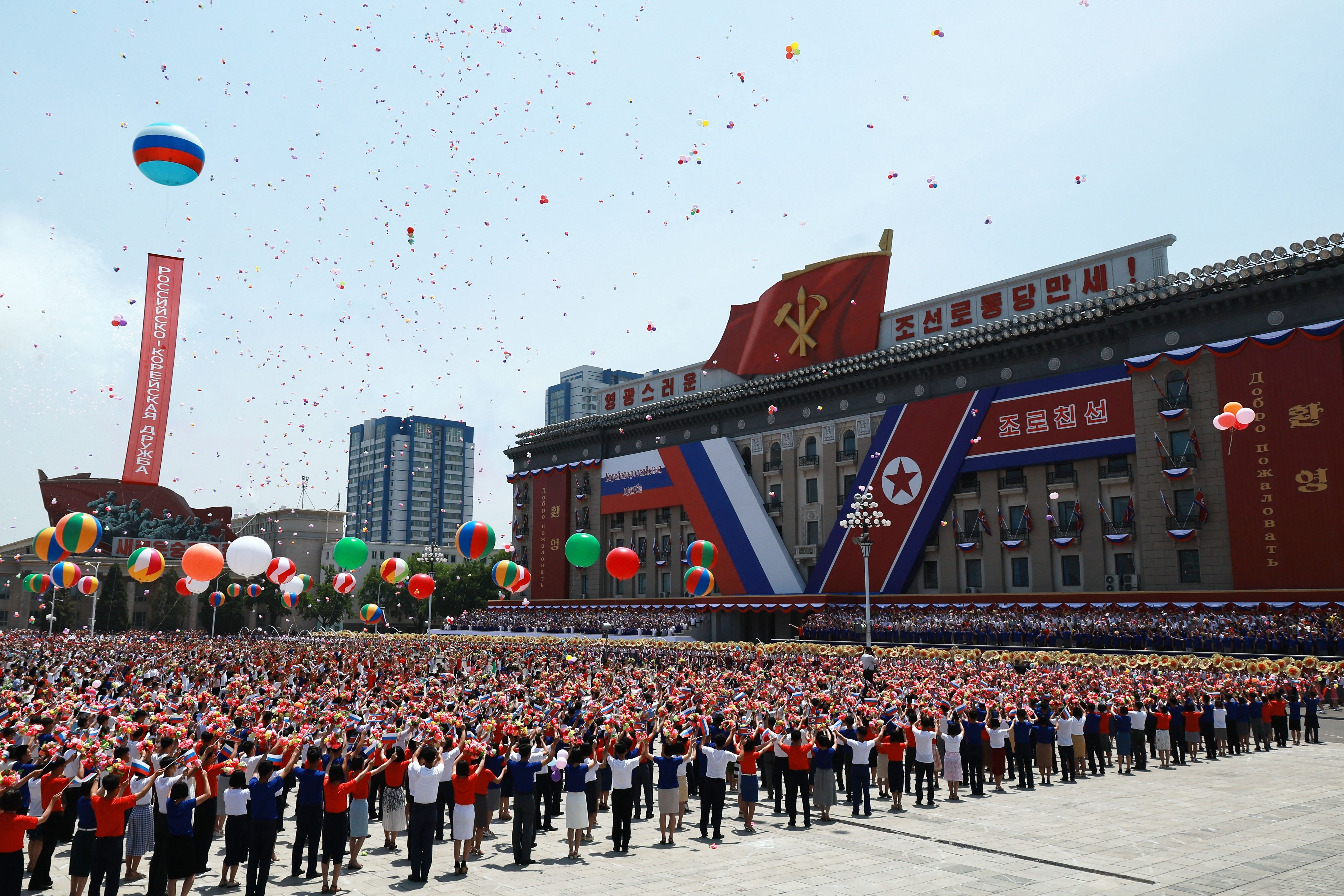
Faced with an increase in strategic maneuvering by Moscow and Pyongyang, Beijing will not sit idly by and allow Putin and Kim to shape the security environment on its behalf.
Tong Zhao

China views U.S. missile defense as posing a greater potential threat to China’s nuclear deterrent than other U.S. military capabilities.
Tong Zhao, Dmitry Stefanovich
There are certainly other issues among other P5 countries, but the U.S.-China competition is so by far the most consequential great power rivalry in the international system, and it has very far-reaching geopolitical implications at and beyond the Pacific region.
Tong Zhao

Satellite data has revealed the construction of new nuclear missile silos in Gansu and Xinjiang in western China. How U.S. and Chinese experts interpret the buildup and the motivations behind it could greatly reshape their security relationship.
Tong Zhao