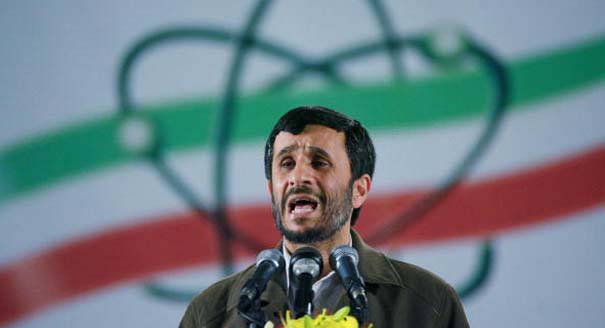
The Obama administration’s deadline for Iran to enter discussions on the nuclear issue has passed. In spite of claims from Washington that “all options are on the table,” the economic crisis makes a military response to Iran infeasible.
Why No U.S. President will Bomb IranThe Obama administration’s deadline for Iran to enter discussions on the nuclear issue has passed. As the White House and its allies weigh new policy options, Washington is still running with the old line that “all options are on the table.” Not really. Amid a global recession and double-digit unemployment, bombing Iran’s nuclear installations is out of the question.
Any attack on Iran would drive oil prices up dramatically from already high levels, and risk sending the fragile global economy back into financial crisis. If oil reached $150 per barrel, as it did in the summer of 2008, the cost of heating bills would soar, and the price of gasoline in the United States could once again climb above $4 a gallon. The effect on consumer spending—on which the recovery depends—would be severe. Based on average national oil consumption and prices in 2009, an oil spike lasting six months would equate to a tax of over $3,000 for a family of four.
An attack on Iran would provide the embattled regime in Tehran an occasion to rally its population and lash out in every way it can. Though the Iranians would be unable to close the Straits of Hormuz, or even do great damage to the U.S. fleet or the Saudi oil apparatus, insurance rates for shipping would skyrocket. The sense of uncertainty about future supply would roil markets and also push oil prices through the roof. As a result, the greatest beneficiaries of an attack on Iran would be oil producers, including irresponsible ones like Hugo Chavez, and ironically the Iranian mullahs themselves, who would use the extra income to tighten their grip on power.
The Iranians would likely also encourage their allies in Lebanon and Palestine, Hezbollah and Hamas, to attack Israel and kick off a wave of terrorism against American interests around the globe. All of this will contribute to an atmosphere of chaos and insecurity.
If President Obama were to set the Iranian nuclear program back at the expense of a relapse into recession, the cost to him politically, not to mention to the American and the global economies, would be unfathomable. As policy makers run out of fiscal and monetary ammunition to deal with yet another shock, it would be doubtful that America could escape a double-dip recession.
The world would once again blame the United States for reckless behavior, and American voters would not likely back Obama for a second term.
There have been five major episodes of oil price hikes since 1970, and each one coincided with a major global recession or sharp economic slowdown. The current economic recovery still depends critically on a massive dose of government stimulus. Consumers are still shaken by 10 percent unemployment, and business confidence is still being slowly and painfully rebuilt.
In developed countries, an oil price hike would probably smother the incipient recovery in its cradle. But its impact expressed as a share of GDP would be even greater on the oil-importing emerging markets, like China and India, which account for the lion’s share of world demand growth, and on the poorest developing countries in Africa, all of whose energy intensity has risen rapidly in recent years.
A new shock would also compound worries of inflationary pressures, and cause another tumble in stock markets, destroying even more wealth. In short, the world can’t afford it.
If these challenges are daunting for the United States, imagine what they would be like for Israel. Even if the Israelis could mount a successful operation against Iran’s nuclear program—which is open to debate—they cannot afford to bear the tremendous political cost of triggering a worldwide recession. This may explain why the Israelis, who are most threatened by the Iranian nuclear program, have been so publicly strident about it; they want other powers to deal with it.
Paradoxically, by removing the military option on Iran, the economic crisis provides a valuable window in which to build an international consensus on how to respond to the country’s obstreperous leadership, and perhaps apply more effective targeted sanctions against it.
Despite Washington’s saber rattling, the threat of reverting back into recession makes one thing clear: when it comes to Iran, all options are not on the table.
Barkey served as a member of the U.S. State Department Policy Planning Staff, working primarily on issues related to the Middle East, the Eastern Mediterranean, and intelligence from 1998 to 2000.
Former Senior Associate, International Economics Program
Dadush was a senior associate at the Carnegie Endowment for International Peace. He focuses on trends in the global economy and is currently tracking developments in the eurozone crisis.
Carnegie does not take institutional positions on public policy issues; the views represented herein are those of the author(s) and do not necessarily reflect the views of Carnegie, its staff, or its trustees.
China’s banking crisis in the 2000s was resolved by transferring the costs to households through financial repression—a decision that recapitalized the banks while exacerbating the structural imbalances that continue to shape the Chinese economy today.
U.S. unpredictability has allowed China to capitalize on its positioning as the “responsible great power”. Paradoxically, the more China wins the perception game, the more likely expectations will rise for Beijing to deliver not just words but to demonstrate with its deeds.
Hanoi and Beijing have long treated each other as distant cousins rather than comrades in arms. That might be changing as both sides draw closer to hedge against uncertainty and America’s erratic behavior.
Across Asia, China is better positioned to withstand energy shocks from the fallout of the Iran war. Its abundant coal capacity can ensure stability in the near term. Yet at the same time, the country’s energy transition away from coal will make it even less vulnerable during the next shock.