• Commentary
  • Research
  • Experts
  • Events
Carnegie China logoCarnegie lettermark logo
{
  "authors": [
    "Henri J. Barkey"
  ],
  "type": "legacyinthemedia",
  "centerAffiliationAll": "dc",
  "centers": [
    "Carnegie Endowment for International Peace"
  ],
  "collections": [],
  "englishNewsletterAll": "menaTransitions",
  "nonEnglishNewsletterAll": "",
  "primaryCenter": "Carnegie Endowment for International Peace",
  "programAffiliation": "MEP",
  "programs": [
    "Middle East"
  ],
  "projects": [],
  "regions": [
    "Middle East",
    "Israel",
    "Palestine"
  ],
  "topics": [
    "Security"
  ]
}
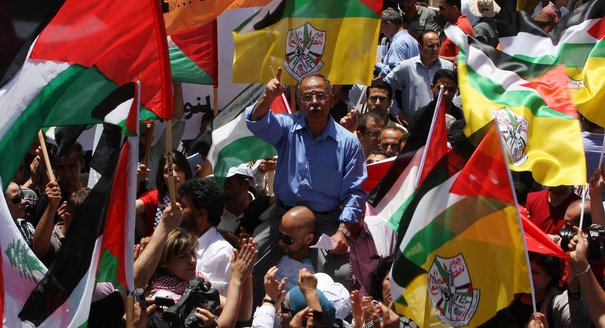
Source: Getty

In The Media

How Israel Can Respond

Israel should use the opportunity created by the flotilla crisis to alter its political discourse, open up Gaza for all to see, and, most importantly, make real efforts to work with the Palestinian Authority on the peace process.

Link Copied
By Henri J. Barkey
Published on Jun 15, 2010

Source: The National Interest

How Israel Can RespondNot since the dark days of the Yom Kippur War has Israel found itself in such a dire predicament. In 1973, Israel faced a military threat. Now it is confronted by a political one that goes to the core of the Israel's international standing. The Jewish state is bleeding politically not just because of the latest flotilla debacle, but also for appearing to be completely insensitive to the plight of civilians. It finds itself completely cornered not by Arab states and their armies, but rather by international opinion, a determined group of protesters and a new foe it has made along the way—Turkey.

There is an honorable way out. Israel has to devise a strategy that defuses the current crisis and begins to win back some of the international trust it has squandered away. Whether it likes it or not, the flotilla troubles resulted from poor intelligence, planning and execution, and the Israeli leadership blindly fell into a trap that was set up for it. Someone ought to be held accountable for this. Beyond the flotilla incident, Israel will have to come up with an alternative approach to the blockade. Prime Minister Benjamin Netanyahu's reaction that the blockade will remain in effect is counterproductive and likely to increase challenges to the quarantine by protest groups and foreign governments. In the duel of images, narratives and countercharges, the Israelis are going to lose.
 
It is now clear that the blockade is not going to rid Gaza of Hamas, as Israel may have hoped at one point; quite the contrary. Hamas is now more entrenched than ever. The confrontation with Israel has fed the organization's lore and enhanced its status, not to mention its control over Gaza's residents. If this is the case, what are Israel's objectives? It wants assurances that arms will not flow into the strip, that no projectiles or raids will be launched against its territory and the release of Corporal Gilad Shalit, who was abducted by Hamas some four years ago.
 
So how can it best achieve these aims? Israel should have announced that it was willing to have a third-party investigation of the flotilla events and would consider seriously any recommendations. States make mistakes; to circle the wagons and insist that one is in the right is something that most countries routinely do. In this particular case taking the high road and accepting its ramifications would have demonstrated a rare degree of self-confidence. Israel will emerge stronger not weaker if it has to admit that it committed errors. It has instead, by setting up an Israeli investigation panel with foreign participation, selected the second-best option. Whether this panel will have credibility will depend on the results, but it starts with the odds stacked against it.
 
In the meantime, Israel should announce that it has set up the port of Ashdod as a receiving node for all aid, and that a third party can be appointed to liaise with the Palestinian Authority to ascertain what humanitarian supplies are needed by the Palestinians in Gaza.
 
Israel should announce that the blockade will be lifted the moment Shalit is released and Hamas undertakes credible assurances that it will not engage in cross-border attacks of any kind. The international community, which has hitherto been always silent or at best unconvincing in its condemnations of Hamas attacks, needs to step up and warn the Palestinian organization that it will not tolerate such behavior. Here it is important for the United States and the Europeans in particular to help push for such an understanding.
 
Such a declaration would dramatically change the dynamic and put the onus on Hamas to change its behavior.
 
The world is tired of this conflict and wants it resolved as soon as possible. Israel, one of the most globally integrated countries in the world, has to prevent the slow but decidedly successful moves to boycott it culturally, economically, academically, and politically. In recent years, Israel has been on the diplomatic defensive and military offensive. It needs to reverse this relationship. In the twenty-first century, international relations are about images, Twitter accounts and Flickr networks. Ironically, the Flotilla crisis offers an opportunity to Israel, the Palestinians and the international community. Israel should take the occasion to alter its discourse, open up Gaza for all to see, and, most importantly, make real efforts with the Palestinian Authority on the peace process. Always marking time for different and better circumstances forty-three years after the Six-Day-War is not a policy.
 

About the Author

Henri J. Barkey

Former Visiting Scholar, Middle East Program

Barkey served as a member of the U.S. State Department Policy Planning Staff, working primarily on issues related to the Middle East, the Eastern Mediterranean, and intelligence from 1998 to 2000.

    Recent Work

  • Article
    Winners and Losers in Turkey’s Election

      Henri J. Barkey

  • Article
    The Road to Turkey’s June Elections: Crises, Strategies, and Outcomes

      Henri J. Barkey

Henri J. Barkey
Former Visiting Scholar, Middle East Program
Henri J. Barkey
SecurityMiddle EastIsraelPalestine

Carnegie does not take institutional positions on public policy issues; the views represented herein are those of the author(s) and do not necessarily reflect the views of Carnegie, its staff, or its trustees.
More Work from Carnegie China

  • Commentary
    China’s Mediation Offer in the Thailand-Cambodia Border Dispute Sheds Light on Beijing’s Security Role in Southeast Asia

    The Thai-Cambodian conflict highlights the limits to China's peacemaker ambition and the significance of this role on Southeast Asia’s balance of power.

      Pongphisoot (Paul) Busbarat
  • Trump and Xi on a red background
    Commentary
    Emissary
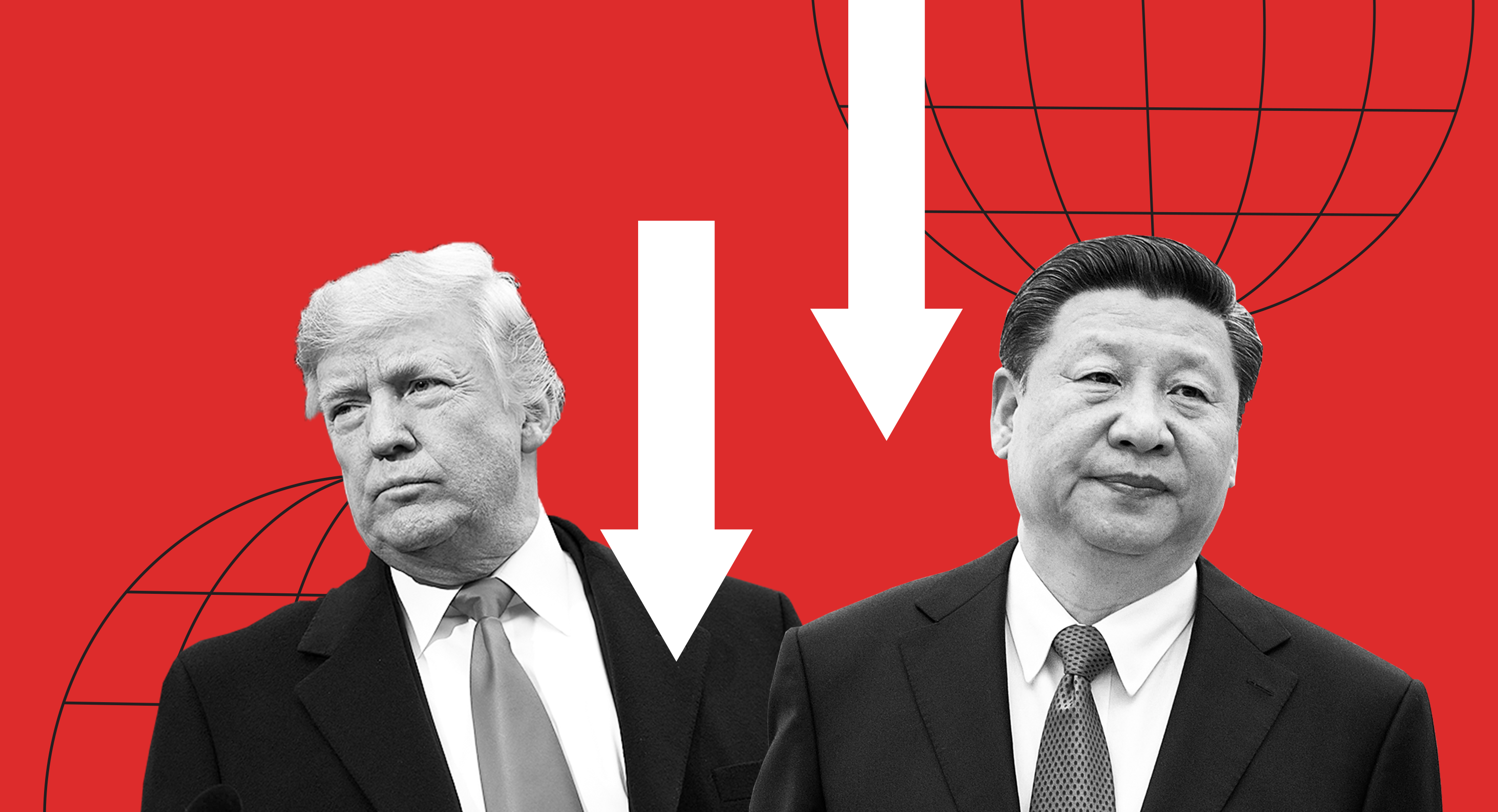
    China Is Determined to Hold Firm Against Trump’s Pressure

    Beijing believes that Washington is overestimating its own leverage and its ability to handle the trade war’s impacts. 

      • Sheena Chestnut Greitens

      Rick Waters, Sheena Chestnut Greitens
  • Commentary
    A Second Trump Term: Will Southeast Asia Tilt Toward China?

    Tapping our network of China experts in the region, Carnegie China offers this latest “China Through a Southeast Asian Lens” report to offer preliminary assessments of whether the U.S. effort to reshape the global trading order will lead countries in the region to tilt toward Beijing. 
      • +6

      Selina Ho, Khin Khin Kyaw Kyee, Joseph Ching Velasco, …
  • Research
    China Through a Southeast Asian Lens

    Because strategic, economic, and ideological perceptions of China contain multiple, sometimes contradictory facets in Southeast Asia, receptions of and responses to Beijing diverge across and within state lines.


      Evan A. Feigenbaum, Chong Ja Ian, Elina Noor
  • Article
    Northeast Asia Is for Deterrence and Southeast Asia Is (Mostly) for Freeriding: Appreciating Divergent East Asian Approaches to Order, Uncertainty, and Contestation

    Most Southeast Asian states behave as if the actions of their Northeast Asian neighbors and the Philippines will be sufficient to maintain a regional status quo from which they can benefit.

      Chong Ja Ian

Get more news and analysis from
Carnegie China
Carnegie China logo, white
Keck Seng Tower133 Cecil Street #10-01ASingapore, 069535Phone: +65 9650 7648
  • Research
  • About
  • Experts
  • Events
  • Contact
  • Careers
  • Privacy
  • For Media
Get more news and analysis from
Carnegie China
© 2026 Carnegie Endowment for International Peace. All rights reserved.