• Commentary
  • Research
  • Experts
  • Events
Carnegie China logoCarnegie lettermark logo
{
  "authors": [
    "Ariel (Eli) Levite"
  ],
  "type": "legacyinthemedia",
  "centerAffiliationAll": "dc",
  "centers": [
    "Carnegie Endowment for International Peace"
  ],
  "collections": [],
  "englishNewsletterAll": "menaTransitions",
  "nonEnglishNewsletterAll": "",
  "primaryCenter": "Carnegie Endowment for International Peace",
  "programAffiliation": "MEP",
  "programs": [
    "Middle East"
  ],
  "projects": [],
  "regions": [
    "Middle East",
    "Israel"
  ],
  "topics": [
    "Security"
  ]
}
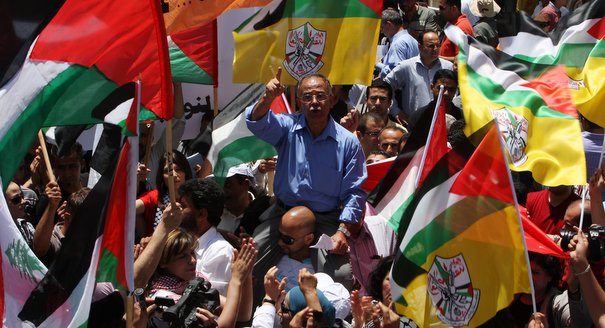
Source: Getty

In The Media

It's Not the PR, Stupid

It is possible that Israel’s raid on the humanitarian flotilla could have negative consequences for its global standing.

Link Copied
By Ariel (Eli) Levite
Published on Jun 8, 2010

Source: Haaretz

It's Not the PR, StupidThe core of Israel's atrocious failure in handling the Gaza flotilla isn't on the operational side, and not even in the clumsy planning and implementation of the public-relations aspects. It isn't even a matter of the policy of blockading Gaza, which has ceased serving its purpose and has become a millstone around our necks. The source of the debacle lies in our inability to grasp the nature of the campaign against us, and what conclusions must be drawn.

Having failed to defeat us by force, our remaining enemies have shifted their efforts to trying to weaken the world's support for the justice of our cause and to delegitimize our very existence. They are doing this systematically and ardently in all arenas, with a readiness to make sacrifices and use any means.
 
Regrettably, they are achieving substantial success. This is the common denominator of the world's response to the outcome of the flotilla raid, the reference to Israel by the recent Nonproliferation Treaty Review Conference, the Goldstone report and the articles about the alleged nuclear cooperation between Israel and the apartheid regime in South Africa. They all depict Israel as a nefarious state with an irresponsible, trigger-happy leadership that indiscriminately uses illegitimate means and meets every problem with brutal, vengeful force.
 
And we play right into their hands. Again and again, we make our few friends left sick of us, and over and over we push the skeptics and neutrals into the arms of our inveterate hate-driven foes. We contribute to this not only by balking at peace, continuing "illegal" (as we call it ) settlement, wanton misconduct in the territories, and barring intellectuals from entering Israel. We are also our callous toward the many Arab citizens who wish to continue living with us in peace as Israelis.
 
The delusionary attitude of rabbis and leaders toward Jews whose only sin is that they belong to the Reform or Conservative movements or are, God forbid, dark-skinned, drives many of our people away from us. On top of all this comes our bear hug of evangelical Christians.
 
We fail to take advantage of our opportunities to expound on our positive credo to the world, or to fulfill it. Our prime minister has avoided taking a leading role in the environmental struggle and halting global warming, just as he has recoiled from presenting our vision of disarmament and from appearing at the nuclear security summit convened by the U.S. president. These are all areas in which Israel has not only a clear interest, but also a favorable record. All we have left for the world is for it to see us using force, even when it is unnecessary and devoid of any sense, including innumerable apparent breaches of international norms, from piracy on the high seas to the misuse of foreign passports.
 
True, there is an abundance of hypocrisy and shortsightedness in the world, and our enemies exploit it at every opportunity. But we, by acts of both commission and omission, abet them. The reserves of tolerance toward us are running out at a terrifying rate. The debate over whether Israel has the right to exist is no longer confined merely to marginal academic circles in Britain or bleeding-heart trade unions in Norway. The legitimization of our continued existence is in peril.
 
This is not a PR problem of how to explain ourselves. This is first and foremost the outcome of a muddleheaded and shortsighted policy, guided by neither a moral compass nor long-range self-interest. Our fight is essential and right, but in diplomacy as in driving a car, to survive, you have to be smart, not just right.

About the Author

Ariel (Eli) Levite

Senior Fellow, Nuclear Policy Program, Technology and International Affairs Program

Levite was the principal deputy director general for policy at the Israeli Atomic Energy Commission from 2002 to 2007.

    Recent Work

  • Article
    Promoting Responsible Nuclear Energy Conduct: An Agenda for International Cooperation

      Ariel (Eli) Levite, Toby Dalton

  • Other
    Unpacking Trump’s National Security Strategy
      • Cecily Brewer
      • +18

      James M. Acton, Saskia Brechenmacher, Cecily Brewer, …

Ariel (Eli) Levite
Senior Fellow, Nuclear Policy Program, Technology and International Affairs Program
Ariel (Eli) Levite
SecurityMiddle EastIsrael

Carnegie does not take institutional positions on public policy issues; the views represented herein are those of the author(s) and do not necessarily reflect the views of Carnegie, its staff, or its trustees.

More Work from Carnegie China

  • Commentary
    China’s Mediation Offer in the Thailand-Cambodia Border Dispute Sheds Light on Beijing’s Security Role in Southeast Asia

    The Thai-Cambodian conflict highlights the limits to China's peacemaker ambition and the significance of this role on Southeast Asia’s balance of power.

      Pongphisoot (Paul) Busbarat

  • Trump and Xi on a red background
    Commentary
    Emissary
    China Is Determined to Hold Firm Against Trump’s Pressure

    Beijing believes that Washington is overestimating its own leverage and its ability to handle the trade war’s impacts. 

      • Sheena Chestnut Greitens

      Rick Waters, Sheena Chestnut Greitens

  • Commentary
    A Second Trump Term: Will Southeast Asia Tilt Toward China?

    Tapping our network of China experts in the region, Carnegie China offers this latest “China Through a Southeast Asian Lens” report to offer preliminary assessments of whether the U.S. effort to reshape the global trading order will lead countries in the region to tilt toward Beijing. 

      • +6

      Selina Ho, Khin Khin Kyaw Kyee, Joseph Ching Velasco, …
  • Research
    China Through a Southeast Asian Lens

    Because strategic, economic, and ideological perceptions of China contain multiple, sometimes contradictory facets in Southeast Asia, receptions of and responses to Beijing diverge across and within state lines.


      Evan A. Feigenbaum, Chong Ja Ian, Elina Noor

  • Article
    Northeast Asia Is for Deterrence and Southeast Asia Is (Mostly) for Freeriding: Appreciating Divergent East Asian Approaches to Order, Uncertainty, and Contestation

    Most Southeast Asian states behave as if the actions of their Northeast Asian neighbors and the Philippines will be sufficient to maintain a regional status quo from which they can benefit.

      Chong Ja Ian

Get more news and analysis from
Carnegie China
Carnegie China logo, white
  • Research
  • About
  • Experts
  • Events
  • Contact
  • Careers
  • Privacy
  • For Media
Get more news and analysis from
Carnegie China
© 2026 Carnegie Endowment for International Peace. All rights reserved.




